





















Implementing Cellular Automata with WebGPU Compute Shaders
By
ibobev

Slow-proofed and worth the wait. Worth its weight in flour.
Summary
This comprehensive guide explores cellular automata algorithms and their implementation using WebGPU compute shaders. The article covers various cellular automata systems including Conway's Game of Life, Life-like automata, Larger-than-Life variants, multi-neighborhood systems, cyclic automata, and continuous systems like SmoothLife. It demonstrates how the inherently parallel nature of cellular automata makes them ideal for GPU acceleration, providing practical implementation guidance for programmers working with modern graphics hardware.
Key quotes
· 3 pulledA simple set of rules can generate complex, emergent behavior. This is the essence of cellular automata, formalized by John von Neumann in 1948 and popularized by John Conway's Game of Life in 1970.
Despite being simple to implement, cellular automata demonstrate complex, almost life-like behavior. Their inherently parallel nature makes them especially well-suited to modern GPUs.
This article takes a tour through various cellular automata algorithms, each one more sophisticated than the last: Conway's Game of Life, Life-like, Larger-than-Life, Multi-Neighborhood, Cyclic, and Continuous Systems.
You might also wanna read


Rotary GPU: Enabling Large Mixture-of-Experts Models on Consumer Laptop GPUs with Limited Memory
This paper presents Rotary GPU, an exploratory approach to running large Mixture-of-Experts (MoE) language models on consumer-grade hardware
 arxiv.org·1d ago
Unsloth and NVIDIA Partner to Accelerate LLM Fine-Tuning by 20%
Unsloth has partnered with NVIDIA to optimize fine-tuning of large language models, achieving 20% faster training speeds. The collaboration
 unsloth.ai·24d ago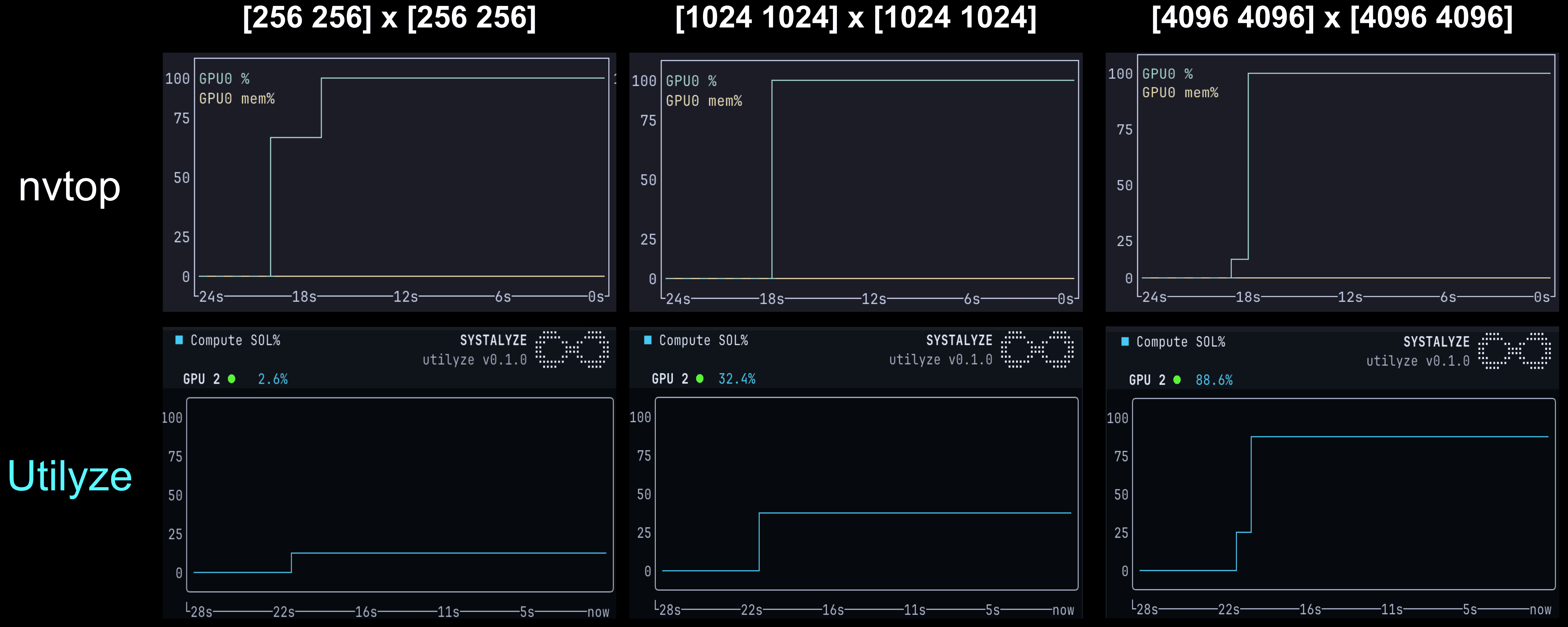
Systalyze's Utilyze Tool Reveals True GPU Compute Utilization in AI Workloads
Systalyze introduces Utilyze, a GPU compute utilization monitoring tool that reveals actual compute throughput versus traditional metrics li
 systalyze.com·1mo ago
Eyot: A Programming Language That Makes GPU Programming as Simple as Background Threads
Eyot is a new programming language designed to make GPU programming as simple as spawning background threads. It transparently compiles code
 cowleyforniastudios.com·2mo ago
BarraCUDA: Open-Source CUDA Compiler Supports AMD, NVIDIA, and Tenstorrent GPUs
BarraCUDA is an open-source CUDA C++ compiler written from scratch in C99 that can compile .cu files to multiple GPU architectures including
 github.com·3mo ago
VectorWare Enables Rust Async/Await Programming on GPUs
VectorWare announces a breakthrough in GPU programming by enabling Rust's async/await and Future trait on GPUs. This represents a significan
 vectorware.com·3mo ago