
























Synthetic MRI Data Shows Promise for Reducing Manual Annotations in Focal Cortical Dysplasia Detection
This study investigates using synthetic MRI data generated by conditional generative networks to improve automated detection of focal cortical dysplasia (FCD), a brain lesion. Researchers used T1-weighted and FLAIR MRI scans from 131 FCD patients and 90 healthy controls across three sites. Synthetic MRIs were generated from binary FCD masks, and two neuroradiologists could only distinguish real from synthetic images with 60-70% accuracy. Adding synthetic data to automated FCD detection increased sensitivity by 8.14% and improved model confidence at lesion sites. The study concludes that synthetic data can reduce the need for manual annotations by approximately 20%, though equivalent amounts of real data remain more effective.
Key quotes
Experts showed limited ability to distinguish real from synthetic images, with classification accuracy of 60% for T1w and 70% for FLAIR (inter-rater agreement kappa = 0.86).
Augmenting automated FCD detection with synthetic data increased sensitivity by 8.14% (p = 0.12) and improved model confidence at true lesion sites (0.83 +/- 0.11 to 0.89 +/- 0.12; p = 0.02).
Conditional generative networks can generate realistic synthetic FCD-MRIs, reducing labeled data needs by approximately 20% while maintaining equivalent sensitivity.
Equivalent amounts of real data, when available, remain more effective than synthetic augmentation.
From the article
You might also wanna read

Guide to Neuroimaging Datasets for Visual Perception Reconstruction from fMRI Data
This repository provides an index and overview of open neuroimaging datasets specifically for reconstructing visual perception from human fM
 github.com·4mo ago
Development and Validation of an AI Foundation Model for CNS Tumor Classification

Training-Free Single-Image Diffusion Model Achieves Fast, High-Quality Generation
This paper presents a training-free approach to single-image diffusion models. Instead of training a neural network on a single image (which
 arxiv.org·1mo ago
Brain-IT: Transformer-Based Image Reconstruction from fMRI Brain Recordings
Brain-IT is a novel AI method that reconstructs images from fMRI brain recordings using a Brain-Interaction Transformer. The system achieves
 amitzalcher.github.io·8mo ago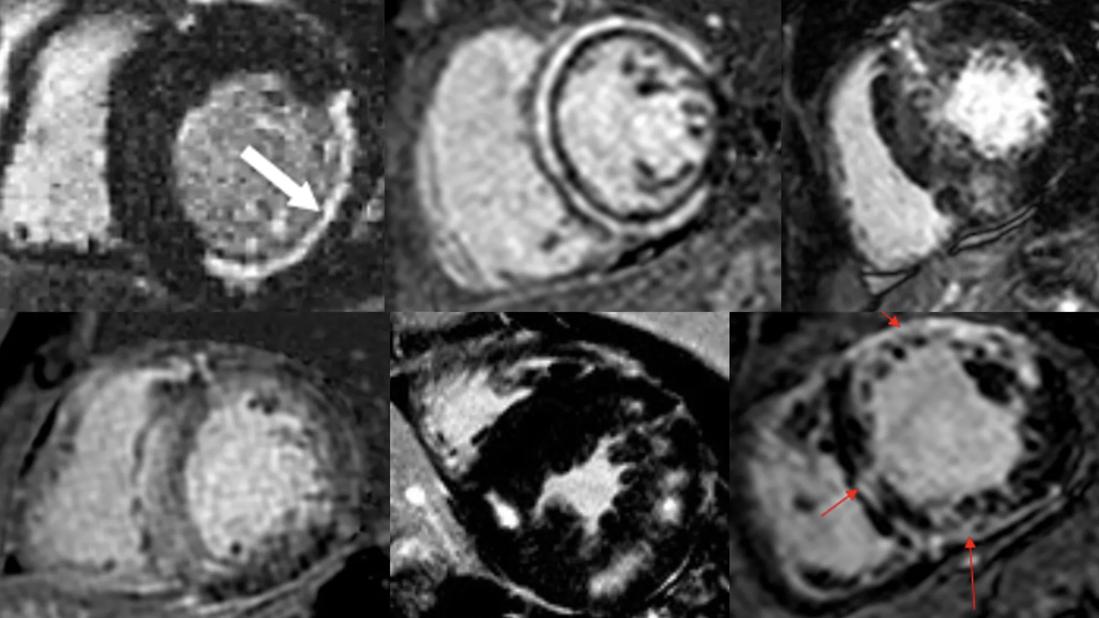
New AI framework CMR-CLIP combines cardiac MRI videos with clinical text reports for accurate heart diagnosis
Researchers from Carnegie Mellon University and Cleveland Clinic have developed CMR-CLIP, a vision-language AI framework that combines cardi
 consultqd.clevelandclinic.org·1d ago
Comments
Sign in to join the conversation.
No comments yet. Be the first.