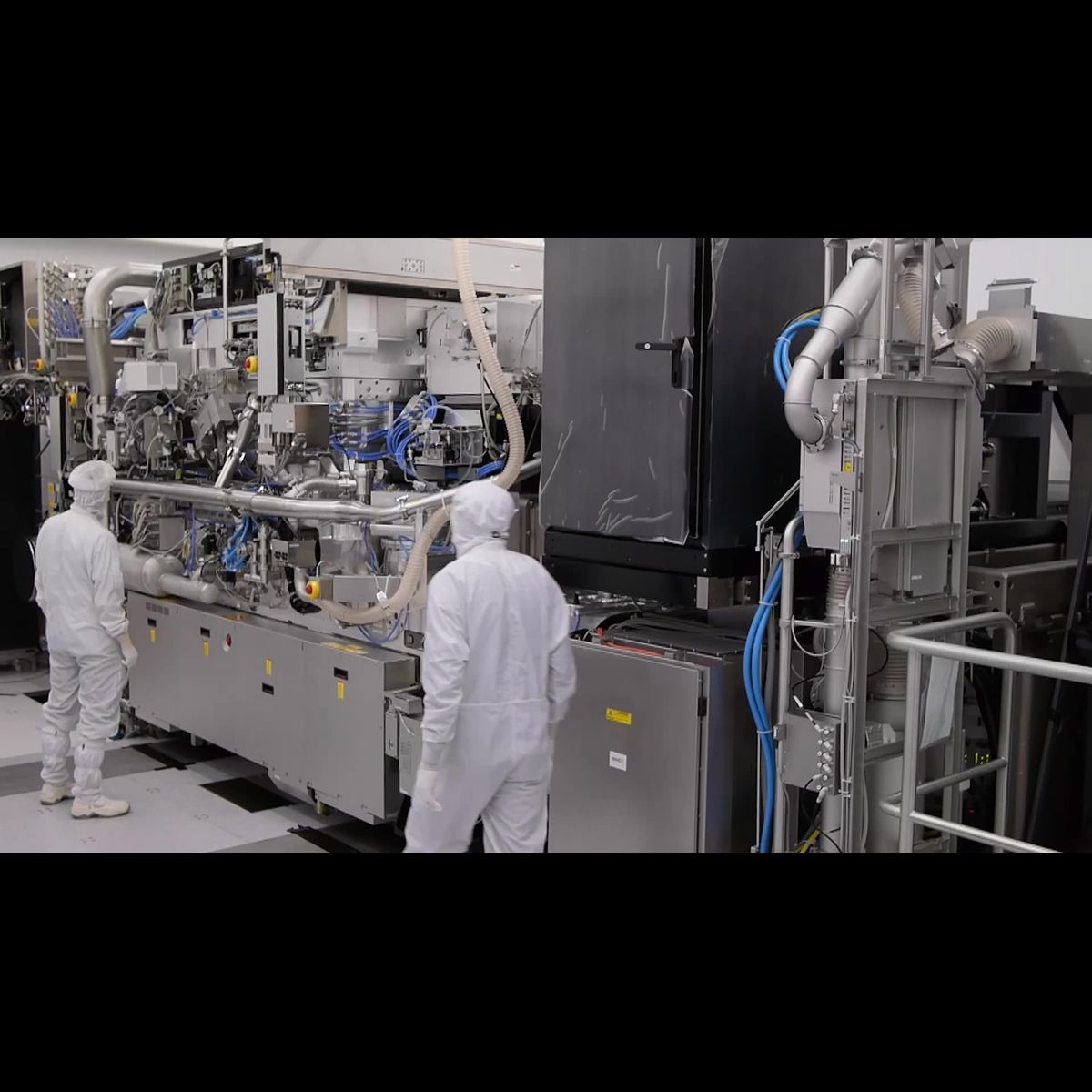
How the Dutch hide a $400 billion monopoly in a forest, and why the world hasn’t noticed. I need to tell you about a building in Eindhoven. Every smartphone you’ve touched, every GPU running every AI model, every chip in every data center on Earth traces back to this one place. I expected fences. Cameras. Maybe some guy in a booth asking for ID. There’s a bike path. Some birch trees. A yellow bench. That’s it. The Quietest Monopoly on Earth ASML builds extreme ultraviolet lithography machines. They’re the only ones who can. These are the machines that print transistors at 2–3 nanometers onto silicon wafers. If ASML stops shipping, TSMC can’t make chips, NVIDIA can’t make GPUs, and the AI boom dies in a quarter. The entire digital economy runs through this building. A single machine costs around €380 million. Over 100,000 components, 457 suppliers, 30 countries. You need 40 freight containers and three Boeing 747s just to move one. Inside, a laser fires 50,000 pulses per second at droplets of molten tin to create plasma light at 13.5 nanometers. The mirrors focusing that light are polished so flat that if you scaled one up to the size of Germany, the biggest bump would be under a millimeter. China has thrown over $150 billion at replicating this. Still stuck at 7 nanometers while everyone else moves to 2. The US leaned on the Dutch government to block EUV exports to China because this is not a technology competition anymore. It’s a chokepoint. Whoever controls these machines controls what gets computed and what doesn’t. So I walked up to the front door. Nobody stopped me. Nobody looked. What They Let You See I put my face against the glass and took a photo. A refrigeration compressor. Copper lines. Armaflex Class 1 foam insulation, the same stuff in every hotel basement on the planet. A mechanical thermostat. Not even digital. And taped to the unit, a piece of lined paper in someone’s handwriting: Ruud Bloks. 26 B00 007. Any refrigeration guy in Adana, in Rotterdam, in Lagos could build this in an afternoon. Everything here is catalog-order, off-the-shelf, zero export restriction. The front layer is worthless on purpose. But then I looked up the name. There’s a Ruud Hendrikus Martinus Johannes Bloks at ASML who holds patents in lithography measurement substrates, liquid management systems, overlay computation. Deep EUV R&D work. I don’t know if it’s the same person. Maybe it’s a common name in Brabant. But if it is the same Ruud, then what I photographed through that glass is the handwriting of a man who engineers components for the most complex machine ever built by humans, and he’s taping notes to a cooling unit like my father’s foreman tags equipment at our family factory in Turkey. Same energy. Same paper. Same tape. That post-it might be the most accidentally significant thing I’ve ever photographed. Security Disguised as Hospitality I found the perimeter. It’s a gabion wall. Stones stacked in wire cages, zip-tied to the frame. And attached to it, a sign. “Attention cyclists!” it says. Campus is open weekdays 6:30 to 23:00, weekends 8:00 to 17:00. Read it again. That’s an access control protocol for one of the most strategically critical sites on Earth. After 23:00, the campus locks. You don’t get in. But the sign doesn’t say “restricted area.” It doesn’t say “authorized personnel only.” It talks to you like you’re on a Sunday ride and might want to cut through the park. The gabion wall does the same thing. Looks like landscaping. Feels like a garden feature. But try driving a car through it. A chain-link fence would work just as well, but chain-link looks like security. Stones in wire look like someone cared about the aesthetics. Every layer at ASML runs this way: make the restriction feel like information, frame the boundary as hospitality, dress the barrier up as nature. Building in the Shadow I sat on that bench outside the building, opened my MacBook, and started working on Lightcap.ai. It’s a search engine I’ve been building for months now, moving between cities, coding wherever the signal is decent. I looked up from my screen and it hit me physically. The supply chain was right there, laid out in front of me like a diagram. ASML designs the lithography machine. TSMC uses it to print chips. NVIDIA turns those chips into GPUs. Anthropic and OpenAI train models on those GPUs. I build on those models. I was sitting at the end of a chain and staring at the beginning of it. If that building didn’t exist, my laptop is a paperweight. The AI I build on doesn’t get trained. Lightcap doesn’t work. I don’t work. Nobody around me seemed to register this. An engineer walked past eating a sandwich. Someone locked a bike. A phone rang in the distance. Just another day at the building the digital world depends on. Doe Normaal The Dutch say doe normaal. Act normal. Don’t be loud about what you are. Be unremarkable on purpose. I always thought it was just a cultural thing, like Midwest nice or Japanese restraint. But standing in front of ASML, I think it might be something closer to a doctrine. I lit a joint at the front entrance. Behind me, the sign says “Smoking strictly prohibited in front of this building.” That’s the strongest deterrent I encountered at the headquarters of the company the entire semiconductor industry depends on. A laminated no-smoking sign. The building that stores the IP behind every advanced chip. The technology China would do almost anything to acquire. Protected at the perimeter by a sign about cigarettes, a stone wall pretending to be a garden, and a notice for cyclists. I don’t think this is carelessness. I think this is the whole point. Politics stages spectacles so you watch the show. The real power sits here, in a forest in Brabant, designing the next node. The best protection is being so ordinary that the thought of looking twice never crosses your mind. A Time Capsule Nobody cares about these photos today. Some guy standing outside a building in Eindhoven. Thirty views, maybe. Looks like a campus visit post. But twenty, thirty years from now, when someone is writing about the semiconductor era and trying to reconstruct what the peak of the chokepoint looked like from the outside, these become primary sources. Ruud’s handwriting is a biometric trace. In 2050, an AI will extract his stress level, pen pressure, writing speed, emotional state from those letters on that post-it. The gabion wall is a document of how security was performed through aesthetics. The cyclist sign is evidence that access control was disguised as public information. And the fact that I sat there, opened a laptop, worked on a search engine built on the technology that building enables, and nobody blinked, that proves the disguise worked. I didn’t break in. I didn’t photograph anything classified. I saw exactly what they wanted me to see: nothing. And that’s the strategy. Doe normaal. Hide the most powerful chokepoint in the global economy inside a quiet forest in Eindhoven. Make sure nobody thinks it needs guarding at all. I’m Faruk. I build Lightcap.ai from wherever the context is richest. Sometimes that’s a café in Istanbul. Sometimes it’s the bench outside the building the entire digital world depends on.

























 lightcapai.medium.comI Walked Up to the Most Powerful Chokepoint in Tech. There Were No Guards.lightcapai.medium.com
 counterpunch.org·3d ago
 thewirechina.com·4d ago
 startupfortune.com·8d ago
 nikkei.shorthandstories.com·10d ago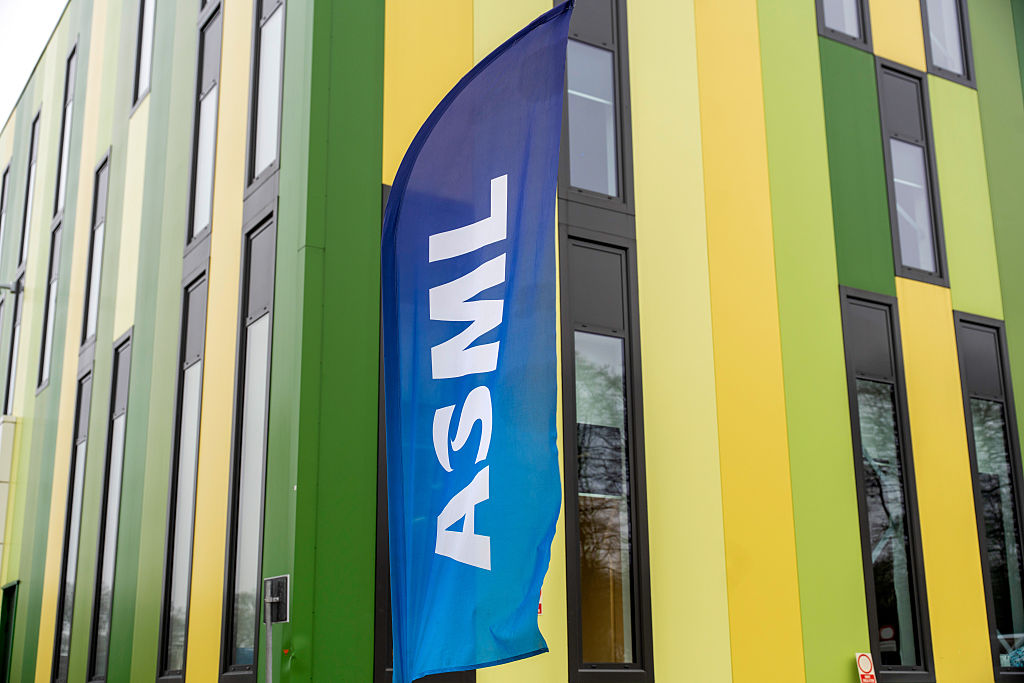
 techcrunch.com·13d ago
Comments
Sign in to join the conversation.
No comments yet. Be the first.