
























Kenzaburo Oe on Writing, Activism, and the First-Person Narrative
By
Interviewed by Sarah Fay
Summary
An interview with Nobel Prize-winning Japanese author Kenzaburo Oe, exploring his literary philosophy, his commitment to first-person narrative style, his activism on issues like Hiroshima and Okinawa, and his approach to writing about disability and scholarly life. The piece reveals Oe as a modest, lighthearted figure who takes serious subjects seriously but not himself.
Source
 Twitter / XKenzaburo Oe on Writing, Activism, and the First-Person Narrativetheparisreview.org
Key quotes
· 3 pulledI've cultivated the first-person style as opposed to the third person. It's a problem. A really good novelist is able to write in the third person, but I have never been able to write well in the third person.
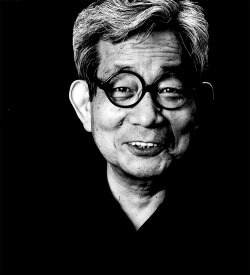
Kenzaburo Oe has devoted his life to taking certain subjects seriously—victims of the atomic bombing of Hiroshima, the struggles of the people of Okinawa, the challenges of the disabled, the discipline of the scholarly life—while not appearing to take himself seriously at all.
Unfailingly modest and lighthearted, he dresses in sport shirts, fidgets a great deal, and smiles easily.
You might also wanna read


Nobel laureate Olga Tokarczuk denies using AI to write her latest novel after initial remarks spark controversy
Nobel laureate Olga Tokarczuk was reported to have admitted using AI in her creative process for her latest novel during an event in Poznań.
 lithub.com·1mo ago
Exploring Autobiography as an Orphan Form: The Loneliness of Self-Reflection
The article explores the nature of autobiography and memoir, beginning with John Berger's observation that autobiography is an "orphan form"
 Defector·1mo ago
Finding Environmental Hope Through Okami: A Personal Reflection on Nature and Renewal
A reflective feature article exploring the author's personal journey with environmental anxiety and how the video game Okami helped reshape
 unwinnable.com·15h ago
Reflecting on Hiroshima: A Personal Perspective on Historical Relief
The article reflects on the 80th anniversary of the Hiroshima bombing, contrasting the global sympathy for Japan with the personal relief fe
 washingtonpost.com·10mo ago
Umberto Eco's Analysis of Ur-Fascism: Core Characteristics of Eternal Fascism
Umberto Eco's 1995 article 'Ur-Fascism' analyzes the core characteristics of what he calls 'Eternal Fascism,' drawing from his personal expe
 bobmschwartz.com·9mo ago
Why AI in literature threatens the essential struggle of writing
This opinion piece argues that AI's encroachment into literature is catastrophic for writers not because of output quality, but because it u
 engelsbergideas.com·21d ago
Comments
Sign in to join the conversation.
No comments yet. Be the first.