
























Hybrid material confirms antiferroelectricity can coexist with switchable polarization
Many of the advanced electronic components surrounding us in everyday life rely on polar materials to function. Polar materials have an uneven distribution of electric charge. This gives them a…
Read the full articleYou might also wanna read
Heat-shrinking materials get cleaner production route with lower temperatures and finer particles
Among the many modern technologies that shape life today, functional oxide materials are found in almost everything, from advanced electroni
New imaging method reveals how electric fields reshape ferroelectric materials
New research is shedding light on longstanding debates over the behavior of ferroelectric materials when those materials are exposed to elec


Researchers demonstrate electrical control of magnetic dimer entanglement via ferroelectric switching
Can a magnetic dimer be switched from ferromagnetic to antiferromagnetic behaviour using only an electric field? New calculations demonstrat
 iq.fp2.dev·19d ago
University of Minnesota researchers discover nanoscale thickness changes can control metal electronic properties
A team at the University of Minnesota discovered that changing a metal film's thickness by just a few nanometers can dramatically alter how
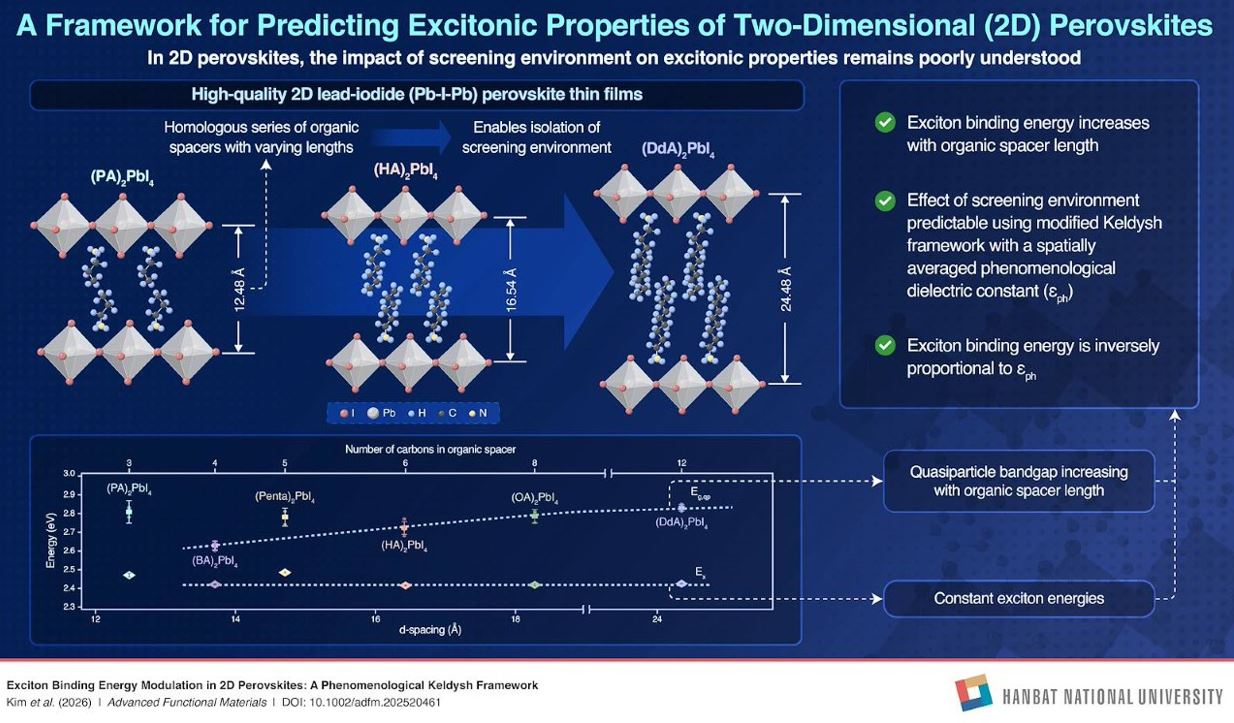
Researchers develop predictive framework to optimize 2D perovskite solar cell efficiency
Researchers have developed a predictive framework for 2D perovskite design to enable more efficient, stable solar cells.
 PV Tech·14d ago
Researchers develop predictive framework to optimize 2D perovskite solar cell efficiency
Researchers have developed a predictive framework for 2D perovskite design to enable more efficient, stable solar cells.
pv-tech.org·14d agoElectrical imbalances at grain boundaries help explain solid-state battery failure
Next-generation batteries that use new electrolyte materials could achieve far higher energy density than today's lithium-ion batteries, wit
Comments
Sign in to join the conversation.
No comments yet. Be the first.