
























A personal guide to sequencing your own genome with the Oxford Nanopore MinION
By
bilsbie
Summary
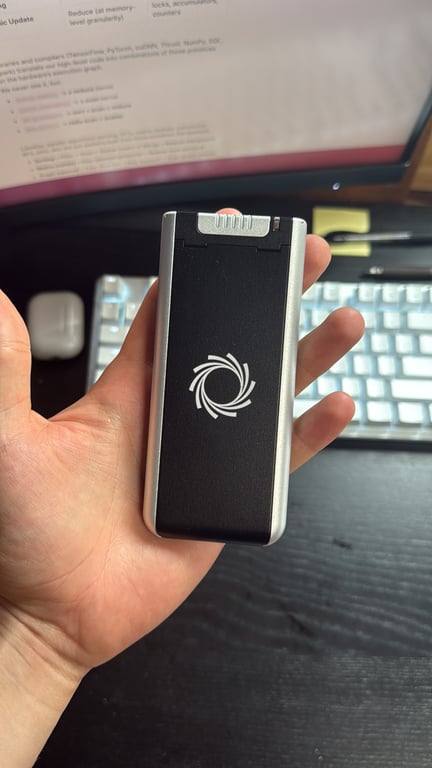
The author describes their personal experience sequencing their own genome five times using an Oxford Nanopore Technologies MinION device. The process involves collecting cheek cells via swab, preparing samples for sequencing, running them through the sequencer, and performing analysis. The article explains that cheek cells are easily accessible and replenish quickly, but notes they are not suitable for certain diagnostic purposes like cancer detection or inflammation analysis, which require cells from the specific affected area.
Source
 Hacker NewsA personal guide to sequencing your own genome with the Oxford Nanopore MinIONbradleywoolf.com
Key quotes
· 3 pulledI have now sequenced my own genome 5 times with an Oxford Nanopore Technologies MinION.
Cheek cells are easily accessible and replenish pretty quickly.
They are not used for cancer diagnosis, inflammation, or what genes are being activated in other parts of the body.
You might also wanna read


Native long-read RNA sequencing of human monocytes reveals activation-induced alternative splicing toward functional isoforms

Read-depth CNV genotyping method identifies 501 copy-number variants associated with 1,537 human traits in UK Biobank
This study presents a novel read-depth-based method for genotyping copy-number variants (CNVs) from genome sequencing data, including challe

‘Beautiful blobs’: can scientists build life from scratch? – podcast

UK Government Invests £4.75 Million in ME/CFS Genomic Sequencing Study
The UK government has invested £4.75 million in the SequenceME programme, a genomic sequencing study of ME/CFS that will sequence the comple
 medscape.com·10d ago
A scalable Tn5-based method for genome-wide DNA methylation profiling in development and disease

Hunting the tardigrade: one small step in sequencing DNA of all life on Earth
Comments
Sign in to join the conversation.
No comments yet. Be the first.