
























How the SKA will use fast radio bursts to decode the universe
There are parts of the universe that are extremely hard to see, even for our most advanced telescopes. Gas and dust don't emit light and are visible only by the light they block from stars and…
Read the full articleYou might also wanna read


Hubble telescope spots 'impossible' light from a galaxy that shouldn't have been visible
Researchers say the surprising discovery of the faraway galaxy MXDFz4.4 could help explain how the cosmos went from opaque to transparent bi
Untitled
🌌 🧪 For two decades now, #astronomers have been recording short-lived extremely energetic radio signals dubbed fast radio bursts. ✍🏼 New
The square kilometer array will revolutionize the hunt for alien life
With new technologies come new opportunities. And that is especially true in astronomy—with every new advanced telescope, we have the potent

Astronomers keep finding giant radio rings in space they can’t explain
Astronomers keep finding enormous rings of radio light in deep space that nothing in the textbooks can account for.
Astronomers keep finding giant radio rings in space they can’t explain
Astronomers keep finding enormous rings of radio light in deep space that nothing in the textbooks can account for.
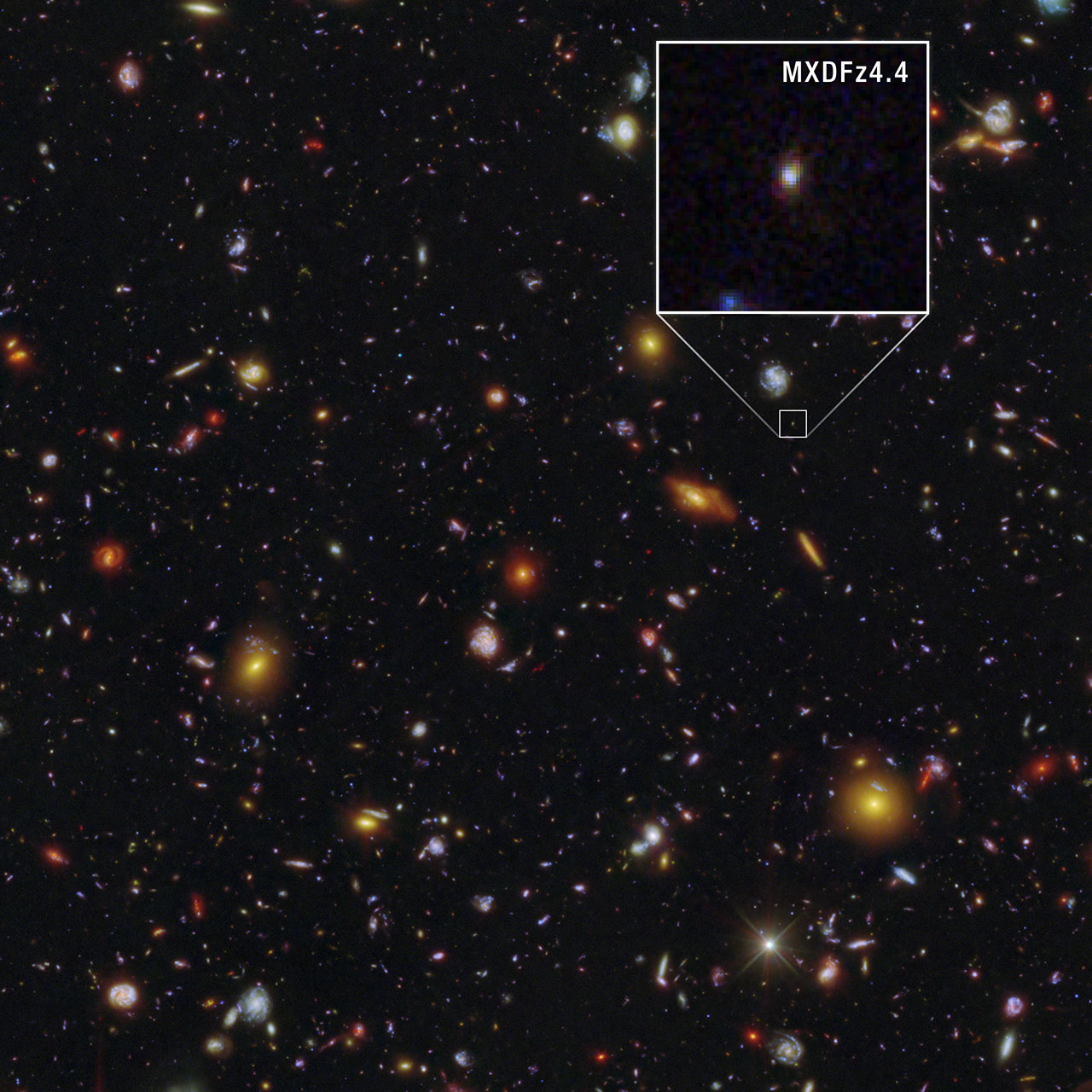
Hubble Detects Ultraviolet Light from Early Galaxy, Shedding Light on Cosmic Reionization
Astronomers using Hubble found ultraviolet light from a galaxy that existed just 1.4 billion years after the big bang.
 go.nasa.gov·23d ago
Astrophysicists Uncover Magnetic Signature of Gamma-Ray Burst
Using NSF’s Very Large Array (VLA), astronomers achieved a groundbreaking wireless detection of polarization and Faraday rotation in the aft
Comments
Sign in to join the conversation.
No comments yet. Be the first.