





















How Passive Design Strategies Improve Building Thermal Performance Through Orientation and Ventilation
By
Written by Kiana Buchberger

The bagel they save for the regulars. Don't skim, savour.
Summary
This article explores how passive design strategies—such as building orientation, natural ventilation, daylight optimization, and strategic placement of openings like roof windows—can significantly improve thermal performance in buildings before mechanical systems are introduced. It emphasizes that thermal comfort begins with early spatial and architectural decisions, not just insulation or HVAC technology. The piece highlights the growing urgency of this approach given that buildings account for nearly 40% of global energy consumption and people spend 90% of their time indoors.
Key quotes
· 3 pulledCan architecture shape comfort before mechanical systems enter the equation?
As buildings account for nearly 40% of global energy consumption and people spend close to 90% of their time indoors, thermal performance has become one of architecture's most urgent concerns.
Thermal performance begins with spatial decisions made long before technical equipment is introduced.
You might also wanna read

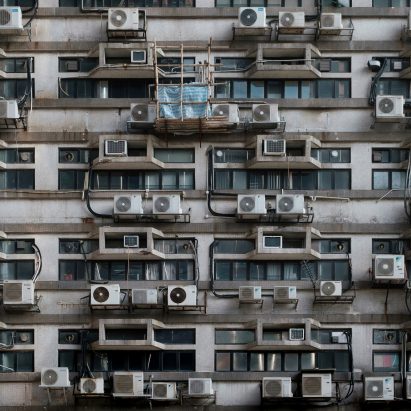
The Environmental Challenge of Global Air Conditioning Demand
The article examines the growing global dependence on air conditioning as temperatures rise, highlighting the environmental paradox where in
 Dezeen·9mo ago
The Case Against Fast Architecture: Why We Should Slow Down Building Design
This article critiques the trend of 'fast architecture' - the push for rapid construction and instant gratification in building design. The
Dezeen·7mo ago
GS Architecture retrofits Hampstead Victorian home to Passivhaus standards using fabric-first approach
GS Architecture has completed a renovation and extension of a semi-detached Victorian family home in Hampstead Heath, London, using a "fabri
Dezeen·1mo ago
Addressing Colonial Legacies in Sustainable Design for Climate Adaptation
The article argues that sustainable design must address its historical ties to colonialism to adapt to the irreversible impacts of climate c
Dezeen·10mo ago
Architecture and Sustainability: Rethinking Building Lifespans in the Age of Embodied Carbon
The article examines the question of how long buildings should last in the context of sustainability and embodied carbon concerns. It contra
Dezeen·5mo ago
Mute's Guide to Adaptable Architecture: How Versatile Design Shapes Future Offices
Office solutions brand Mute has published a guide on adaptable workplace design, arguing that future offices must prioritize versatility and
Dezeen·7mo ago