
























How Org-social.el 2.3+ Solves Performance Issues with Large Social.org Files Using Concurrent Processing and Partial Fetching
As Org Social grows, users follow more feeds, and individual social.org files accumulate hundreds of posts over time. Traditional approaches that down
Read the full articleYou might also wanna read


Bun v1.3.6
Fixes 45 issues (addressing 125 👍). Bun.Archive API for creating & extracting tarballs with gzip compression, Bun.JSONC for parsing JSON wi

GitHub's Performance Improvements for Pull Request Diff Rendering
The path to better performance is often found in simplicity.
 GitHub·3mo ago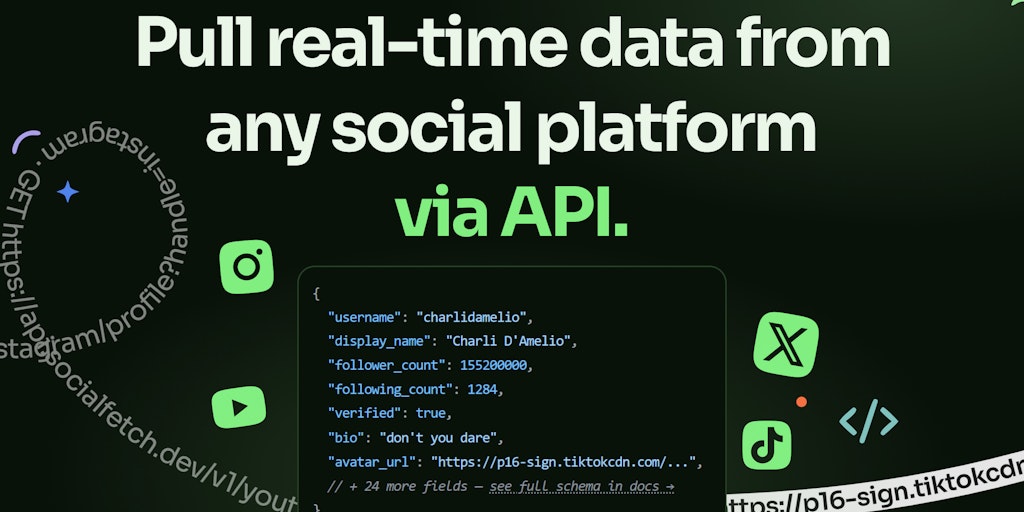
Social Fetch: A Unified API for Scraping Public Data from Major Social Platforms
One API for public social data. Scrape profiles, posts, comments, videos, and transcripts from TikTok, Instagram, YouTube, X (Twitter), Link
 Product Hunt·2mo ago
Bun v1.3.13
Fixes 82 issues (addressing 381 👍). bun test --parallel, --isolate, --shard, and --changed, bun install streams tarballs to disk using 17x

SilverTorch: A Unified Retrieval Architecture for Scalable Recommendation Systems
We’re introducing SilverTorch, a reimagining of recommendation systems that unifies all retrieval components for user generated content unde
 engineering.fb.com·1mo ago
How Using Fetch with the Streams API Gets You Faster UX with GenAI Apps
Generative AI enables us to build incredible new types of applications, but large language model (LLM) responses can be slow. If we wait for
Comments
Sign in to join the conversation.
No comments yet. Be the first.