
























How extreme heat and climate change are transforming the 2026 FIFA World Cup with slower matches
By
Dainet Sierra
16h agoen
Source
Theweather.comHow extreme heat and climate change are transforming the 2026 FIFA World Cup with slower matchestheweather.comWith the start of the Round of 16 in this global sporting event, high temperatures have become a danger for players, posing a risk that varies from one host venue to another. Increasingly changing environmental conditions affect our daily activities and, at times, can give us quite a scare. In this World Cup, one in every four matches has been played under dangerous heat conditions. Under these circumstances, players cover less distance and experience much greater physical strain. The World Weather Attribution system, WWA, estimated that at least 26 of the 104 matches would take place under conditions where heat stress becomes a real risk for athletes, according to thresholds established by the global players’ union. Under these extreme conditions, experts advise postponing the match. The issue is not just air temperature, but a measurement that takes humidity, heat, solar radiation, and wind into account. It was forecast that in at least five matches, the wet-bulb globe temperature could reach 28 °C. It should be clarified that wet-bulb globe temperature is not the same as air temperature; it is actually a measurement that takes humidity, heat, solar radiation, and wind into account. To calculate the real heat stress on the body, weather conditions are analyzed. For example, an air temperature of 40 °C with 30% humidity is equivalent to a wet-bulb globe temperature of approximately 26 degrees, conditions under which the body’s performance begins to decline. The risk is not the same across all World Cup host venues According to the WWA study, inland and southern U.S. cities, along with the three Mexican host venues, are the most vulnerable. Stadiums in Philadelphia, Miami, and Kansas City have a high probability of reaching dangerous levels. Several World Cup host venues, including Miami, showed health risk factors. It was also observed that traditionally cooler locations, such as Vancouver and Toronto, could also face extreme heat wave events. In 2021, a similar weather event caused air temperatures to reach 49.6 °C, resulting in more than 600 deaths. Related article The World Cup Is Happening During Hurricane Season—Should Fans Be Concerned? Before the World Cup began, it was estimated that nearly half of the soccer matches had a 50% probability of heat, which could affect players’ performance. Of the 104 matches, 97 were identified as having a higher probability of limiting conditions due to climate change. Previous warning during the 2025 Club World Cup A study conducted during the 2025 Club World Cup analyzed 57 matches, resulting in 1,070 observations. The study revealed that the wet-bulb globe temperature exceeded 28 degrees in 31 matches, indicating that soccer players were exposed to an extreme risk of heat-related illness. Under extreme heat conditions, players’ performance is directly affected, changing game tactics and representing more than just simple environmental discomfort. In professional soccer matches, especially at the highest level, players have access to ice vests, hydration breaks, and medical support teams. Fans, on the other hand, have the least protection, since only three stadiums have air conditioning. Increasingly extreme conditions could put amateur participation in this sport at risk. Although facilities may have cooling or artificial ventilation, the danger remains. Entry lines, parking lots, fan zones, and outdoor celebrations expose people to dangerous heat conditions for much longer than the players. Dangerous conditions in the future The projection for 2050 is even more alarming. Fourteen of the 16 World Cup host venues are expected to experience extreme heat conditions, which will undoubtedly be much more dangerous than today’s unless proper adaptation measures are implemented. Players who use amateur soccer fields without shade, drainage, water, cooling, or artificial ventilation are far more exposed than athletes competing in the World Cup. Related article Where Is Cape Verde and What to Do There? The Archipelago Making Waves With Its First FIFA World Cup Qualification Given this situation, the Executive Secretary of UN Climate Change issued a warning about current fossil fuel consumption habits. “The planet is warming after more than a century of using this type of energy,” he explained. “This traps heat in the atmosphere, and now we are feeling it everywhere.” He concluded with a call to fans: “Sport is the most powerful unifying force in the world. If soccer lovers raise their voices to protect it from extreme heat, this will mark a turning point. It is not just about saving the sport; it is about protecting the world it depends on, the world we all depend on.” News reference García, M. (2026). Extreme heat, hydration breaks and slower matches: this is how climate change is changing the 2026 World Cup .
You might also wanna read


Analysis: 25% of 2026 World Cup Matches at Risk of Dangerous Heat Conditions
A new analysis by World Weather Attribution (WWA) warns that approximately 25% of the 104 matches in the 2026 FIFA World Cup could be played
 wired.com·22d ago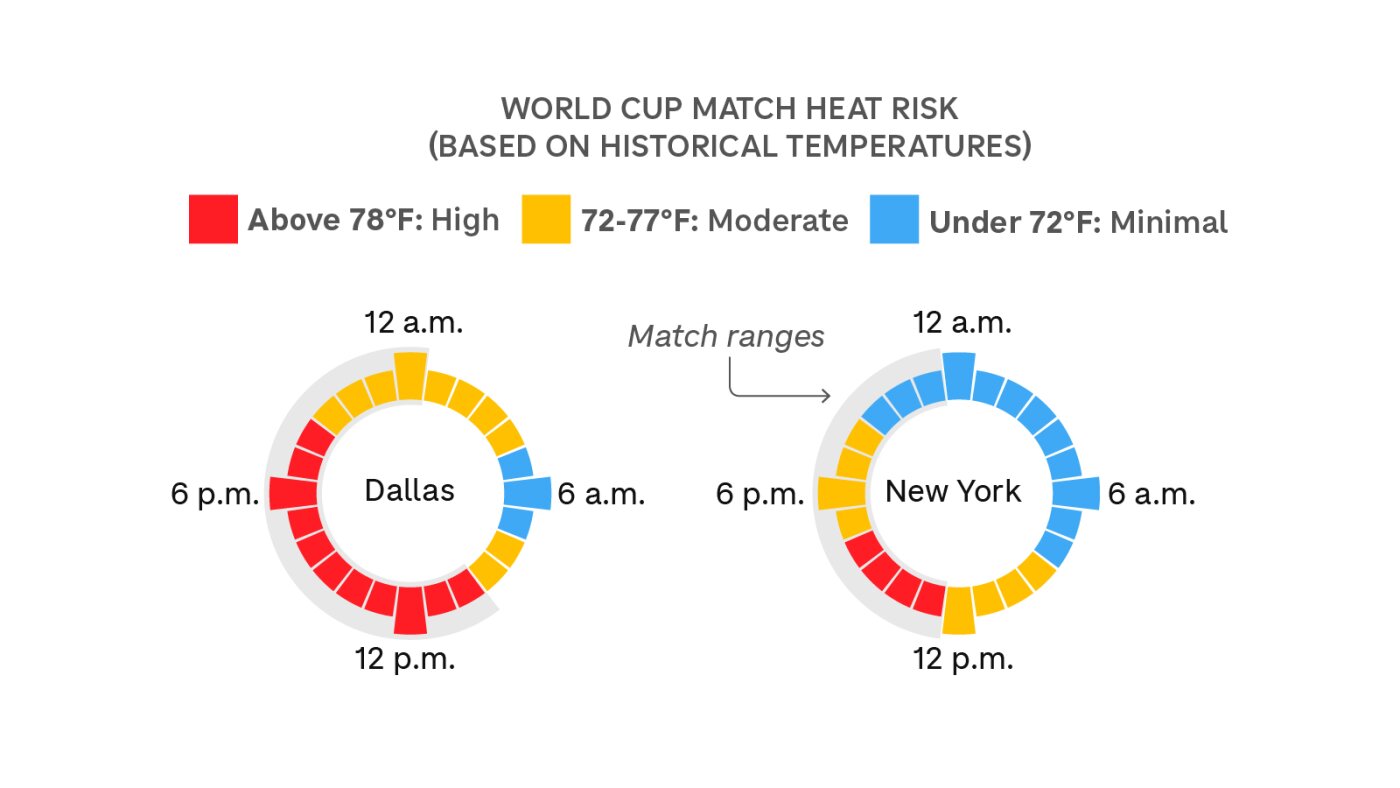
NPR analysis: Over one-third of 2026 World Cup matches face high risk from extreme heat
An NPR analysis of two decades of temperature data across 16 World Cup host cities in North America finds that more than one-third of 2026 W
 n.pr·1mo ago
Extreme Heat Poses Public Health Risks for Fans and Players at 2026 FIFA World Cup
The article discusses the public health risks posed by extreme heat and humidity during the 2026 FIFA World Cup, which will be held across 1
 forbes.com·21d ago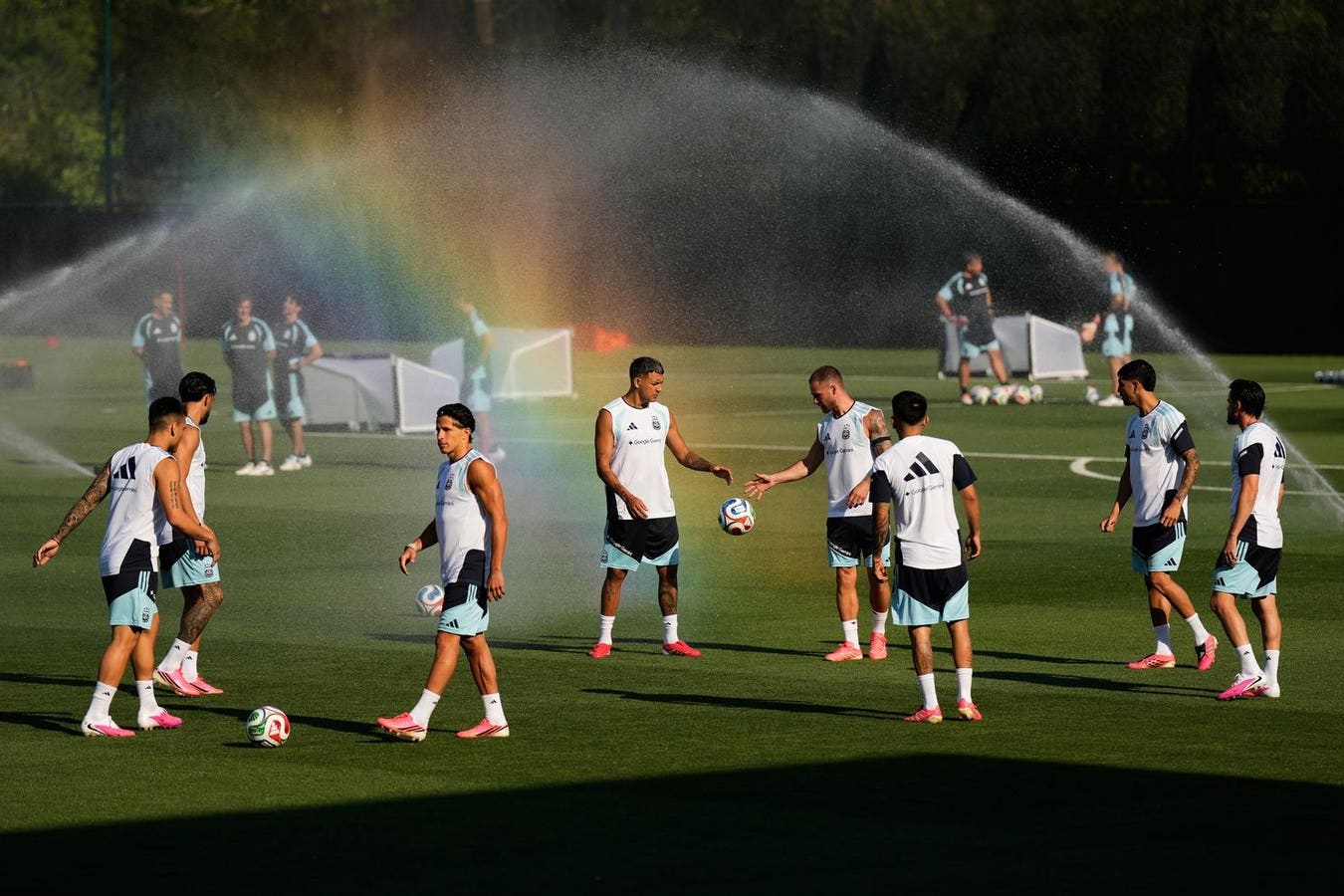
How Extreme Heat Threatens the 2026 FIFA World Cup: Four Key Challenges
An atmospheric scientist analyzes how extreme heat poses four major challenges for the FIFA World Cup: player health and performance, fan sa
forbes.com·28d ago
The World Cup’s heat hazard
 ft.com·1mo ago
World Cup Heat, Humidity ‘Virtually Impossible’ without Climate Change, Says Study
Mailchimp·5d ago
Comments
Sign in to join the conversation.
No comments yet. Be the first.