
























How Compiler Optimizers Recognize Patterns and Simplify Obfuscated Code
Pattern recognition can see through obfuscated code to find the right instruction
Read the full articleYou might also wanna read
How Pattern Recognition Transforms Slow Code into Efficient Solutions
A software developer on DEV Community illustrates how recognizing algorithmic patterns can dramatically improve coding performance. Using th
ShortSingh·1d ago
Silent foe or quiet ally: Brief guide to alignment in C++. Part 3 -- Elizaveta Zhegalova
We continue our deep dive into memory mechanics. If you are just joining us, I recommend reviewing the foundations first. The first part cov
CppCast·23d ago

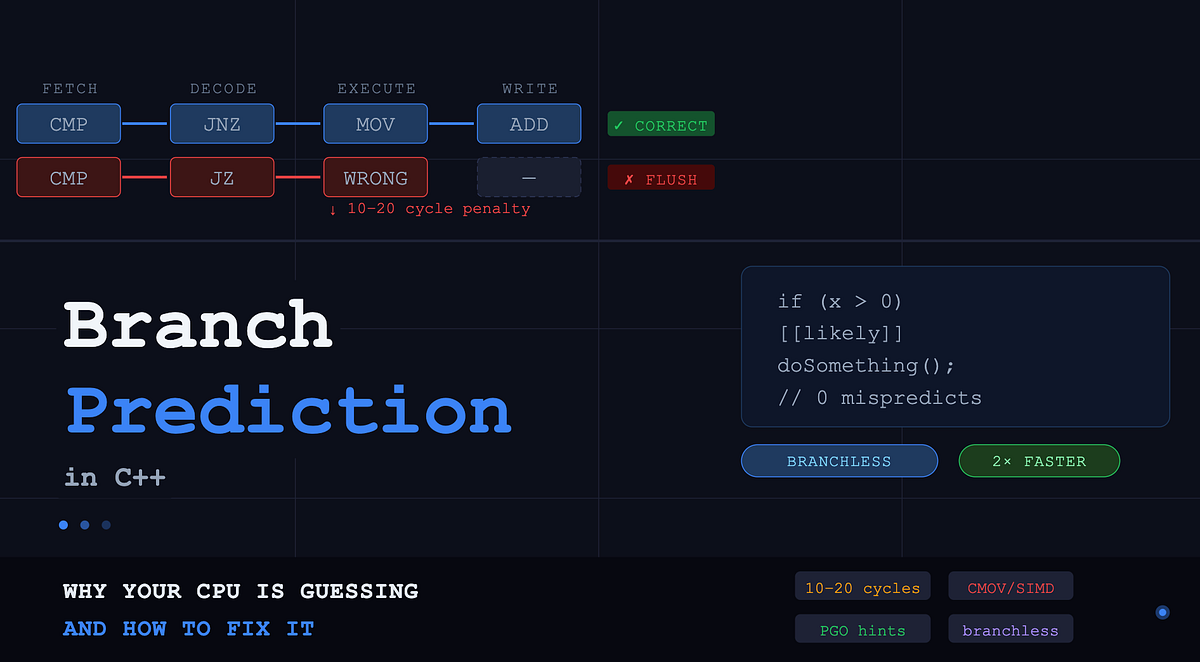
Understanding CPU Branch Prediction and Branchless Programming in C++
Stop letting CPU mispredictions slow down your code. This guide covers C++ branch prediction internals, branchless programming patterns, and
 towardsdev.com·24d ago
LLMs Detect Vulnerabilities by Recognizing Safe Code Patterns, Not Vulnerable Ones, Study Finds
Large language models (LLMs) can detect software vulnerabilities, but how do they actually identify vulnerable code? We address this questio
 arxiv.org·21d ago
Comments
Sign in to join the conversation.
No comments yet. Be the first.