All Topics
All Topics
Technology
Technology
AI
AI
Business
Business
Entertainment
Entertainment
News
News
Programming
Programming
Science
Science
Design
Design
Environment
Environment
Finance
Finance
Crypto
Crypto
Politics
Politics
Sports
Sports
Education
Education
Gaming
Gaming
Art
Art
Music
Music
Health
Health
Security
Security
Books
Books
Food
Food
Travel
Travel
Personal
Personal
Bluesky
Twitter

Highlights from The James Webb Space Telescope’s 4th Year of Science

Read on friendsofnasa.org

From the article

Highlights from The James Webb Space Telescope ’s 4th Year of Science This Space Sparks episode highlights science results from Webb's 4th year of science operations. "Webb is the largest, most powerful telescope ever launched into space." Under an international collaboration agreement, the European Space Agency (ESA) provided the telescope’s launch service, using the Ariane 5 launch vehicle. Working with partners, ESA was responsible for the development and qualification of Ariane 5 adaptations for the Webb mission and for the procurement of the launch service by Arianespace. ESA also provided the workhorse spectrograph NIRSpec and 50% of the mid-infrared instrument MIRI, which was designed and built by a consortium of nationally funded European Institutes (The MIRI European Consortium) in partnership with JPL and the University of Arizona. Webb is an international partnership between NASA, ESA and the Canadian Space Agency (CSA). Credits: Directed by: Bethany Downer and Nico Bartmann Editing: Nico Bartmann Written by: Kerry Hensley Footage and photos: NASA, ESA, CSA, STScI, N. Bartmann (ESA/Webb), Y. Cheng (NAOJ), J. DePasquale (STScI), G. Gozaliasl, A. Koekemoer, M. Franco, G. Rihtaršič (University of Ljubljana, FMF), R. Tripodi (University of Ljubljana, FMF), A. Levan (IMAPP), R. Naidu (MIT), P. Tiranti, H. Melin, M. Zamani (ESA/Webb), A. Leroy, A. Pedrini, A. Adamo (Stockholm University) and the FEAST JWST team, L. Furtak (Ben-Gurion University), R. Maiolino (Cambridge), F. D'Eugenio (Cambridge), I. Juodžbalis (Cambridge), H. Übler (MPE), C. Marconcini (University of Florence) Duration: 1 minute, 53 seconds Release Date: July 6, 2026 #NASA #ESA #Astronomy #Space #Science #Stars #Planets #SolarSystem #Exoplanets #Supernovae #Nebulae # Galaxies #GravitationalLensing #Cosmos #Universe #JWST #InfraredAstronomy #SpaceTelescopes #Europe #NASAGoddard #GSFC #STScI #UnitedStates #CSA #Canada #STEM #Education #HD #Video
Continue reading on friendsofnasa.org

You might also wanna read

Redefining disability as developmental and relational: the phenomenological congruence and flexibility approach

Joshua Sealy (Macquarie University) proposes a new philosophical framework called 'phenomenological congruence and flexibility' for redefini

imperfectcognitions.blogspot.com·2h ago

Long-term single-molecule imaging reveals ErbB receptor dimerization dynamics and oncogenic dysregulation

This study presents a novel long-term, multicolor single-particle tracking (SPT) technique using upconverting nanoparticles (UCNPs) to obser

cell.com·3h ago

Southeast Alaska Tribes Address Ocean Acidification Through Data Collection and Adaptation Planning

SEATOR.org discusses the threat of ocean acidification to Southeast Alaska's marine ecosystem, which is critical for local subsistence and l

seator.org·5h ago

Ocean Acidification Research Laboratory at Alutiiq Pride Marine Institute

The Ocean Acidification Research Laboratory (OAR Lab) at the Alutiiq Pride Marine Institute is a state-of-the-art carbonate chemistry facili

alutiiqprideak.org·5h ago

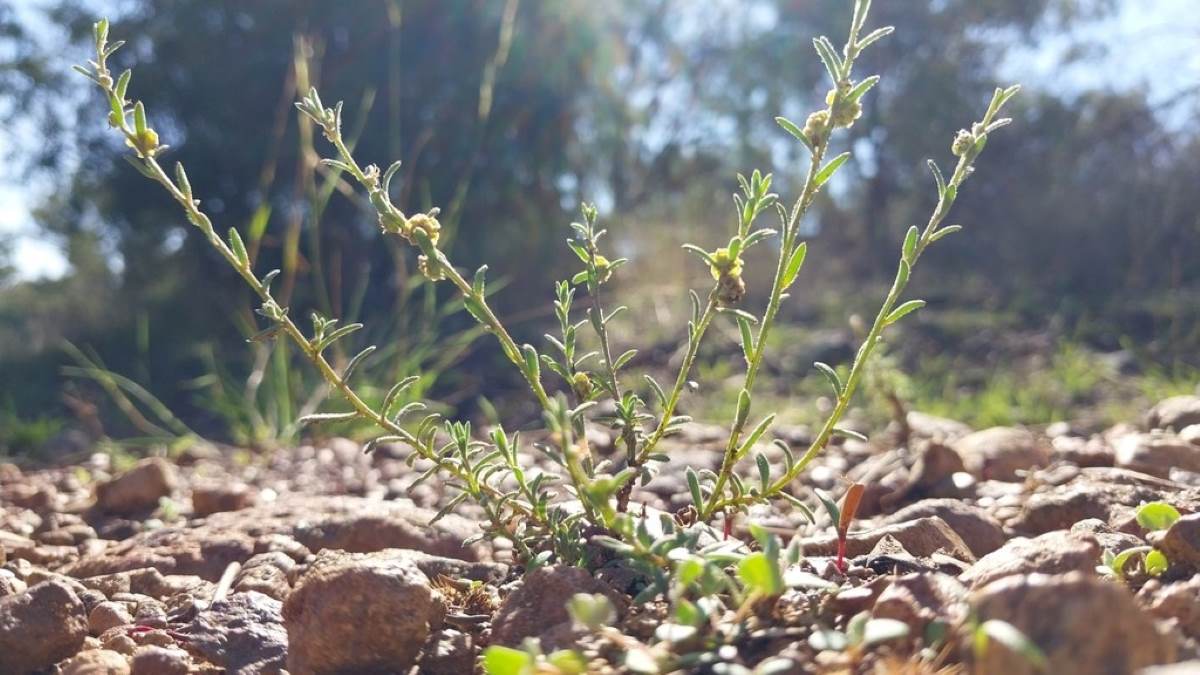
Cultural burning boosts native shrub density in restored Indigenous fire management study

A new study published in the Australian Journal of Botany shows that cultural burning—Indigenous fire practices restored after 180 years on

connectsci.au·5h ago

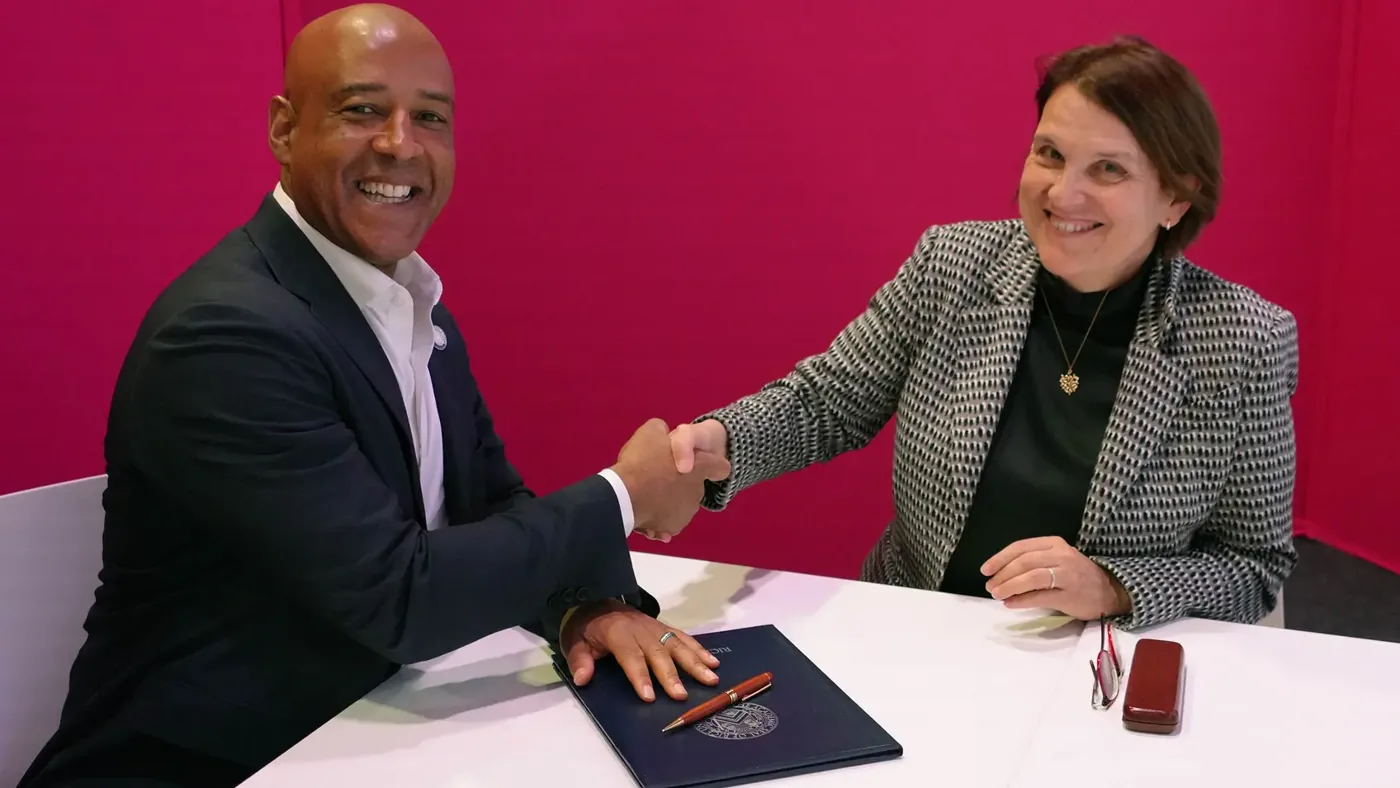
Rice University and Max Planck Society Formalize Q-RaMP Partnership for Quantum Materials Research

Rice University and the Max Planck Society have signed a formal agreement to establish the Quantum Materials – Rice and Max Planck Partnersh

quantumcomputingreport.com·6h ago

Comments

Sign in to join the conversation.

No comments yet. Be the first.