
























Hail Impact Test -Solar PV Module Test
Unknown ([email protected])8mo ago
From the article
Hail Impact Test for Solar Panels: How Solar Modules Withstand Extreme Weather Solar panels are built to last decades, but nature often tests that durability. One of the biggest challenges solar systems face—especially in regions prone to severe weather—is hail . To ensure reliability, every solar panel undergoes a hail impact test before it reaches the market. In this article, we’ll explore what a hail test for solar panels is, how it’s conducted, why it matters, and how you can choose hail-resistant solar panels for your home or business. What Is a Hail Test for Solar Panels? A hail test is a standardized procedure used to evaluate a solar panel’s ability to withstand the impact of hailstones. These tests simulate real-world conditions where large ice balls strike the surface of a solar module during a storm. The most recognized test follows the IEC 61215 and UL 61730 international standards. These certifications ensure panels can survive harsh environments, including high winds, snow loads, and hail impacts. How the Hail Impact Test Is Conducted During testing, manufacturers launch artificial hailstones made of ice at high speeds toward the solar panel. The purpose is to mimic the real-world force of hailstorms. Here’s how it’s typically done: 🔹Panel Setup The solar module is mounted on a frame similar to its rooftop position. Testing conditions are controlled (typically 25°C and stable humidity). 🔹Hail Simulation Ice balls representing hailstones (25 mm to 45 mm, sometimes up to 50 mm) are fired at high speeds (up to 100 km/h) using a pneumatic launcher . 🔹Velocity The hailstones are shot at speeds of about 83 km/h (51.6 mph) using an air cannon or ice gun. 🔹 Impact Testing The panel is hit at 11 to 20 different locations — center, edges, and corners — to test overall strength. 🔹 Post-Impact Evaluation Visual inspection: Checks for cracks or delamination. Electrical testing: Ensures power loss does not exceed 5%. Thermal imaging: Identifies microcracks invisible to the eye. Hailstone Simulation: Ice balls of specific diameters (usually 25 mm , equivalent to a golf ball) are frozen under controlled conditions. Standard Hail Test Ratings Panels that can withstand larger hailstones are often marketed as “hail-resistant solar panels” or “hail-proof solar modules.” Hail Impact Test Standards – Global and Indian 🟩 Note: In India, IS 14286 certification is mandatory for solar panels supplied to MNRE-approved projects. It includes hail impact, mechanical load, humidity, and temperature cycle tests. Why the Hail Test Matters Durability in Harsh Climates: If you live in areas like Texas, Colorado, or Australia—where hailstorms are common—hail testing ensures your panels can survive without costly damage. Long-Term Energy Output: Even small microcracks from hail can reduce panel efficiency over time. Certified panels minimize this risk. Insurance and Warranty Benefits: Many solar insurance policies and warranties require panels to be hail-tested and certified under IEC 61215 . Lower Maintenance Costs: Stronger panels mean fewer repairs, replacements, and less downtime. How to Choose Hail-Resistant Solar Panels When shopping for solar modules, look for the following: ✅ IEC 61215 Certification (Impact Resistance) ✅ Tempered Glass Protection (3.2 mm or higher) ✅ High Mechanical Load Rating (5400 Pa or higher) ✅ Manufacturer’s Test Reports for hail impact ✅ Strong Warranties covering weather damage Some manufacturers also offer enhanced hail certification , meaning their panels can withstand larger hailstones (35–45 mm). Tips for Protecting Solar Panels from Hail Install at an Angle: Panels mounted at an angle are less likely to be hit directly by hailstones. Use Protective Coatings: Some coatings can reduce surface stress from impact. Regular Inspections: After storms, inspect for cracks or reduced power output. Insurance Coverage: Ensure your homeowner or commercial insurance includes solar system protection. Hail-Prone Regions in India Hailstorms are more frequent in: Himachal Pradesh, Uttarakhand, and Jammu & Kashmir (northern hills) Assam and Arunachal Pradesh (Northeast) Madhya Pradesh and Chhattisgarh (central India during spring storms) For these areas, it’s vital to use IS 14286-certified solar panels and ensure proper mounting angles (20°–40° tilt) to deflect hail. Protecting Solar Panels from Hail Even though modern panels are hail-resistant, you can enhance protection by: Choosing Tier-1, IS/IEC-certified modules . Ensuring a proper tilt angle for deflecti on. Installing strong mounting structures . Performing post-storm inspections . Adding solar insurance that co vers natural calamities. The Hail Impact Test is a vital benchmark that ensures solar panels can endure extreme weather — from hailstorms to high winds. By complying with IEC 61215 , UL 1703 , and IS 14286 standards, today’s solar modules guarantee long-term performance, safety, and durability . For Indian consumers, choosing IS/IEC-certified panels is the best way to secure your solar investment against nature’s toughest challenges. ❓Frequently Asked Questions (FAQ) 1. What is a hail impact test for solar panels? A hail impact test simulates the effect of hailstones hitting solar panels at high speed to check their durability. It ensures the glass and structure can withstand severe weather without damage or performance loss. 2. Which Indian standard covers hail testing for solar panels? In India, IS 14286:2019 (equivalent to IEC 61215 ) governs hail impact testing. It specifies procedures to ensure panels resist hail impacts, temperature changes, and mechanical loads. 3. Can solar panels get damaged by hail? Certified panels are designed to resist hailstones up to 25–45 mm in diameter. However, extremely large hail or poor-quality panels may suffer cracks or damage. 4. What happens if hail damages a solar panel? If the glass is cracked or cells are damaged, it can lead to reduced power output and water ingress. It’s best to replace the affected panel and file an insurance claim. 5. How can I protect my solar panels from hail in India? Use IS 14286-certified panels. Install panels at a tilt angle (20°–40°) . Perform regular inspections after storms. Opt for insurance coverage that includes hail damage. 6. Do all solar panels sold in India undergo hail testing? Yes, all panels approved by MNRE (Ministry of New and Renewable Energy) must meet IS/IEC 61215 and IS/IEC 61730 standards — which include hail impact testing as part of type approval. 7. How much power loss is acceptable after hail testing? During certification, a panel must show less than 5% power degradation after the hail impact test to pass 👋 Thank You for Reading! We appreciate your time and interest in renewable energy, EVs, and cutting-edge tech. Your curiosity helps drive a sustainable future forward. 📱 Follow Us on Social Media: 🌐 Visit our website
Continue reading on omkarmhatre.inYou might also wanna read

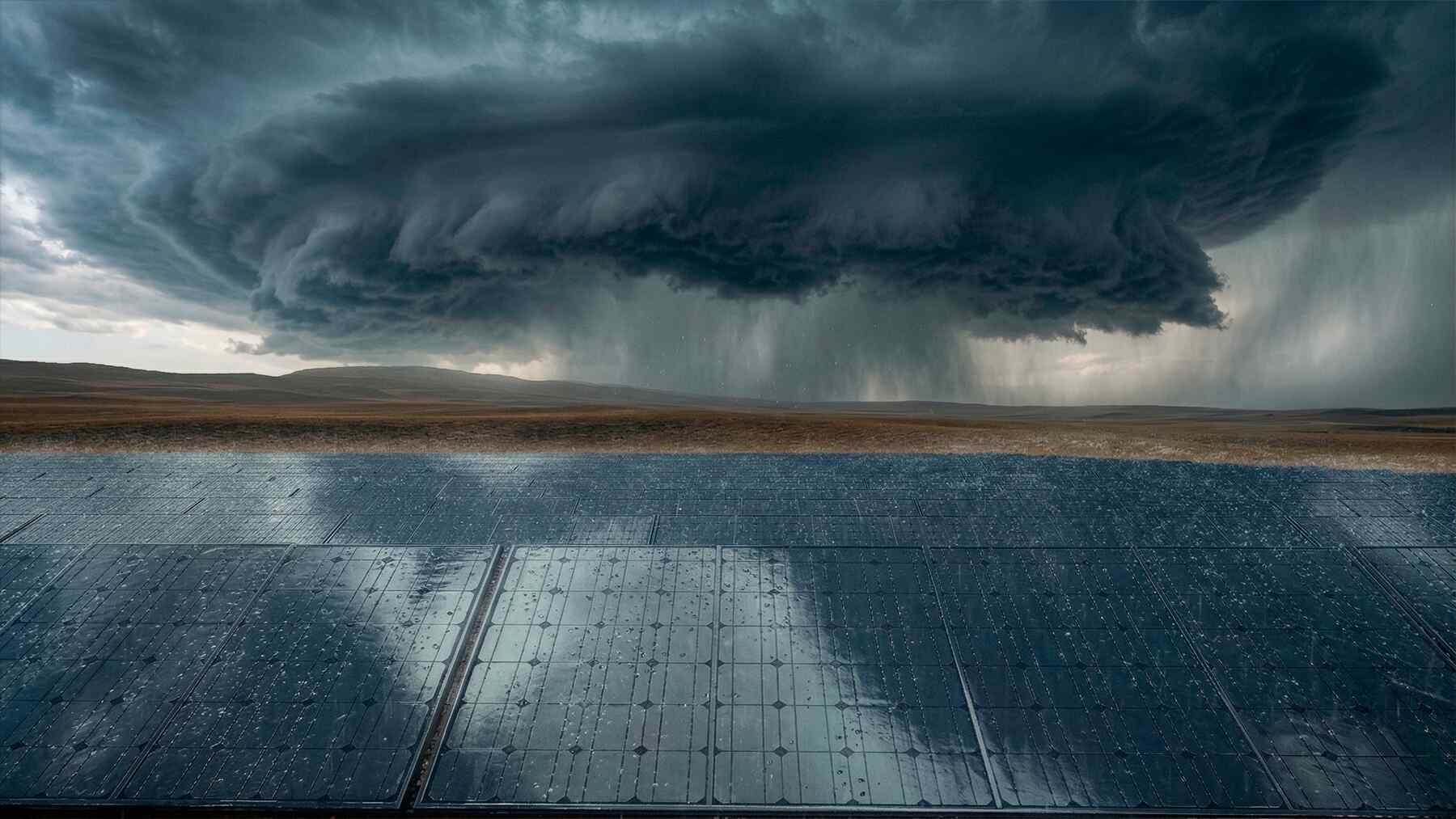
Study Finds Solar Panels Create Rainfall Clouds and Oases in Desert Environments
A recent study reveals that solar panels in desert environments are creating unexpected ecological benefits beyond clean energy production.
 ecoportal.net·2mo ago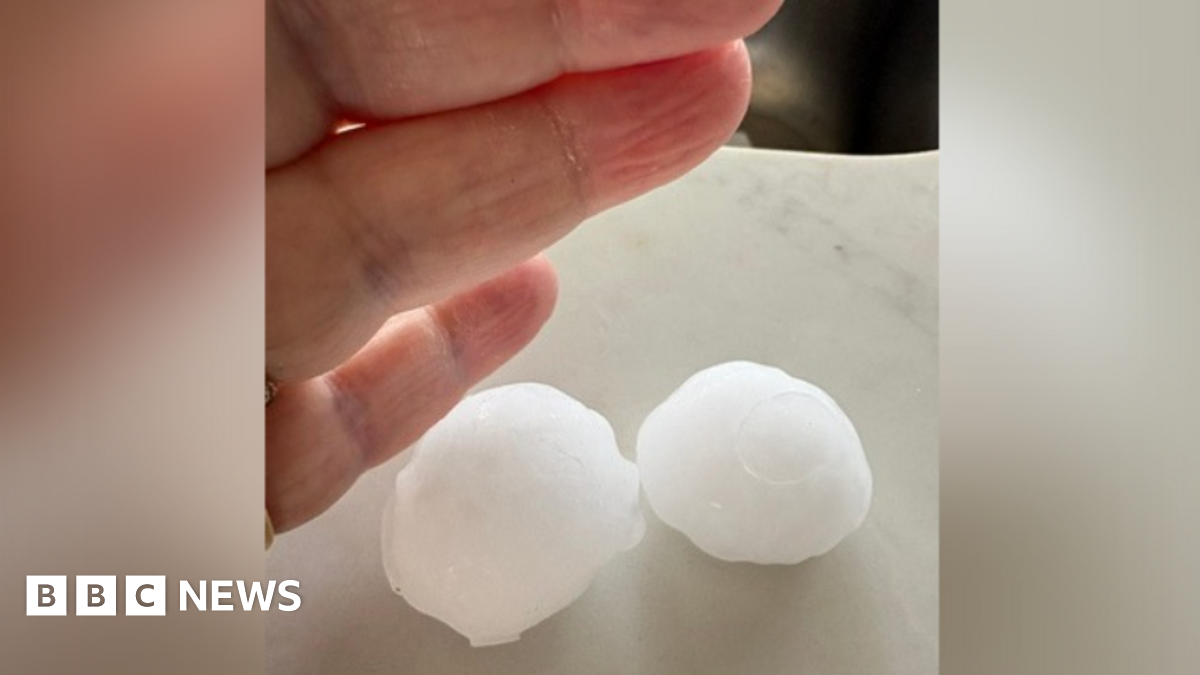
Golf ball-sized hailstorm damages homes and vehicles in Melksham, Wiltshire
A severe hailstorm with golf ball-sized hail hit Melksham, Wiltshire in the early hours of Thursday, causing significant damage to conservat
 bbc.co.uk·1mo ago
Solar farms in deserts create unexpected rainfall and vegetation growth, study finds
Solar panels in desert solar farms are creating unexpected environmental effects, including the formation of rainfall clouds and the develop
ecoportal.net·19d agoA solar storm undergoes a "super expansion" on its way to Earth, baffling physicists
Theweather.com·2d ago

Inside the United States’ Billion-Dollar Blind Spot: Hail
NYT·1d ago

Paneles solares en las vías, Italia estudia replicar el modelo suizo de ferrocarril
Infobae·2d ago
Comments
Sign in to join the conversation.
No comments yet. Be the first.