
























Gravitational wave astronomy reaches maturity with 390 confirmed detections by 2026
By
Ethan Siegel
Summary
The article discusses how gravitational wave astronomy has matured into a fully established scientific field by 2026. The LIGO-Virgo-KAGRA collaboration released results from their fourth observing run, adding 161 new gravitational wave events to the catalog, bringing the total to 390 confirmed detections. This marks a remarkable evolution from the field's birth just 11 years earlier, following the first detection in 2015/2016. The piece reflects on the journey from Einstein's 1915 theory of general relativity to the present day, where gravitational wave astronomy is now a routine and productive area of scientific research.
Source
 bskyGravitational wave astronomy reaches maturity with 390 confirmed detections by 2026bigthink.com
Key quotes
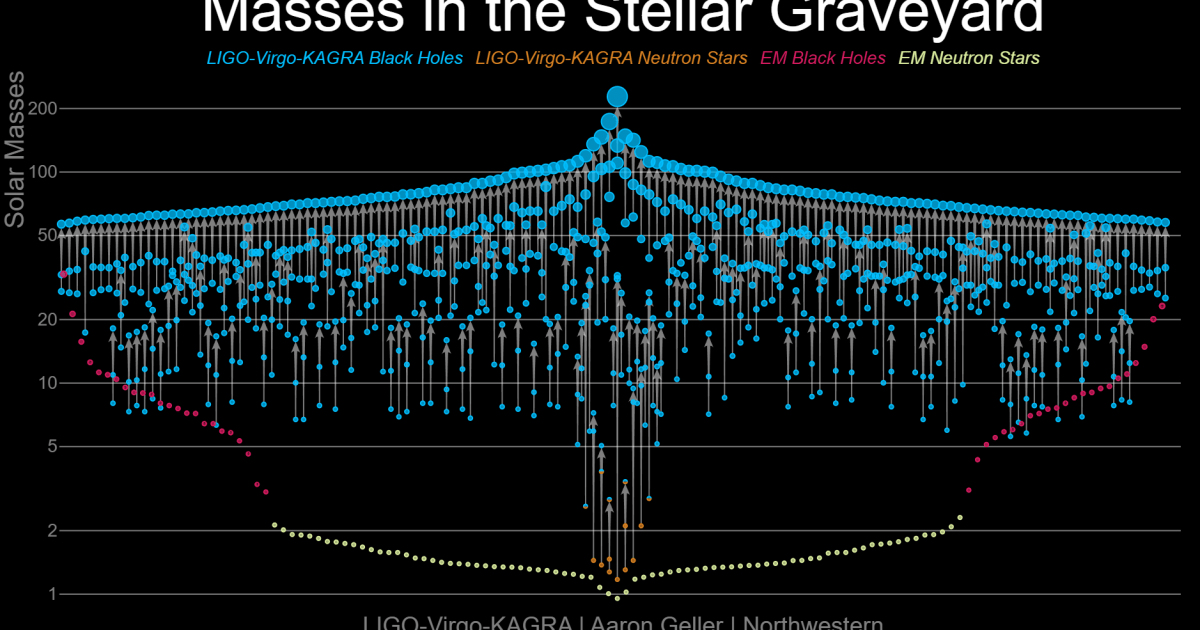
· 3 pulledHere in 2026, something remarkable has happened: the LIGO-Virgo-KAGRA collaboration has just released their results from the second part of their fourth observing run.
All told, 161 new gravitational wave events were added to the catalog of successful direct detections, bringing the total number of events up to a staggering 390.
It's a remarkable feat for a field of science that, as little as 11 years ago, had not yet been born.
You might also wanna read

LIGO Gravitational Wave Detector Confirms Einstein and Hawking Theories Through Black Hole Collision Observations
The Laser Interferometer Gravitational-Wave Observatory (LIGO) has confirmed key predictions from Albert Einstein, Stephen Hawking, and Roy
 space.com·9mo ago
LIGO Observatories Detect Most Massive Black Hole Merger in History
The LIGO-Virgo-KAGRA Collaboration detected the merger of the most massive black holes ever observed with gravitational waves, resulting in
caltech.edu·11mo ago
Google AI Method Deep Loop Shaping Improves Gravitational Wave Detection
Google researchers have developed a novel AI method called Deep Loop Shaping that improves control of gravitational wave observatories. This
 deepmind.google·9mo ago
Astronomers Discover Massive Black Hole Merger Defying Expectations
Astronomers detect the most colossal black hole merger known to date, producing a gigantic black hole about 225 times the mass of the Sun.
gizmodo.com·11mo agoNew synthesis of astronomical measurements shows Hubble tension is real
How would a passing gravitational wave look or feel?
Comments
Sign in to join the conversation.
No comments yet. Be the first.