
























MIT study finds natural graphite can host multiple superconducting states that strengthen under magnetic fields
By
Jennifer Chu | MIT News
Summary
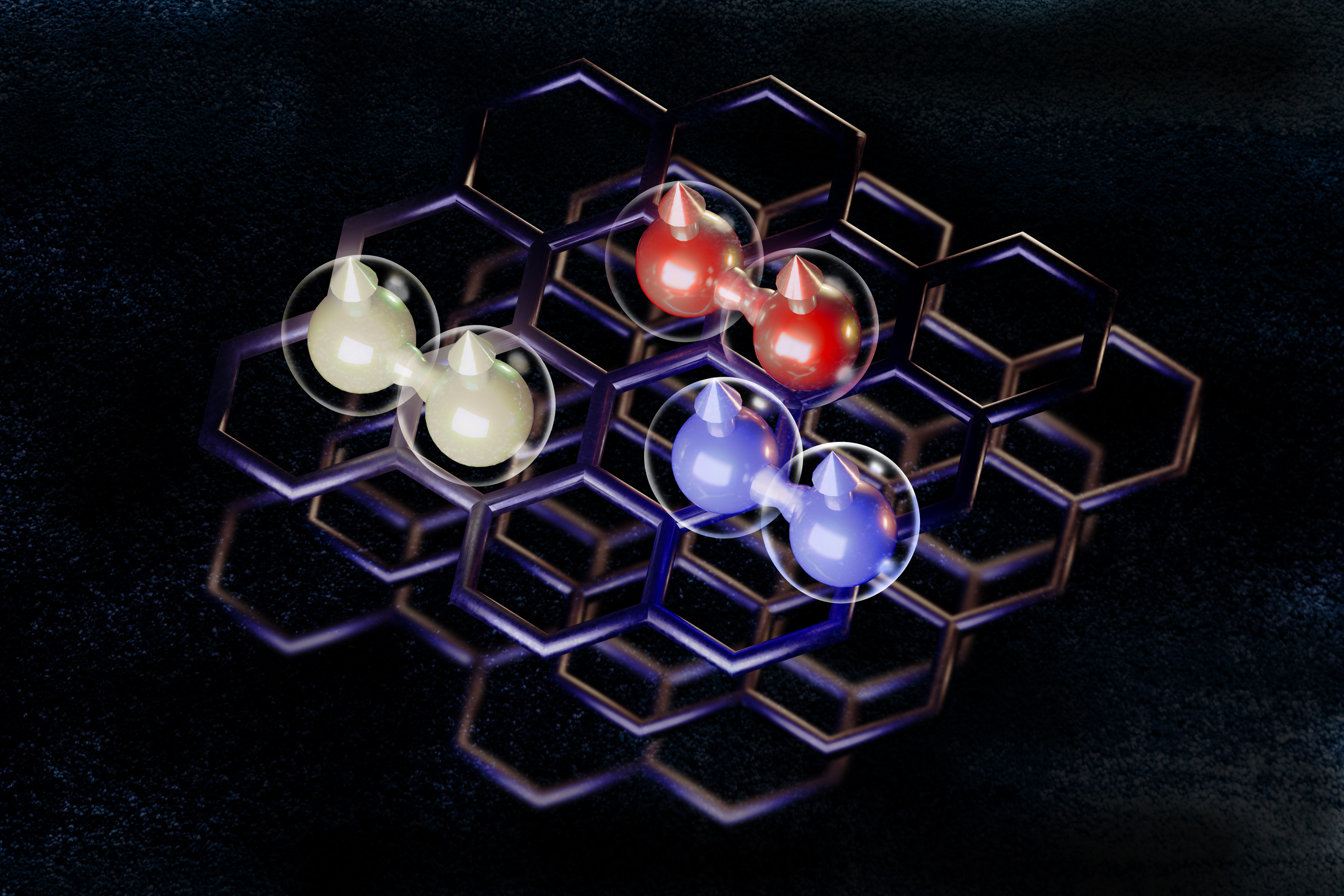
MIT researchers have discovered that a microscopic structure found in natural graphite (the material in pencil lead) can host multiple superconducting states — a rare phenomenon where a single material exhibits different forms of zero-resistance electron flow. Surprisingly, these superconducting states actually strengthen when exposed to a magnetic field, contrary to typical superconductor behavior. The findings, published in Nature, reveal that ordinary graphite is far more complex at the microscale than previously understood.
Source
 bskyMIT study finds natural graphite can host multiple superconducting states that strengthen under magnetic fieldsnews.mit.edu
Key quotes
· 3 pulledWhile there are thousands of materials that are known to be superconductors, it is rare for one material to host multiple forms of superconductivity.
The ordinary graphite in pencil lead is proving to be surprisingly multifaceted at the microscale.
In a further surprise, these superconducting states even get stronger when exposed to a magnetic field.
You might also wanna read
Family of magnetic field-boosted superconductors in rhombohedral graphene


Atomically Thin Materials Significantly Shrink Qubits

Two Decades After Discovery: Assessing the Commercial Reality of Graphene
This article examines the current state of graphene commercialization two decades after its discovery at the University of Manchester in 200
 theguardian.com·8mo ago
Johns Hopkins Researchers Develop Thermoelectric Cooling Technology with Double Efficiency
Researchers at Johns Hopkins Applied Physics Laboratory have developed a new solid-state thermoelectric refrigeration technology using nano-
MIT study reveals why solid-state batteries fail: dendrites grow at lower stresses than thought
MIT researchers discovered that dendrites—cracks that degrade solid-state battery performance—can grow at far lower stresses than previously
news.mit.edu·14d ago
Nanocrystal Light Emission Reveals Quantum Zero-Point Motion in Atomic Lattice
Researchers have observed unexpected light emission from a nanocrystal cooled to near absolute zero, which is shown to arise from quantum fl
 physics.aps.org·7mo ago
Comments
Sign in to join the conversation.
No comments yet. Be the first.