





















GPU Distance Field Techniques for Advanced Text Rendering and Effects
By
PaulHoule

Hand-rolled, kettle-boiled, baked to perfection. Worth every minute at the bakery.
Summary
The article discusses the challenges of text rendering in computer graphics and presents a technical approach using GPU-computed distance fields for efficient text rendering with advanced effects. The author explains that text rendering is notoriously difficult due to issues with layout, bi-directional text, shaping, Unicode, and rendering itself. They describe their personal experience working on text rendering for a compositing engine for creative content, where they needed fast performance and advanced visual effects. The solution involves using distance fields on the GPU, which enables anti-aliasing and various visual effects with minimal computational cost.
Key quotes
· 4 pulledText rendering is cursed. Anyone who has worked on text will tell you the same; whether it's about layout, bi-directional, shaping, Unicode, or the rendering itself, it's never a completely solved problem.
I needed crazy text effects, and I needed them to be reasonably fast, which implied working with the GPU as much as possible.
The distance field was an obvious requirement because it unlocks anti-aliasing and the ability to make many great effects for basically free.
I've been working on trying to render text in the context of a compositing engine for creative content.
You might also wanna read

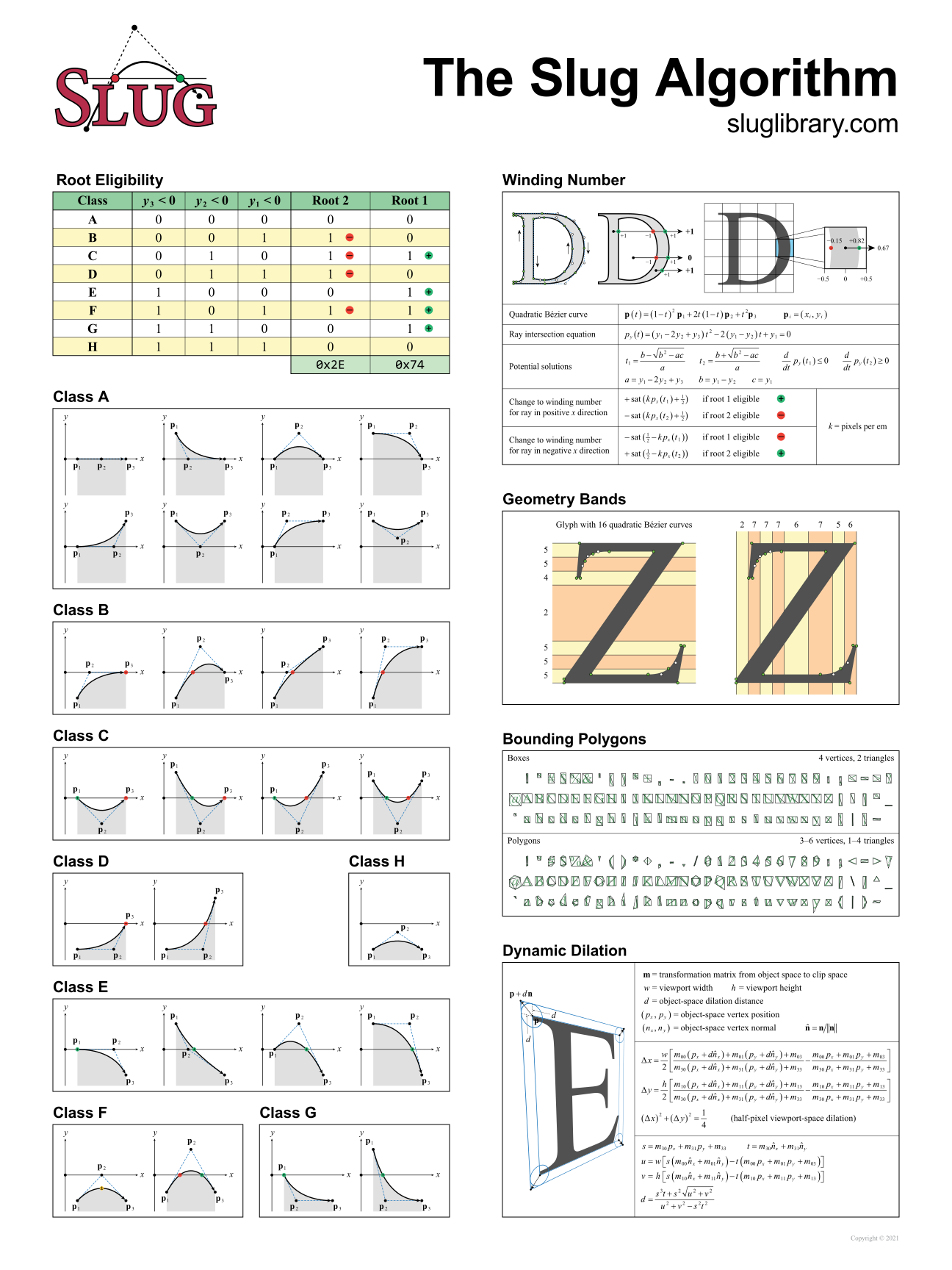
Slug Algorithm: 10 Years of GPU-Based Font Rendering Technology
Eric Lengyel reflects on the 10-year anniversary of the Slug Algorithm, a GPU-based font rendering technique he developed in 2016. The artic

Ray Tracing Integration for Makie Visualization: GPU-Based Photorealistic Rendering Pipeline
The article announces RayMakie and Hikari, a physically-based GPU ray tracing pipeline integrated into the Makie visualization ecosystem. Th
 makie.org·3mo ago
Building a High-Quality Image-to-ASCII Renderer with Sharp Edge Detection
The article details the author's development of an image-to-ASCII renderer that produces sharp, high-quality ASCII art from images and anima
 alexharri.com·4mo ago
Rust Ray Tracing Renderer: CPU, GPU, and Real-Time WebGPU Implementations
This article describes a Rust-based ray tracing renderer project that demonstrates three different implementation approaches: a CPU-based pa
 github.com·6mo ago
Why Average LLM Use Is Likely Destroying Value in Software Development
The author argues that, contrary to prevailing hype, the average use of Large Language Models (LLMs) is likely destroying value rather than
 unessays.substack.com·10h ago
How AI Accelerated Prototyping: From Idea to Tangible in Record Time
The author reflects on how AI has transformed their prototyping workflow. Previously, the biggest bottleneck was the time needed to scaffold
 darylcecile.net·10h ago