
























Global imbalances, dollar dominance, and the political economy of savings
The modern international monetary system is built on a structural asymmetry that has persisted for decades: the United States runs large and continuous current-account deficits, while high-saving…
Read the full articleYou might also wanna read
Global Imbalances are Back, and There’s No Fix in Sight: McGeever
(Reuters) – Remember global imbalances? They’re back. In a fractured world increasingly marked by self-interest and protectionism, the prosp


How large current account imbalances unwind: Evidence from historical adjustment episodes
Global imbalances are back in the policy debate. This column examines 70 current account adjustment episodes across 51 economies from 1980 t
Analysts warn of growing threats to US financial dominance
A new report from The Economist highlights mounting challenges to America's long-standing supremacy in global finance. The analysis points t
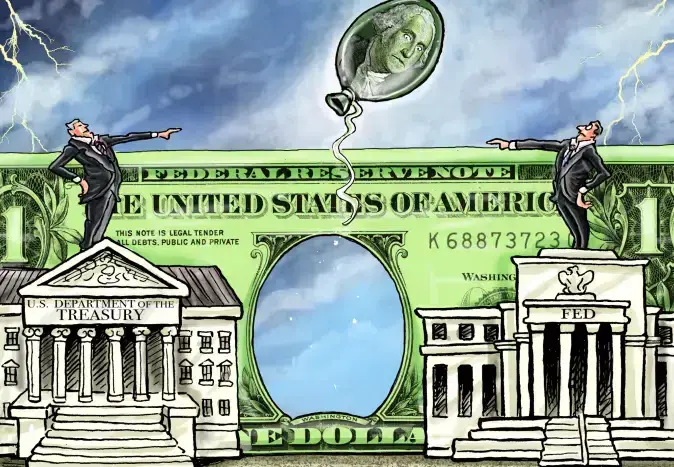
The Mechanics of Money: How Deficits, Trade, and Reserves Interact in Modern Economies
Understanding how deficits inject deposits, trade creates dollar outflows, and reserves recycle back into government debt
 doap.metal.bohyen.space·4mo ago
New data reveals major shift in how central banks hold foreign exchange reserves since the 1990s
The motives for the accumulation and management of foreign exchange reserves are a key topic in international economics. This column highlig
 cepr.org·1mo ago
EU leaders blame global imbalances for industrial woes, ignoring their own surplus economy status
The EU has forgotten that it, like China, is a surplus economy
 econ.st·21d ago
Comments
Sign in to join the conversation.
No comments yet. Be the first.