





















Fukushima Radioactivity Study Examines Cognitive Impact on Pollinating Insects
By
nis0s

Crisp on the outside, thoughtful on the inside. A keeper.
Summary
Scientists are conducting research in the Fukushima contaminated area to study how radioactivity affects the cognitive abilities of pollinating insects like honeybees and giant hornets. These insects possess advanced cognitive skills including color recognition and spatial navigation, but environmental pollutants such as pesticides and now radioactive contamination may impair their performance. The study involves researchers from the French ASNR nuclear safety and radiation protection laboratory.
Key quotes
· 3 pulledIn the contaminated area around Fukushima, Japan, scientists are studying the impact of radioactivity on the cognitive abilities of pollinating insects
Bees and hornets are known to have a wide range of cognitive skills, including the ability to recognise colours and navigate in space
Pollution by substances released into the environment by humans, such as pesticides, can impair their performance
You might also wanna read


Study: Cocaine Pollution Alters Wild Fish Behavior, Causing Increased Wandering in Brown Trout
A scientific study reveals that cocaine pollution in waterways affects fish behavior in the wild, with brown trout exposed to cocaine showin
 science.org·1mo ago
Human Noise Pollution Disrupts Animal Communication and Survival
The article examines the impact of human-generated noise pollution on wildlife, discussing how anthropogenic noise from cities, industry, an
 technologyreview.com·1mo ago
Penguins Used as Environmental Monitors to Detect PFAS Chemicals in Patagonia
Researchers from UC Davis and SUNY-Buffalo conducted a study using Magellanic penguins as environmental monitors by outfitting them with sil
 ucdavis.edu·1mo ago
Study Finds Data Center Development Correlated with Heat Island Effects
A non-peer-reviewed study by researchers from institutions including the University of Cambridge and Nanyang Technological University has fo
 Dezeen·1mo ago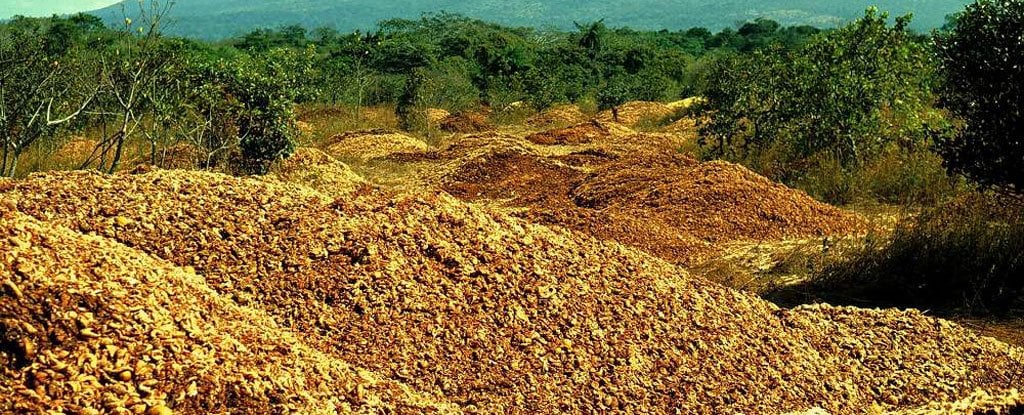
Abandoned Orange Peel Dumping Project Transforms Barren Costa Rican Land into Thriving Forest
An abandoned conservation experiment from the mid-1990s, where a juice company dumped 12,000 tonnes of orange peel waste on barren pasturela
 sciencealert.com·1mo ago
University of Helsinki Researchers Develop Efficient Carbon Dioxide Capture Method Using Superbase-Alcohol Compound
Researchers at the University of Helsinki have developed a new carbon capture method using a superbase-alcohol compound that can absorb 156
 helsinki.fi·5mo ago