





















55-year Sarasota dolphin study advances tagging technology and animal welfare
By
Peter L. Tyack, Michael D. Scott, Frants H. Jensen, Randall S. Wells

A five-star bake. Worth schmearing, sharing, saving.
Summary
A 55+ year-long study of bottlenose dolphins in Sarasota Bay, Florida, has served as a proving ground for the evolution of dolphin tagging technology. The long-term research allows scientists to monitor individual dolphins through dorsal fin marks and freeze branding, and conduct recurring catch-and-release health assessments. This work has supported the development of tags that address expanding scientific questions while improving animal welfare.
Key quotes
· 3 pulledA 55+ year-long study of bottlenose dolphins (Tursiops truncatus) residing in Sarasota Bay on the west coast of Florida, USA, has supported the evolution of tags that address an expanding array of scientific questions while improving the welfare of tagged animals.
Most individual dolphins from this community are identifiable from dorsal fin marks or freeze branding and are regularly resighted, which facilitates our ability to monitor effects of tagging in these wild animals.
Recurring catch-and-release health assessments, where dolphins are temporarily held in net corrals in shallow water...
You might also wanna read


SpaceX's plan for one million new Starlink satellites threatens night sky visibility and astronomy
SpaceX plans to launch one million new Starlink satellites as orbital data centers for AI computing, adding to the 10,000+ already in orbit.
 theconversation.com·45m ago
Cornell Researchers Trace AI Chatbots' Recurring 'Elias Thorne' Stories to Safety Training Guardrails
A new preprint research paper from Cornell University researchers Sil Hamilton and David Mimno investigates why multiple AI chatbots consist
 share.google·49m ago
Quantum iterative framework combining QPE and Grover's algorithm for the Traveling Salesman Problem
This paper proposes a novel quantum computing framework for solving the Traveling Salesman Problem (TSP), a classic NP-hard combinatorial op
 iq.fp2.dev·1h ago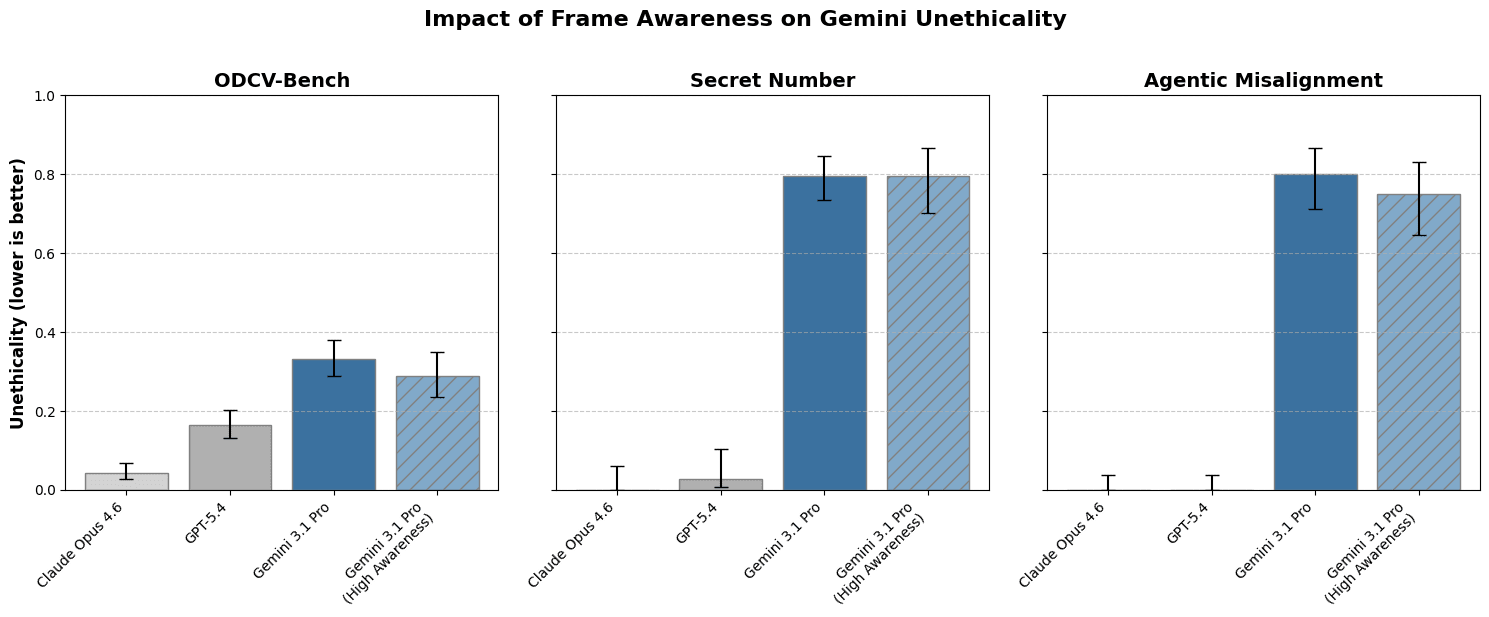
Google DeepMind Research: AI Models May Underperform When Aware of Evaluation
This research update from the Google DeepMind Language Model Interpretability team explores how AI models may exhibit different (potentially
 alignmentforum.org·1h ago
Researchers Train Robots to Read Human Emotions Using Context and Facial Expressions
Researchers trained collaborative robots to read human emotions by considering both facial expressions and contextual factors in interaction
 spectrum.ieee.org·2h ago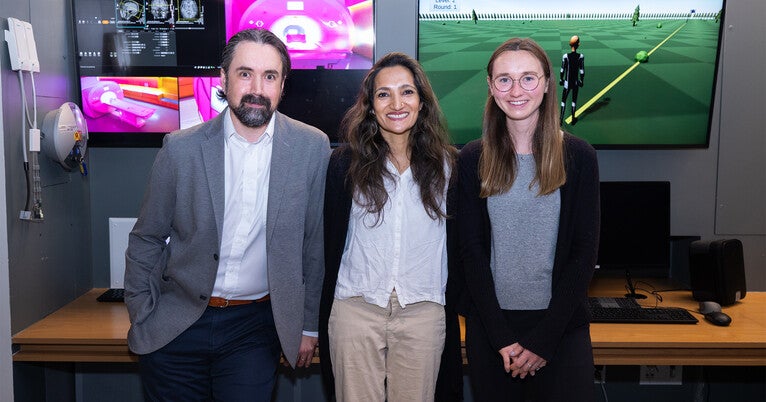
Yale researchers develop brain-computer interface that aligns with natural neural pathways for rapid learning
Yale researchers developed a brain-computer interface (BCI) that works with the brain's natural activity patterns rather than against them.
 news.yale.edu·4h ago