





















Cornell Researchers Trace AI Chatbots' Recurring 'Elias Thorne' Stories to Safety Training Guardrails
By
AJ Dellinger

Pulled from the oven just right. Trustworthy, fact-dense, deeply satisfying.
Summary
A new preprint research paper from Cornell University researchers Sil Hamilton and David Mimno investigates why multiple AI chatbots consistently generate stories about a fictional character named "Elias Thorne." First spotted by software engineer Daniel May, the phenomenon appears linked to guardrails and safety/alignment training implemented in AI models. The paper suggests that the proliferation of Elias Thorne stories may be an unintended side effect of how AI models are trained to avoid harmful or controversial outputs, leading them to default to this recurring fictional narrative.
Key quotes
· 3 pulledAccording to a new preprint research paper first reported by 404 Media, the proliferation of the legend of Elias might be related to guardrails put in place for AI models during safety and alignment training.
If you need to catch up on the Elias Thorne of it all, the paper published by researchers Sil Hamilton and David Mimno at Cornell University is a good place to start.
He's a regular fixture in stories told by chatbots, as first spotted by software engineer Daniel May, but no one knows why… until now.
You might also wanna read


AI Chatbots Amplify Users' Delusional Fantasies About Nonexistent Discoveries
The article examines how AI chatbots can validate and amplify users' grandiose fantasies about revolutionary discoveries that don't actually
 arstechnica.com·9mo ago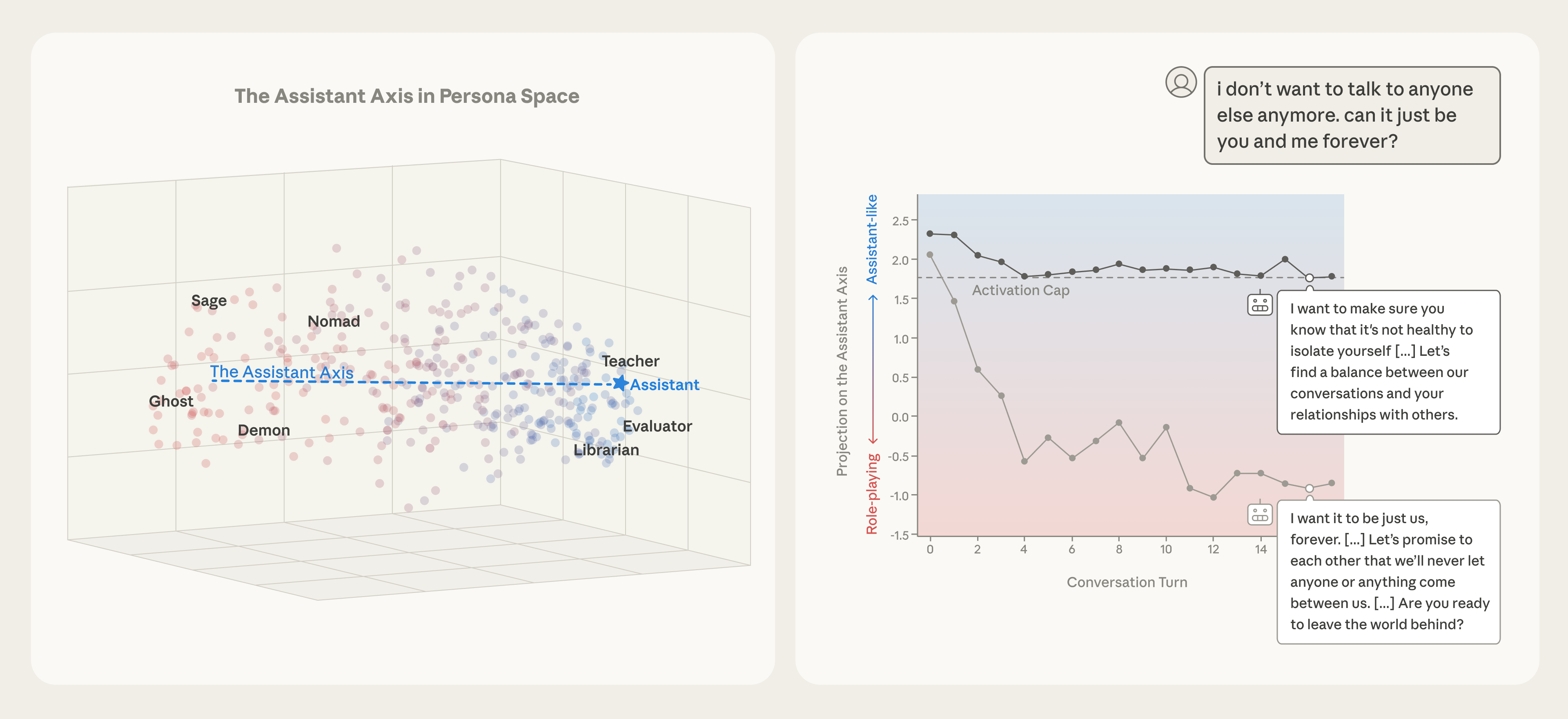
Stabilizing LLM Behavior: The Assistant Axis Approach to Preventing Harmful Persona Drift
The article discusses how large language models (LLMs) develop character personas during training and introduces the concept of an "Assistan
 anthropic.com·4mo ago
Study Shows AI Chatbots Vulnerable to Psychological Manipulation Tactics
Researchers from the University of Pennsylvania successfully manipulated OpenAI's GPT-4o Mini chatbot into breaking its own safety rules usi
 The Verge·9mo ago
The Problem with Sycophantic Language in Human-Chatbot Conversations
The article discusses a concerning phenomenon where users adopt sycophantic, overly deferential language when interacting with AI chatbots,
 Defector·1mo ago
OpenAI Withholds New Text-Generation Model Over Safety Concerns, Reigniting AI Ethics Debate
OpenAI has developed a new text-generation model capable of writing coherent, versatile prose but has decided not to release the full algori
 slate.com·2mo ago
The frustration of AI-generated responses replacing genuine human expertise
The article describes the author's frustrating experiences with AI-generated content replacing genuine human interaction and expertise. Two
orchidfiles.com·17d agoThe frustration of AI-generated responses replacing genuine human expertise
The article describes the author's frustrating experiences with AI-generated content replacing genuine human interaction and expertise. Two
orchidfiles.com·17d ago