





















LSTM-based deep learning method enables automated nest behaviour recognition from wild animal video recordings
By
Liliana R. Silva

An everything bagel for the brain. Substantive, layered, well-seasoned.
Summary
This article presents a novel LSTM-based deep learning approach for automated recognition of animal nest behaviours from video recordings in the wild. The research addresses the significant challenges of manual video annotation in animal behaviour studies, which are time-consuming, subjective, and error-prone. The proposed method uses Long Short-Term Memory (LSTM) networks to classify behavioural patterns from video data, offering a more efficient and objective alternative to traditional observation techniques. The study demonstrates the application of this automated approach for nest behaviour recognition, contributing to the field of computational ethology and wildlife monitoring.
Key quotes
· 3 pulledAnimal behaviour studies frequently rely on video for behavioural characterisation and quantification.
Video analysis requires expertise, annotators or commercial software, demanding significant resources, whereas manual coding is subjective, error-prone and tedious.
However, behaviour analysis through video is costly given the complexity and variable nature of behavioural data and the ever-growing size of longitudinal datasets.
You might also wanna read

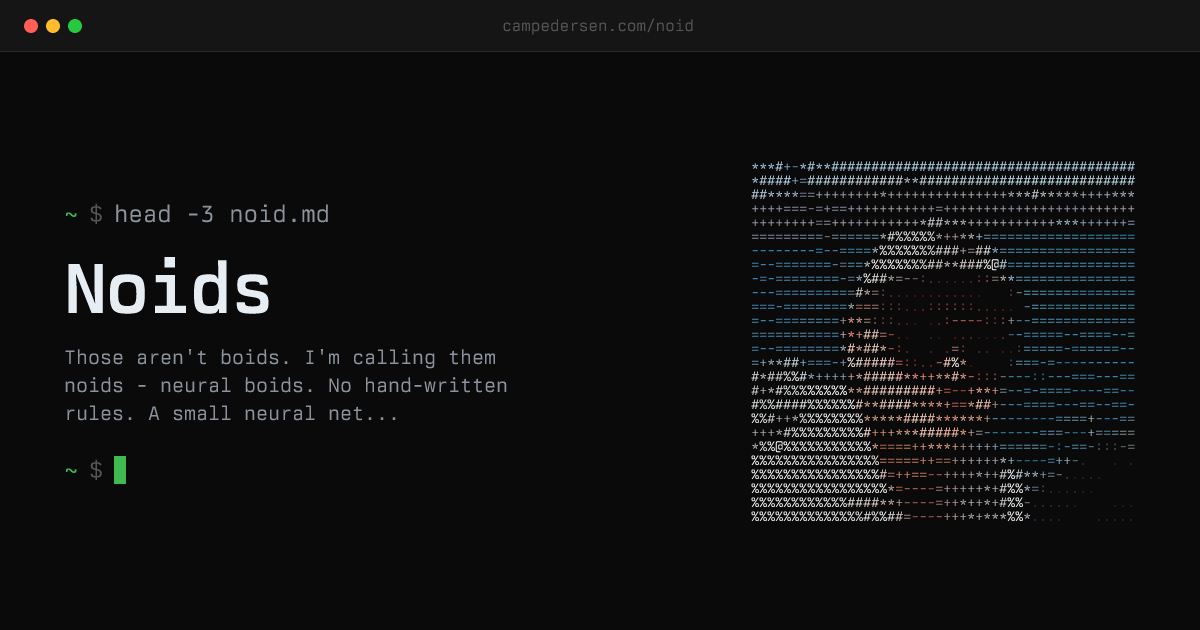
Neural Boids: Using Small Neural Networks to Simulate Natural Flocking Behavior
The article introduces 'noids' (neural boids), which are flocking agents controlled by small neural networks instead of hand-written rules.

Nested Learning: A New Machine Learning Paradigm for Continual Learning Inspired by Human Neuroplasticity
The article introduces "Nested Learning," a new machine learning paradigm for continual learning that addresses the challenge of models acqu
 research.google·6mo ago
AI Evolution in 2025: From Stochastic Parrots to Chain of Thought Reasoning
The article reflects on the evolution of AI understanding by the end of 2025, noting that the 'stochastic parrots' criticism of LLMs has lar
antirez.com·5mo ago
Study Reveals Convergent Evolution in How Language Models Learn Number Representations
This research paper investigates how different language models (Transformers, Linear RNNs, LSTMs, and classical word embeddings) learn to re
 arxiv.org·1mo ago
A Cognitive Science-Inspired Framework for Autonomous AI Learning
This article examines the limitations of current AI models in achieving autonomous learning and proposes a new learning architecture inspire
arxiv.org·2mo ago
Field Testing Satellite-Based Bramble Detection for Hedgehog Habitat Mapping
Researchers conducted field testing of a machine learning model designed to identify bramble habitats from satellite data, specifically for