
























How Fractal Geometry Shapes Architectural Design Through Nature's Patterns
By
Elif Ayse Sen
Summary
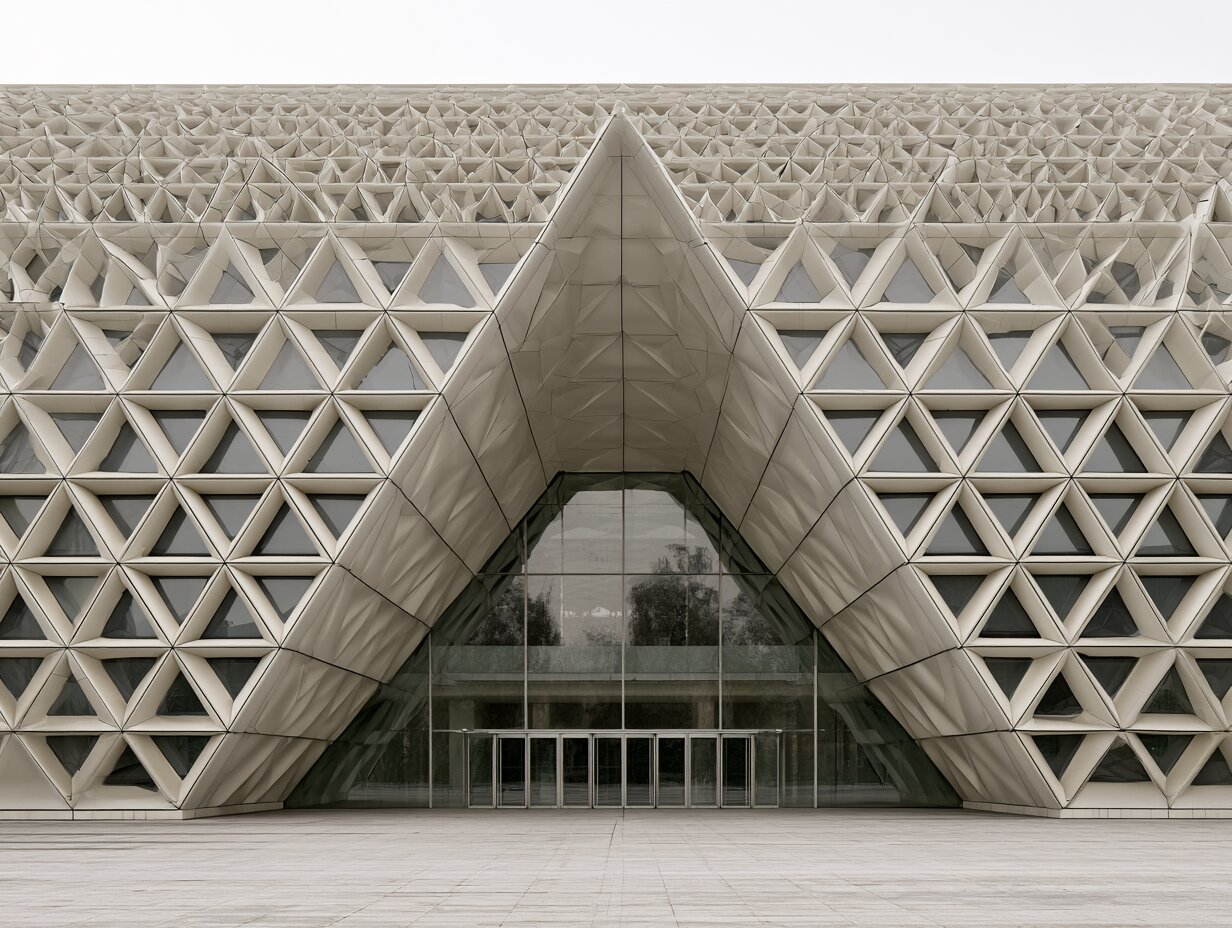
Fractal architecture uses self-similar geometric patterns that repeat at different scales, mirroring natural structures like ferns, trees, and coastlines. Architects apply fractal geometry to create buildings that feel complex yet ordered, connecting architectural design to the visual logic of the natural world. The article explores how this mathematical concept has influenced memorable buildings throughout history, from traditional designs to modern structures.
Source
 Twitter / XHow Fractal Geometry Shapes Architectural Design Through Nature's Patternsillustrarch.com
Key quotes
· 3 pulledFractals in architecture are self-similar geometric patterns that repeat at different scales, echoing the structures found in nature like ferns, trees, and coastlines.
Architects use fractal geometry to create forms that feel complex yet ordered, linking buildings to the visual logic of the natural world.
Look closely at a fern, a snowflake, or the branching of a river system and you see the same idea repeated: a small part resembles the whole.
You might also wanna read


Mathematicians Discover Geometric Principle Behind How Natural Materials Fragment Into Cube-Like Shapes
Mathematician Gábor Domokos and geophysicist Douglas Jerolmack discovered that natural gravel and rock fragments consistently break into sha
 quantamagazine.org·5mo ago
Understanding Abelian Sandpiles: Mathematical Patterns and Aesthetic Beauty
The article introduces abelian sandpiles, a mathematical concept that produces beautiful symmetric patterns on grids. It explains how sandpi

The Mathematics and Design History of Squircles: From iOS 7 to Geometric Principles
The article explores the history and mathematics of the 'squircle' shape, tracing its origins from Apple's iOS 7 redesign to its deeper math
 figma.com·5mo ago
Eight Innovative Pavilions Inspired by Nature's Organic Shapes
The article highlights eight innovative pavilions designed by architects, featuring organic shapes inspired by nature such as seashells and
 Dezeen·10mo ago
The Cyclical Nature of Design: From Minimalism to Ornamentation and Back Again
The article explores the cyclical nature of design trends across various fields, particularly focusing on architecture and art history. It e
 josem.co·5mo ago
10 architectural viewpoints where design competes with the landscape
A curated roundup of 10 architectural viewpoints around the world where the design of the lookout structure itself competes with the natural
Dezeen·5d ago
Comments
Sign in to join the conversation.
No comments yet. Be the first.