
























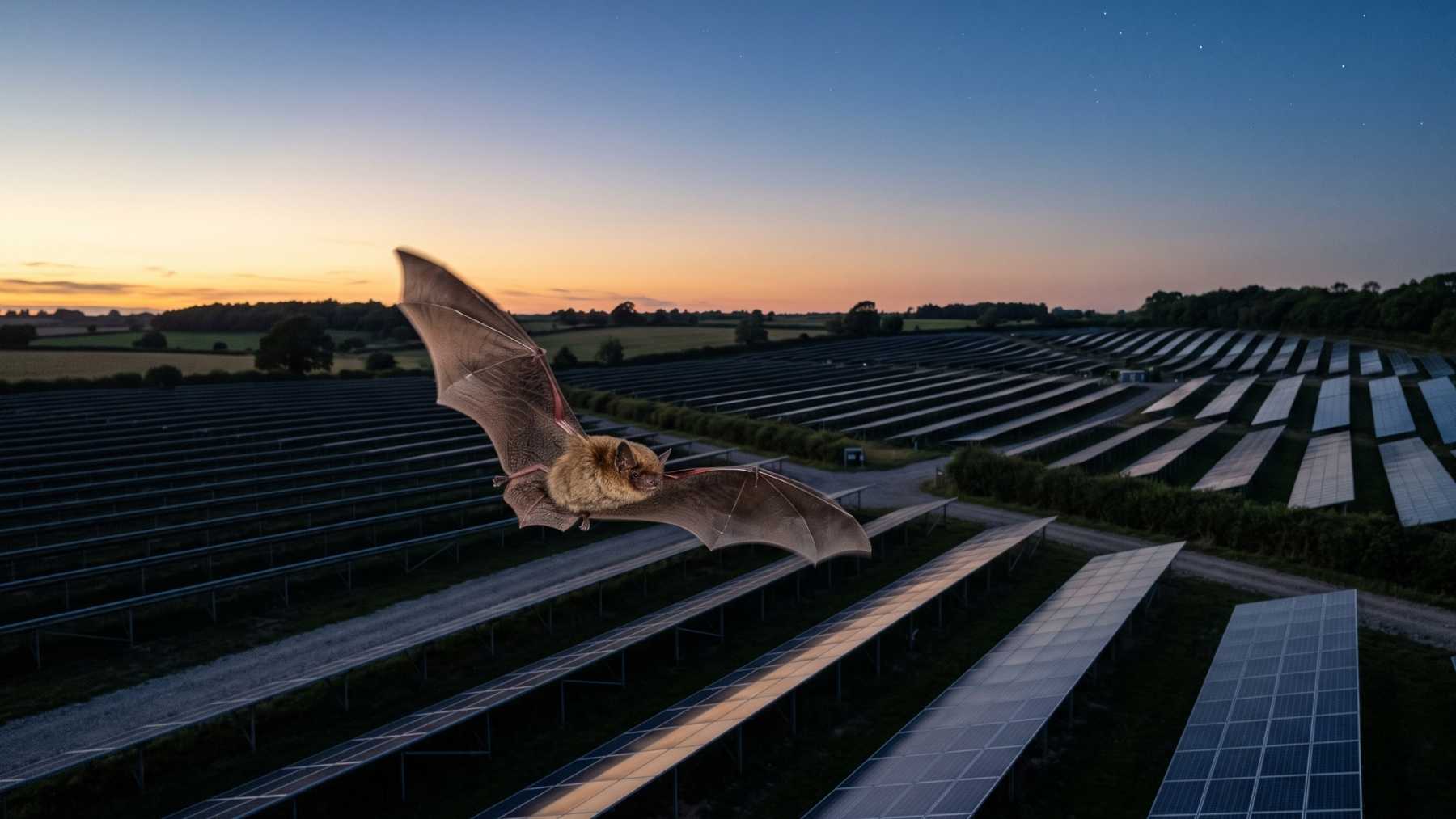
Bat activity plummets 86% at solar farms in England, study finds, while other wildlife thrives
By
@autonocion
5d ago· 6 min readenNews
Summary
A University of Bristol study of 19 solar farms in southwest England found that bat activity dropped by 86% in the middle of solar panel fields, suggesting bats actively avoid these areas even though solar farms don't physically harm them like wind turbines do. Meanwhile, other wildlife like foxes, bees, and birds are thriving on solar farms. The research highlights an unexpected ecological trade-off with solar energy infrastructure.
Source
 bskyBat activity plummets 86% at solar farms in England, study finds, while other wildlife thrivesautonocion.com
Key quotes
· 3 pulledThe bats weren't being killed. They were just leaving, and by a lot.
Wind turbines have a body count. The spinning blades kill bats in real numbers... So solar always looked like the gentle renewable for wildlife. No moving parts, nothing to fly into, just panels sitting quietly in a field.
Then a team at the University of Bristol drove out to 19 solar farms in southwest England, pointed bat detectors at them, and found the fields had gone quiet in a way nobody expected.
Wind turbines have a body count. The spinning blades kill bats in real numbers, and one often-cited estimate put the toll at U.S. wind facilities at around
You might also wanna read
Sheep, Solar Power and Science — A Model Agrivoltaic Project Emerges in Września
e-greenify.com·1d ago


Wildlife thrives with bird and bat boxes at upgraded schools
Reading Chronicle·2d ago
Floating Solar Farm in the Netherlands Becomes an Unexpected Nursery for Aquatic Life
microgridmedia.com·7d ago

Study Finds Solar Panels Create Rainfall Clouds and Oases in Desert Environments
A recent study reveals that solar panels in desert environments are creating unexpected ecological benefits beyond clean energy production.
 ecoportal.net·2mo ago
Comments
Sign in to join the conversation.
No comments yet. Be the first.