
























FOCUS: Challenges Remain for Japan's Maglev Shinkansen Project
By
[email protected] (Web Info)
5h agoit
Source
AdnkronosFOCUS: Challenges Remain for Japan's Maglev Shinkansen Projectadnkronos.com(Adnkronos) - Nagoya, July 8 (Jiji Press)--A closely watched high-speed magnetic levitation train line project in Japan still faces many challenges, including huge construction costs seen totaling 11 trillion yen, although it has cleared a major hurdle with much-awaited consent from a prefectural governor. On Tuesday, Shizuoka Governor Yasutomo Suzuki gave his nod to the start of construction of the Chuo Shinkansen line's section in the central Japan prefecture, breaking the nine-year deadlock that began with opposition to the project expressed by his predecessor, Heita Kawakatsu, in October 2017 due to environmental concerns, such as a possible drop in the amount of water in the Oi River, which runs through the prefecture. The Shizuoka section is the most challenging part for the construction of the line linking Tokyo's Shinagawa Station and Nagoya Station in Aichi Prefecture, west of Shizuoka. After the maglev line of Central Japan Railway Co., or JR Tokai, begins operations, the fastest train is expected to connect Shinagawa and Nagoya in only 40 minutes, far shorter than 86 minutes needed for travel between the two stations on a Nozomi train on the existing Tokaido Shinkansen bullet train line. A private-sector estimate showed in 2013 that the economic effect from the new train line would total at least 10.7 trillion yen over 50 years, assuming the launch of the Shinagawa-Nagoya service in 2025. Many local communities along the envisaged train line are hoping that it will widen commuter areas, increase tourism demand and promote life with multiple bases. "A dual life would become more realistic," an official of the government of Gifu Prefecture, located just north of Aichi, said, adding that the new train line will "make it easier for people to visit tourist spots in our prefecture." One of the stations for the Chuo Shinkansen line is slated to be built in the prefecture. Amid such expectations, JR Tokai aims to launch services early. "We will actively make preparations to start construction (of the Shizuoka section) as soon as possible," JR Tokai President Shunsuke Niwa said Tuesday following the Shizuoka governor's consent. Japanese transport minister Yasushi Kaneko expressed his determination the same day, saying, "We will work steadily in cooperation with relevant local governments and JR Tokai to open the line at the earliest possible time." Challenges lie ahead, however. Construction of the Shizuoka section was originally slated to start in 2017, with the work estimated to take around 10 years. After the nine-year stalemate, JR Tokai now expects the train line's opening to be in 2036 at the earliest even if construction kick off by the end of this year. The business environment has also changed drastically in the nine years. The construction industry is experiencing serious labor shortages, and prices and wages, which had remained relatively unchanged amid deflation, have begun to rise. The estimate on total construction costs, initially put at 5.5 trillion yen, was revised to 7 trillion yen in 2021 and to 11 trillion yen in October last year, also due to the challenging construction conditions. Noting that the new cost estimate is "quite conservative," a JR Tokai official said that the eye-watering costs can be covered with profits from the lucrative Tokaido Shinkansen line operations and bond issuance revenue. But with interest rates continuing to rise, higher borrowing costs will likely weigh on the company's finances. The maglev line will link Shinagawa and Nagoya via Kanagawa, Yamanashi, Shizuoka, Nagano and Gifu prefectures. Niwa said, "Based on the construction of the Yamanashi and Nagano sections, the Oi River's water resources and environmental conservation of the Southern Japanese Alps area, I think that the construction (of the Shizuoka section) may be more difficult than initially expected." Concerns over further increas
You might also wanna read

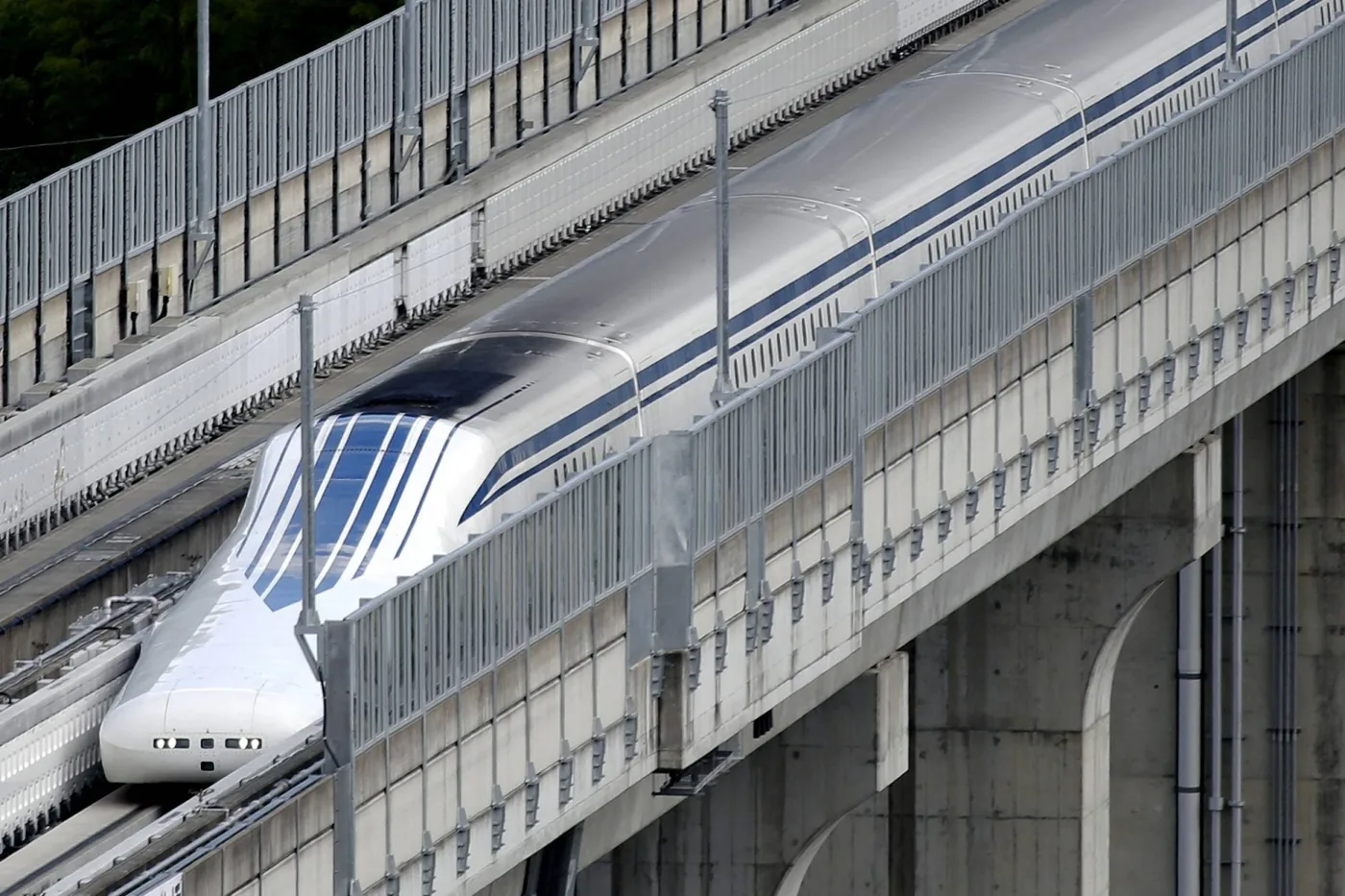
Long-stalled maglev line finally gets green light from Shizuoka Prefecture
ebx.sh·18h ago
The Shinkansen
worksinprogress.news·2mo ago
Giappone, passo decisivo verso costruzione supertreno maglev
askanews.it·20h ago
社説:クアッド首脳会合の早期再開を求める
日本の新聞社説。日米豪印の協力枠組み「Quad(クアッド)」の外相会合がインドで開催され、中国の覇権主義的な行動を念頭に経済安全保障面での連携強化を確認した。しかし、トランプ米大統領の再任以降、毎年開催されてきた首脳会合が途絶えており、早期再開の必要性を訴えている。東シナ海・南シ
nikkei.com·1mo ago
キオクシア時価総額44兆円、トヨタ超え一時国内首位 稼ぐ力急拡大
nikkei.com·26d ago

【6月8日締切】Central Japan発スタートアップの海外挑戦を支援~ジェトロ名古屋が製造業アクセラを開催~
nagoyastartupnews.jp·1mo ago
Comments
Sign in to join the conversation.
No comments yet. Be the first.