
























Scientists Continue Analyzing Ridgecrest Earthquake Data Five Years On
Summary
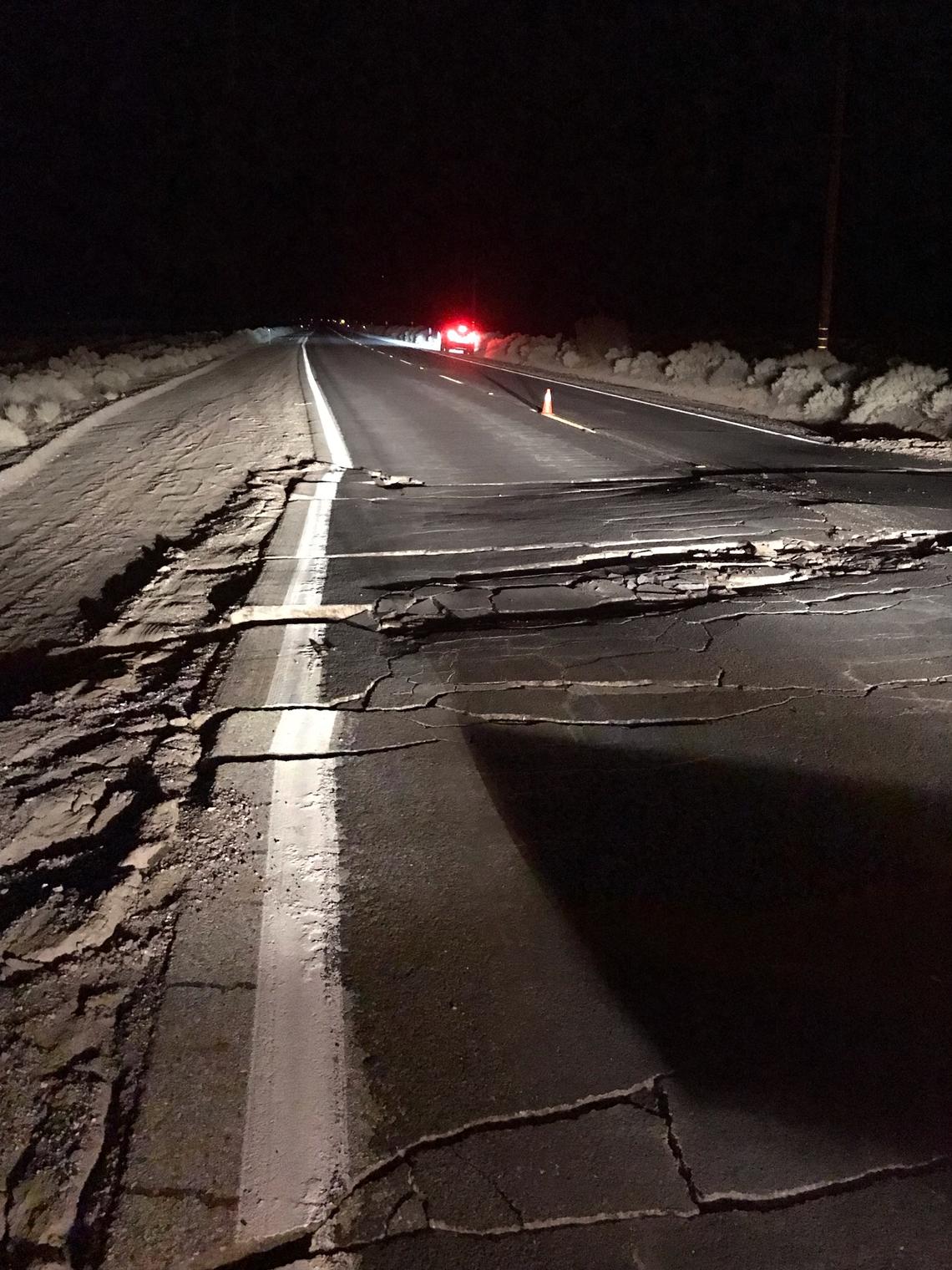
This article discusses the ongoing scientific analysis of the 2019 Ridgecrest earthquake sequence in Southern California. Scientists continue to study the rich dataset collected from seismic networks, geodetic networks, satellites, and other technologies to better understand earthquake science — particularly what controls aftershock timing and location, and how ground shaking behaves near large earthquakes. The piece highlights how conventional seismic networks have grown in sophistication and are now complemented by additional technologies that record shaking in far greater detail than before.
Source
 bskyScientists Continue Analyzing Ridgecrest Earthquake Data Five Years Onusgs.gov
Key quotes
· 3 pulledScientists continue to analyze the rich data set to address key questions in earthquake science, including what factors control the timing and location of aftershocks, and how the ground shakes close to large earthquakes.
Investigations of the Ridgecrest Sequence have exploited data from seismic networks, geodetic networks, satellites and more.
Complementing conventional seismic networks that have grown in sophistication, the scientific community also embraces additional technologies that allow earthquake shaking to be recorded in far greater detail than previously possible.
You might also wanna read

Earthquake Monitoring Techniques Reveal How Tilling Reduces Soil Water Retention
University of Washington researchers conducted an innovative study using earthquake monitoring techniques to examine how tilling affects soi
 washington.edu·3mo ago
ScS-triggered slip on megathrust interfaces after the 2011 MW 9.0 Tohoku-Oki earthquake
 scim.ag·10d ago
New high-resolution geophysics in the Outer California Borderland

A NASA satellite caught a giant tsunami doing something no one expected
SWOT Satellite Captures High-Resolution Images of Pacific Tsunami, Revealing Complex Wave Patterns
NASA and French space agency's SWOT satellite captured unprecedented high-resolution images of a Pacific-wide tsunami generated by a magnitu
 earth.com·7mo ago
Vera C. Rubin Observatory Begins 10-Year Legacy Survey of Space and Time
The NSF–DOE Vera C. Rubin Observatory in Chile has officially begun its 10-year Legacy Survey of Space and Time (LSST), a revolutionary astr
 energy.gov·5d ago
Comments
Sign in to join the conversation.
No comments yet. Be the first.