
























Five Big Takeaways From IESA's H1 India Storage Report
By
Prasanna Singh
4h agoen
Source
 Saur EnergyFive Big Takeaways From IESA's H1 India Storage Reportsaurenergy.com
India's battery energy storage story has moved from promise to proof. The India Energy Storage Alliance's (IESA) India BESS Market Review for H1 2026, released as a special IESW edition with data updated to June 30, documents a market that added more capacity in six months than it had built cumulatively in its entire history. Behind the headline numbers, however, sit five takeaways that deserve closer attention from developers, financiers and policymakers alike 1. An 11x jump in installed capacity — powered by merchant BESS India's installed BESS capacity leapt from just 0.78 GWh in December 2025 to 8.7 GWh by June 2026, an eleven-fold expansion, with 7.9 GWh commissioned in H1 alone. The striking detail is the composition: roughly 70% of the growth, about 6 GWh, came from merchant BESS installations built outside the familiar tender route. ACME's 3,200 MWh Rajasthan project (with Envision as supplier), Adani's 3,400 MWh Gujarat facility and Juniper's 500 MWh Hithium-backed plant anchor this new merchant class. Eighteen projects are now operational, and IESA expects installed capacity to reach 12–15 GWh by December 2026. The message is unambiguous — developers are willing to take market risk on storage, a maturity signal few predicted this early. 2. The demand signal: 888 GWh by 2035-36 The Central Electricity Authority projects India will need 888 GWh of energy storage by 2035-36 — a staggering leap from the roughly 1 GWh-scale operating base at the start of 2026. The projected mix assigns 567 GWh to pumped storage and 321 GWh to BESS, with annual ESS additions climbing from about 50 GWh in 2027 to nearly 140 GWh by 2036. Even allowing for the usual optimism in long-range projections, the directional signal to manufacturers and investors is enormous: the addressable market is measured in hundreds of gigawatt-hours, not tens. 3. A 260 GWh pipeline — but cancellations are the leak in the bucket The tendering engine kept running through H1 2026, with 47 GWh of ESS tenders floated — NTPC Group alone accounting for 22 GWh — at an average tender size of 1.5 GWh and four-hour duration. Cumulatively, 281 GWh of ESS capacity has been tendered since 2018, and the total live pipeline stands at around 260 GWh. But the tracker also reveals the leak: 53 GWh of tenders, about 20% of everything floated, has been cancelled, and a sizable block of awarded capacity is stuck with power sale agreements unsigned or tariffs unadopted — predominantly FDRE projects. With 40% of tendered capacity still in process and only 3% operational, execution, not ambition, is the sector's binding constraint. 4. The tariff paradox: record-low bids meet rising cell costs Standalone BESS tariffs collapsed over two years — from INR 10.83–11.25 lakh/MW/month in 2022 to a low of INR 1.48 lakh/MW/month in APTRANSCO's late-2025 round — on the assumption that cell prices would keep falling. That assumption has broken. With battery prices now rising, IESA pointedly asks how many of these aggressively bid projects will survive, and the newest awards already reflect the correction: CESC and PSPCL rounds in early 2026 discovered tariffs of INR 3.26–3.44 lakh/MW/month, roughly double the 2025 floor. Solar-plus-BESS tells a similar story, with L1 bids drifting from the RUMSL low of INR 2.70/kWh back above INR 3.10/kWh. Bid discipline, and the viability of the 2025 vintage, will be the theme to watch in H2. 5. Manufacturing moves from announcement to build-out Domestic manufacturing is finally scaling to meet the moment. Operational Li-ion cell capacity remains modest at 2–4 GWh, but announced cell capacity reaches roughly 110 GWh by 2030, while cell/pack-to-container assembly capacity is projected at 180–220 GWh by decade's end, up from 60–70 GWh announced today. Policy is reinforcing supply: the INR 18,100 crore ACC PLI, an INR 1,500 crore critical-mineral recycling incentive, customs duty exemptions under the Critical Minerals Mission, and a planned battery-recycling PLI. Layer on the CERC's new BESS tariff framework, CEA's finalised safety regulations, SECI's designation as the primary REIA for BESS tenders, and state policies from Rajasthan to Bihar, and the enabling architecture looks more complete than at any point in the sector's history. The bottom line H1 2026 was the half in which Indian storage stopped being a policy aspiration and became an operating asset class. The 10 GWh installed-capacity mark should fall well before December. The open question is whether tariffs bid in a falling-cost world can be financed in a rising-cost one — and whether the awarded-but-unsigned backlog clears before it curdles into the sector's next credibility test. Source: IESA India BESS Market Review H1 2026 (Special IESW Edition), data updated to 30 June 2026. The full report is available here .
You might also wanna read
A New Benchmark Will Reveal the Revenue Potential of Energy Storage Systems in Poland
e-greenify.com·1d ago

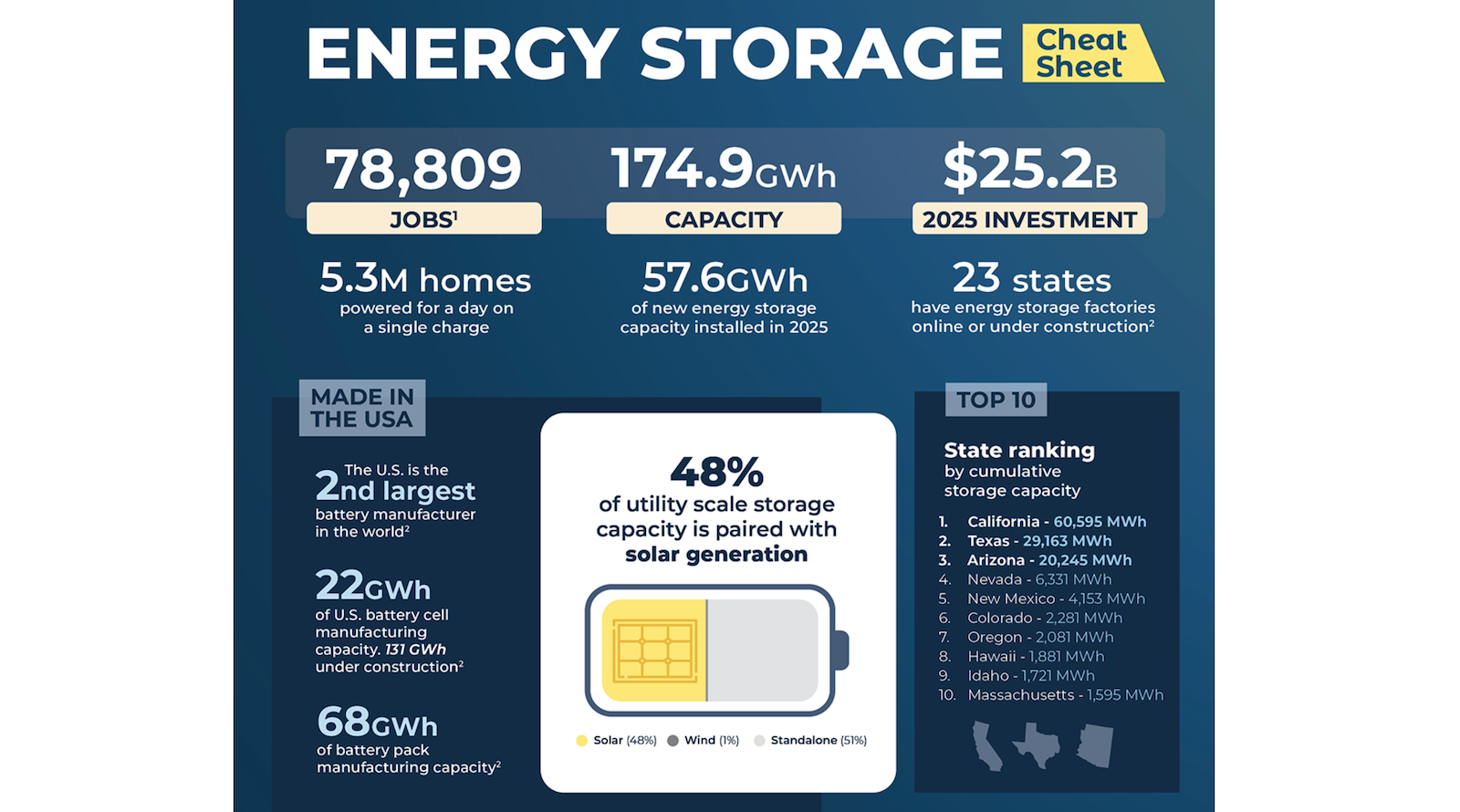
U.S. Energy Storage Installations Hit Record 9.7 GWh in Q1 2026, Driven by Energy Security Concerns
The U.S. energy storage industry installed 9.7 GWh of new capacity in Q1 2026, marking the strongest first quarter on record with a 32% year
 cleantechnica.com·1mo ago
SECI Issues Tender for 4,800 MWh Assured Peak Power Supply from Renewable Energy with Storage
SECI has issued a tender for 4,800 MWh (1,200 MW × 4 hours) of assured peak power supply from ISTS-connected renewable energy projects with
/saur-energy/media/agency_attachments/2025/06/20/2025-06-20t080313673z-favicon-prasanna-singh-1-2025-06-20-13-33-13.png) saurenergy.com·1mo ago
saurenergy.com·1mo ago
european-battery-market-outlook-2026-2030-1 - SolarPower Europe
 solarpowereurope.org·14d ago
SECI launches 4,800MWh FDRE tender requiring co-located energy storage in India
SECI (Solar Energy Corporation of India) has launched a tender for 4,800MWh of firm and dispatchable renewable energy (FDRE) capacity, backe
 pv-tech.org·22d ago
Tenfold growth of the industrial energy‑storage market in India
e-greenify.com·2d ago
Comments
Sign in to join the conversation.
No comments yet. Be the first.