
























Exploring the Limits of Rich Sutton's 'Bitter Lesson' in AI Development
Recently, “the bitter lesson” is having a moment. Coined in an essay by Rich Sutton, the bitter lesson is that, “general methods that leverage computation are ultimately the most effective, and by a…
Read the full articleYou might also wanna read
The Bitter Lesson: Why Computation Beats Human Knowledge in AI Research
In computer chess, the methods that defeated the world champion, Kasparov, in 1997, were based on massive, deep search. At the time, this wa

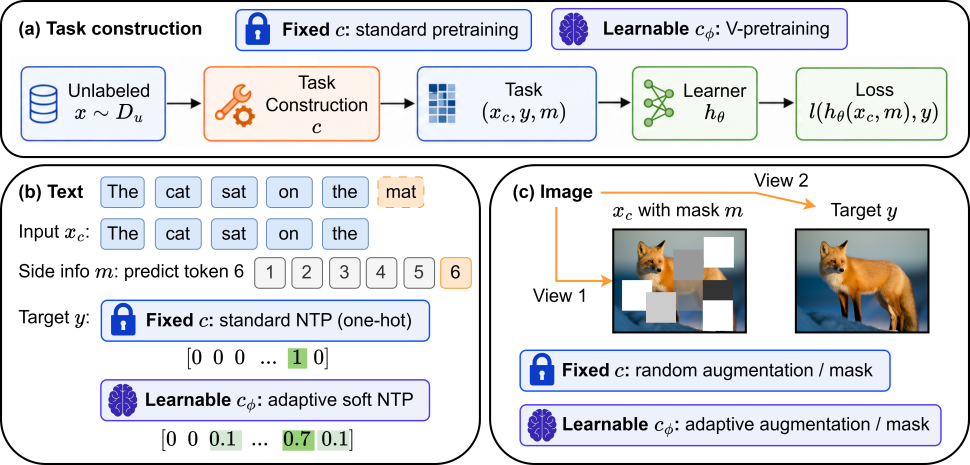
V-Pretraining: Using Adaptive Task Construction to Improve Continued Pretraining in Machine Learning
Task construction as the control surface in continued pretraining. A construction rule (c) maps each unlabeled example (xsimmathcal D_u) int
 blog.ml.cmu.edu·6d ago
AI development pivots to simulated worlds as chatbot limitations become apparent
In pursuit of human-level intelligence, researchers are developing agents that learn by acting in virtual environments rather than simply ab
 science.org·21d ago
Richard Sutton Describes the "One-Step Trap" in AI
Reinforcement learning pioneer Richard Sutton explains why iteratively applying one-step prediction models is unsuitable for long-term plann

How AI's instant answers may undermine the process of genuine learning
When AI hands us an answer, we risk bypassing the process through which learning happens.
 tcnv.link·1mo ago
Mindfulness for Machines: Aligning AI with Ethical Principles
A new framework harnesses contemplative traditions to enhance large language models' ethical alignment. Is this the future of AI ethics?
Comments
Sign in to join the conversation.
No comments yet. Be the first.