
























Meta repurposes DDR4 memory with custom ASIC to bypass DDR5 shortages
By
Jon Martindale
Summary
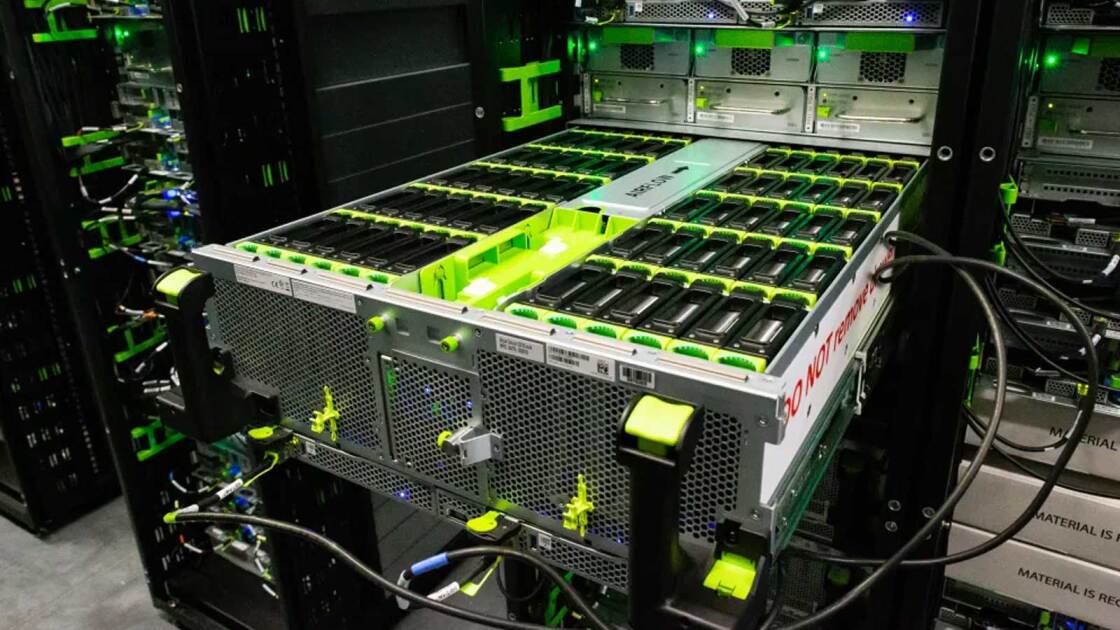
Meta revealed at the International Symposium on Computer Architecture (ISCA) that it is repurposing old DDR4 memory from retiring servers to fill supply chain gaps caused by DDR5 memory shortages. The company developed a custom ASIC chip to make DDR4 memory compatible with DDR5-only systems. Each new "MemServer" design uses an AMD CPU with a terabyte of combined memory, showcasing how even major tech companies with large budgets are finding creative workarounds to memory supply constraints.
Source
 bskyMeta repurposes DDR4 memory with custom ASIC to bypass DDR5 shortagespcmag.com
Key quotes
· 3 pulledMeta is re-using its old DDR4 memory to fill gaps in its supply chain, and has a custom ASIC chip to make it work in DDR5-only systems
Even companies with near-unlimited budgets are struggling to get all the memory they need, and they're finding creative workarounds
With an AMD CPU and a terabyte of combined memory, each of the new 'MemServer' designs...
You might also wanna read


Even Meta Is Using DDR4 to Get Around DDR5 Memory Shortages

Meta's solution to the global memory shortage is to use DDR4 in a DDR5 server, with a custom chip making the impossible possible
Memory shortage drives buyers to legacy DDR2 and DDR3 as AI demand reshapes chip production priorities
The global memory crisis is driving buyers to turn to older, legacy RAM products like DDR2 and DDR3 as chipmakers prioritize production of m
 theregister.com·11d ago
Memory shortage drives buyers to legacy DDR2 and DDR3 as AI demand reshapes chip production priorities
The global memory crisis is driving buyers to turn to older, legacy RAM products like DDR2 and DDR3 as chipmakers prioritize production of m
theregister.com·11d ago
AI Demand Drives Server DRAM Shortages: Prices Up 50%, Order Fulfillment at 70%
Server DRAM prices have surged up to 50% in Q4 as AI-driven demand creates severe memory shortages, with major U.S. and Chinese hyperscalers
 tomshardware.com·8mo ago
Memory Manufacturers Shift Focus from Smartphones to Hyperscalers, Threatening 2026 Device Markets
The article analyzes a global memory shortage crisis driven by a fundamental shift in semiconductor manufacturing priorities. Rather than a
 idc.com·6mo ago
Research Proposal: Specialized Memory Architectures with Long-Term and Short-Term RAM Classes
This research paper proposes a paradigm shift in memory architecture due to the scaling limitations of SRAM and DRAM. The authors argue for
 arxiv.org·10mo ago
Comments
Sign in to join the conversation.
No comments yet. Be the first.