
























The AI Paradox: U.S. Leads in Development but Lags in Adoption, Stanford Index Shows
By
Oren Etzioni
Summary
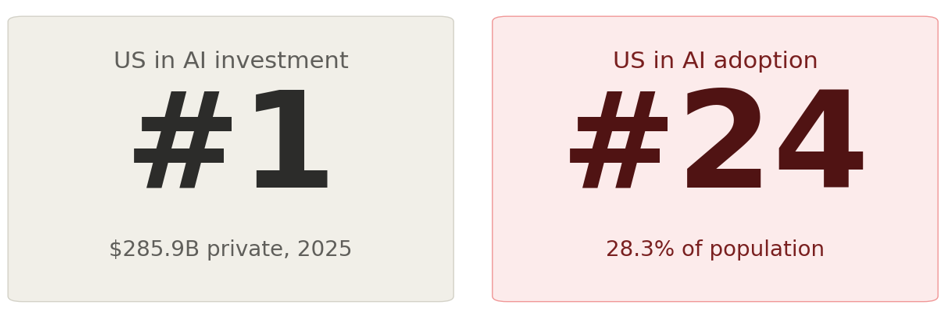
Oren Etzioni analyzes the Stanford 2026 AI Index, highlighting a central paradox: while the United States leads the world in AI investment, model development, and research, it ranks only 24th in population-level AI adoption — behind countries like the UAE, Singapore, Norway, Ireland, and France. The piece explores what the AI Index is (a 400-page annual data-driven checkup on AI across technical performance, investment, labor, environment, regulation, and geopolitics), and examines the implications of the gap between AI creation and AI usage in America.
Source
 bskyThe AI Paradox: U.S. Leads in Development but Lags in Adoption, Stanford Index Showsgeekwire.com
Key quotes
· 3 pulledOne finding stopped me cold: the country that leads AI development is not the country that leads AI adoption.
The AI Index is the most rigorous data-driven portrait of where AI stands: a yearly checkup across technical performance, investment, the labor market, the environment, public attitudes, regulation, the US-China race, and more.
Four hundred pages, twelve headline takeaways, and a measurement apparatus no other institution has
You might also wanna read


Stanford's 2026 AI Index Report: Accelerating Capabilities Amid Growing Public Concerns
The article discusses the 2026 Stanford AI Index report findings, highlighting that while AI capabilities continue to accelerate and major c
 spectrum.ieee.org·2mo ago
US Leads AI Race in Commercialization and Infrastructure
The US is leading the global AI race primarily in commercialization, revenue, adoption, tools, and reach. Since DeepSeek R1's market shock i

The 2026 Economic Paradox: AI Investment Surges While Software Jobs Grow
The article discusses the paradoxical state of the 2026 economy where despite narratives of AI-driven job displacement, software engineering
 Citadel Securities·1mo ago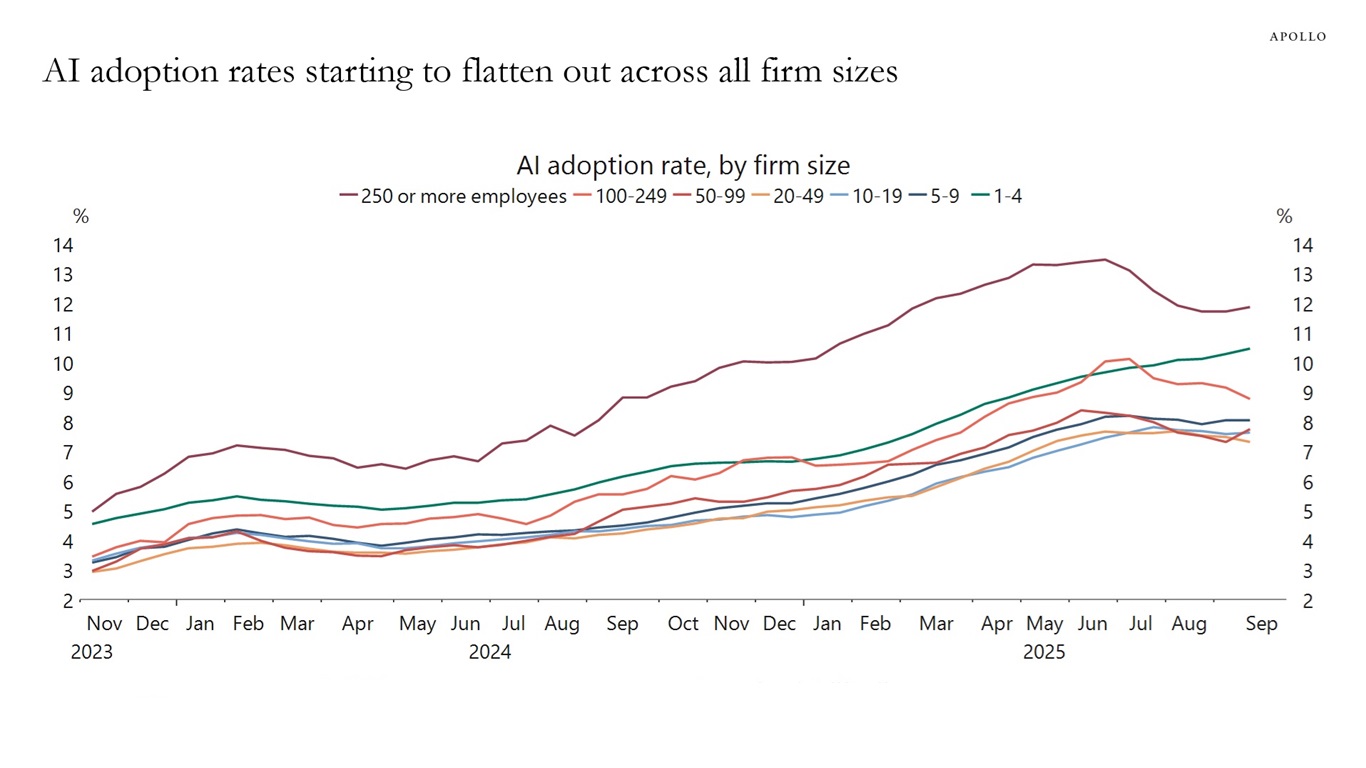
AI Adoption Rates Show Signs of Plateauing Across Business Sectors
Recent data from the Census Bureau and Ramp indicates that AI adoption rates are beginning to flatten out across all firm sizes, suggesting
 apolloacademy.com·7mo ago
Growing Public Backlash Against AI Industry Highlighted by Stanford Report and Social Media Reactions
The article discusses the growing public backlash against the AI industry, highlighting two incidents of politically motivated violence and
 newrepublic.com·2mo ago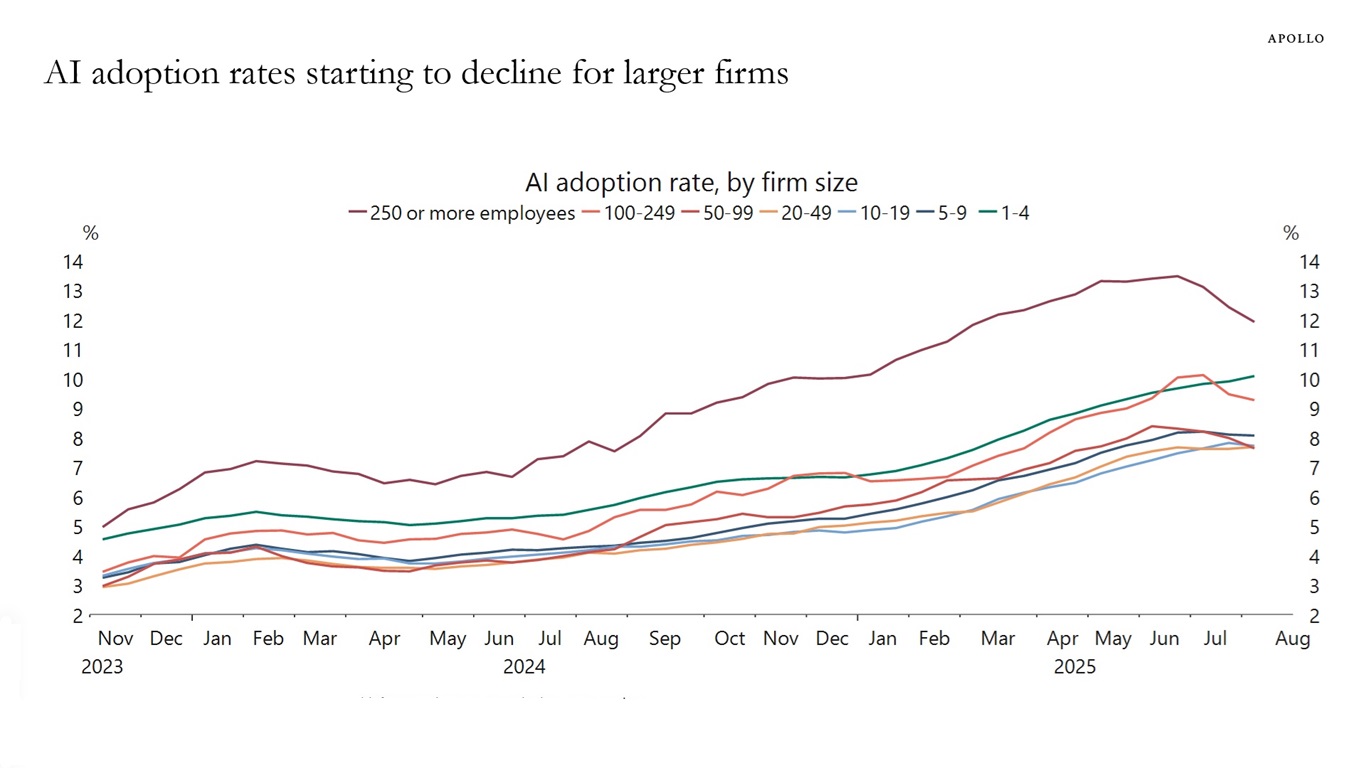
US Census Data Shows AI Adoption Declining Among Large Enterprises
The US Census Bureau's biweekly survey of 1.2 million firms reveals that AI adoption rates among large companies are trending downward. The
apolloacademy.com·9mo ago
Comments
Sign in to join the conversation.
No comments yet. Be the first.