
























Enhancing SHA256 Calculation Efficiency on FPGA Through Parallel Processing
A few weeks ago, I wrote an article where I developed a hash calculator on an FPGA. Specifically, I implemented an SHA-256 calculator. This module computes the hash of a string (up to 25 bytes) in 68…
Read the full articleYou might also wanna read

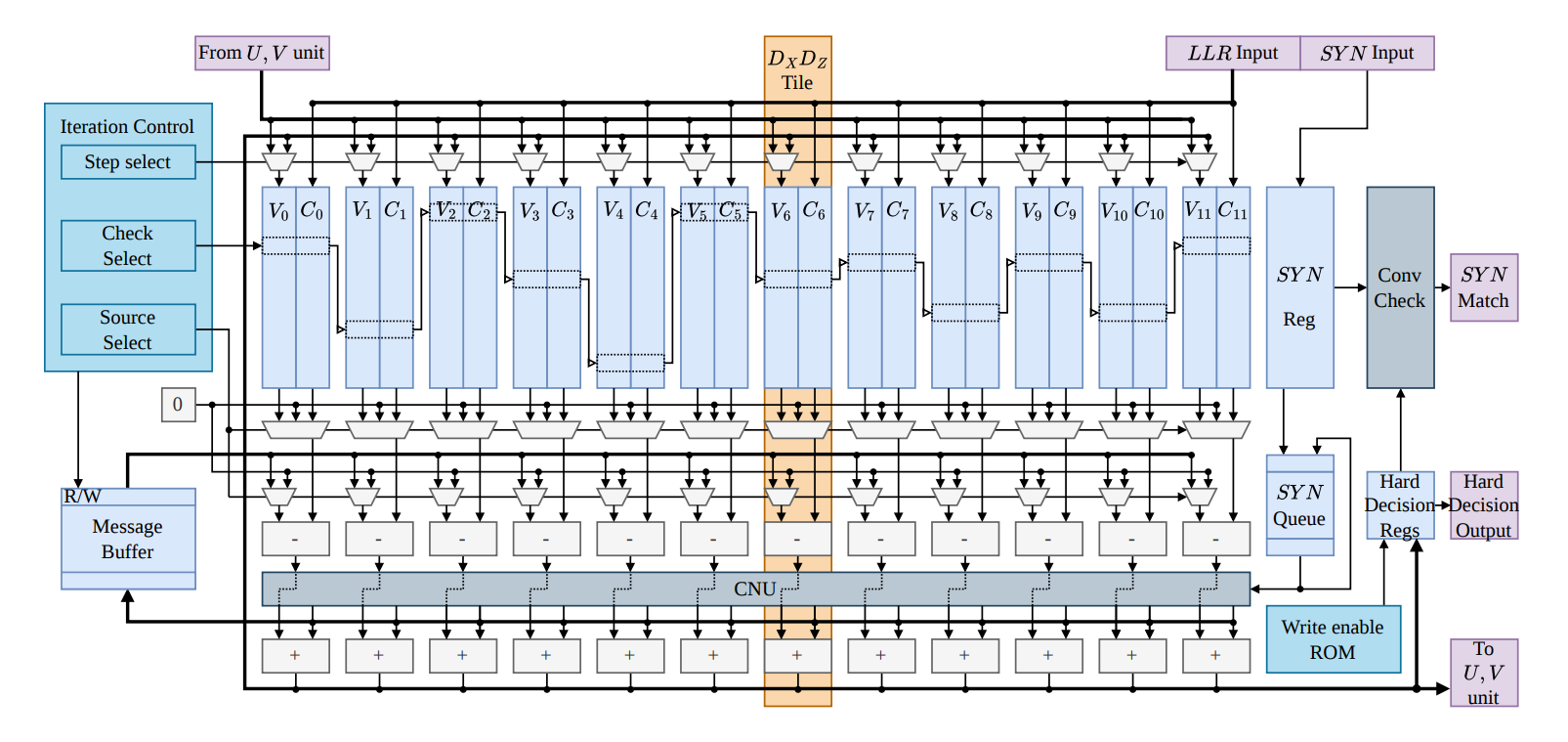
FPGA-Based Hardware Architecture Enables Real-Time Decoding of Quantum LDPC Codes
The architecture for the DX, DZ decoder. Memory elements shown in blue (light for RAM, dark for ROM). I/O in purple. Sub-modules in gray. Re
 quantumcomputingreport.com·22d ago
Really low latency multipliers and cryptographic puzzles
At Jane Street, we have some experience using FPGAs for low-latency systems–FPGAs are programmable hardware where you get the speed of an ap
Advent of FPGA — A Jane Street Challenge
Update: We got over 200 submissions to this challenge, spanning a wide variety of HDL languages and hardware platforms! We featured our favo
Accelerating zk-SNARKs - MSM and NTT algorithms on FPGAs with Hardcaml
In 2022 a consortium of companies ran an international competition, called the ZPrize , to advance the state of the art in “zero-knowledge”

Implementing Provably Fair SHA-256 Commit-Reveal RNG: A 12-Step Technical Guide for 2026 Regulatory Compliance
Wire up provably-fair RNG with SHA-256 commit-reveal in 12 steps. Node.js + Python code, Redis storage, MGA/UKGC audit trail, 5 pitfalls, 8
 tech-insider.org·22d ago
Achieving 232x Speedup on GPU QR Factorization: A Contest Retrospective
Table of Contents Intro Contest in short Problem intro Why this problem is auto-research-able Learning Enough to Ask Better Questions (Optio
 sankalp.bearblog.dev·8d ago
Comments
Sign in to join the conversation.
No comments yet. Be the first.