
























Why Einstein's E = mc² is only half the story: The role of motion in energy
By
Ethan Siegel
Summary
The article explores the deeper physics behind Einstein's famous equation E = mc², explaining that it only describes the energy of a particle at rest. It argues that the full picture of energy must account for motion, momentum, and kinetic energy, making the complete equation more complex. The piece delves into the historical context, derivation, and implications of Einstein's work, showing how mass-energy equivalence is just one piece of a larger relativistic framework.
Source
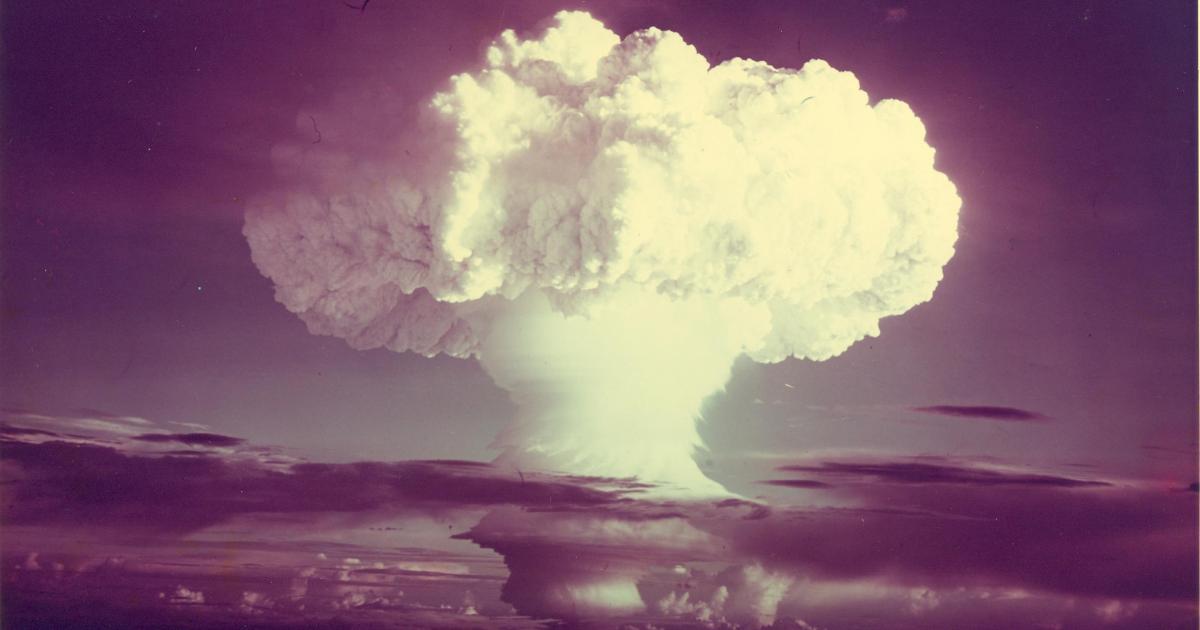
 bskyWhy Einstein's E = mc² is only half the story: The role of motion in energybigthink.com
Key quotes
· 3 pulledIf you simply say the name 'Albert Einstein' and ask people what comes to mind, many of them will simply repeat his most famous equation, whether they know what it means or not: E = mc².
This simple-seeming mathematical relation holds an enormous amount of physics inside of it.
E = mc² describes how much energy is inherent to any massive particle at rest, including how much energy it takes to create it and how much energy is released when it's annihilated.
You might also wanna read


Gravity as the Mechanism for Wavefunction Collapse in Quantum Mechanics
This academic paper presents a theoretical argument that gravity, when unified with matter in a fundamental theory, naturally explains the c
 arxiv.org·8mo ago
The Fundamental Mystery of Time in Physics: Why It Remains One of Science's Greatest Puzzles
The article explores the fundamental nature of time in physics, examining why it remains one of the most perplexing problems in science. It
 sciencefocus.com·6mo ago
Understanding gravity: How mass and matter explain its existence
This article explores the relationship between gravity and mass, explaining that gravity exists wherever there is mass. It defines mass as a
 universal-sci.com·6d ago
Paper Argues Semiclassical Gravity Could Enable NP-Complete Problem Solving, Suggesting Gravity Must Be Quantized
This paper argues that if gravity is classical and couples to quantum fields via semiclassical Einstein field equations, then the weak-field
arxiv.org·8d ago
9th Grade Student Asks About Time, Entropy, and General Relativity
A 9th grade student from India asks two physics questions: (1) whether the Second Law of Thermodynamics (entropy always increases) implies t
 news.ycombinator.com·20d ago
Astrophysicists Test Einstein's 'No-Hair Theorem' on Black Holes Using Collision Data
Astrophysicists are testing Einstein's 'no-hair theorem' which states that black holes are defined only by mass and spin, with no other dist
 quantamagazine.org·10mo ago
Comments
Sign in to join the conversation.
No comments yet. Be the first.