
























Study links early retirement to faster cognitive decline, economists warn of broader consequences
By
Sasha Rogelberg
Summary
A Fortune article reports on research showing that early retirement may accelerate cognitive decline, particularly for Gen X workers retiring before age 65. About 35% of long-term unemployed workers are over 55, and retirement ages have been trending younger over the past 35 years. Economists warn of large-scale consequences from declining employment among older workers, noting financial risks as most retirees lack pensions beyond Social Security.
Source

 bskyStudy links early retirement to faster cognitive decline, economists warn of broader consequencesfortune.com
Key quotes
· 3 pulledWe should really think about the potential consequences of a really large-scale decline in employment
About 35% of workers who have been unemployed for more than 24 weeks are over the age of 55
Few retirees have a pension outside of Social Security
You might also wanna read


Study Finds Employment Slows Cognitive Decline in Older Adults, Especially After Involuntary Job Loss
This NBER working paper investigates whether employment slows cognitive decline in older adults. Using data from the Health and Retirement S
 NBER·2mo ago
A quarter of young baby boomers and Gen Xers who’ve been laid off in the last decade are still unemployed—and 11% have taken pay cuts to work

Impact of Raising Retirement Age on Young Workers' Careers
The article discusses the impact of raising the retirement age on young people's careers and the potential consequences on wages and career
governance.fyi·11mo ago
Shift in Mental Despair Trends Among U.S. Workers by Age and Employment Status
The article discusses a shift in the relationship between mental despair and age in the United States, noting that despair now declines mono
nber.org·11mo ago
Yale study finds nearly half of older adults improve physically or cognitively with age
A Yale University study challenges the myth that aging inevitably means decline. Drawing on over a decade of nationally representative data,
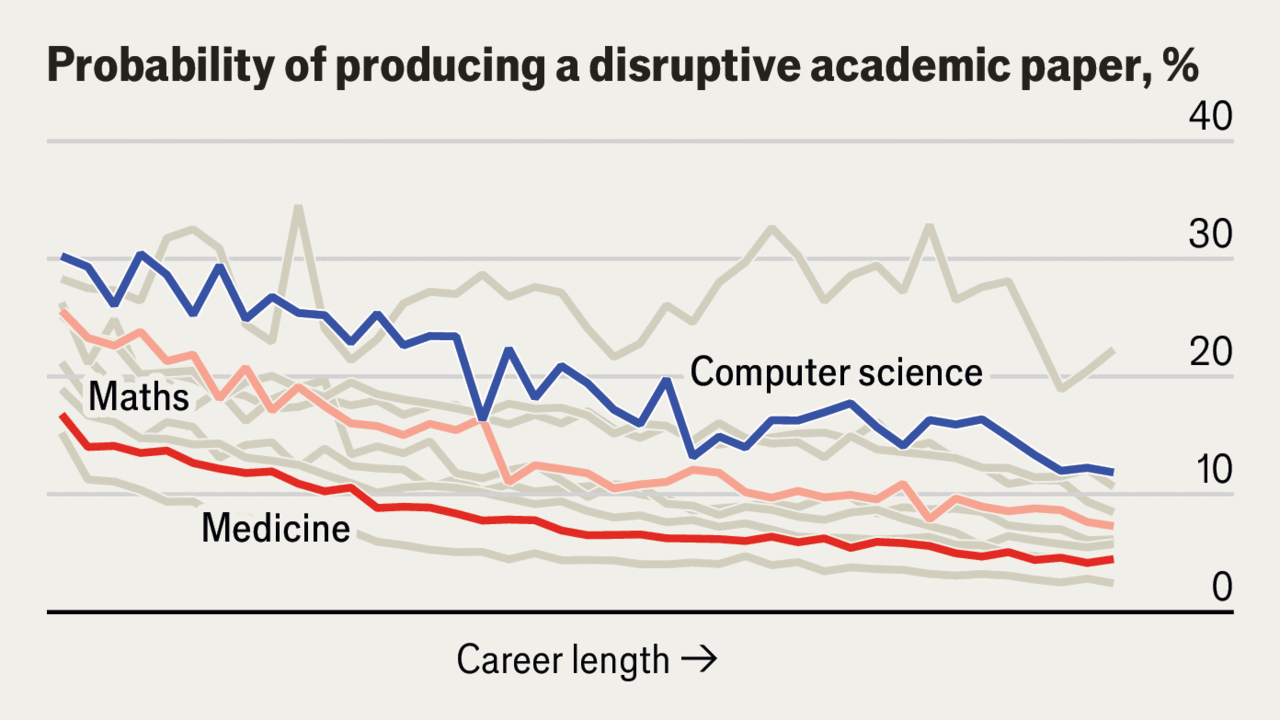
Study links declining scientific breakthroughs to aging researchers
A 2023 study found science is becoming less innovative, producing fewer breakthroughs. New research analyzing 12.5 million scientists sugges
 economist.com·4d ago
Comments
Sign in to join the conversation.
No comments yet. Be the first.