

























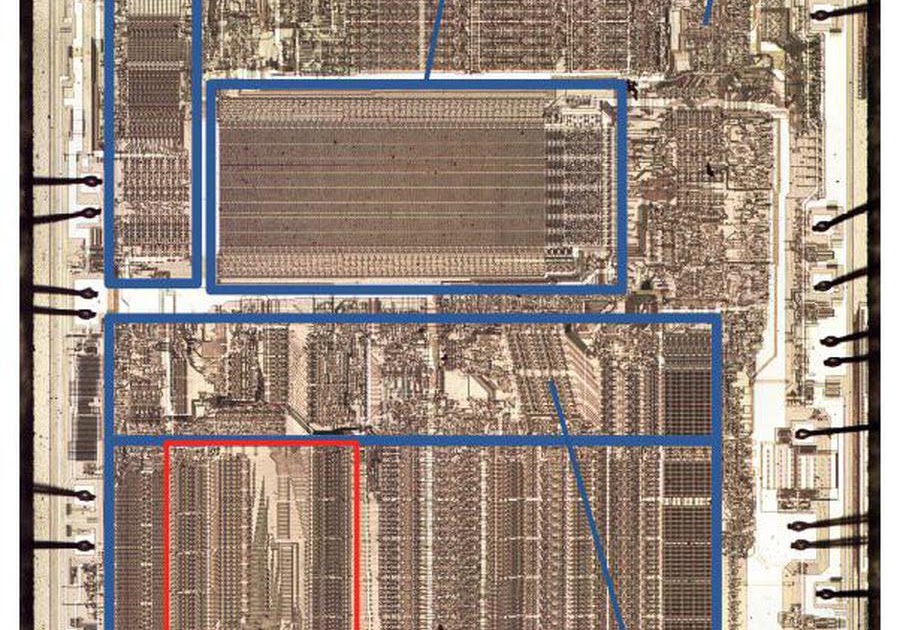
Die analysis of the Intel 8087 math coprocessor's fast bit shifter
By
Jimmc414
2h ago· 19 min readenInsight
Summary
A detailed die-level analysis of the Intel 8087 math coprocessor's fast bit shifter, examining its internal architecture, transistor-level implementation, and how it accelerated floating-point operations for early microcomputers like the IBM PC. The article explores the hardware design techniques used to make floating-point calculations up to 100 times faster than software-only approaches.
Source
 Hacker NewsDie analysis of the Intel 8087 math coprocessor's fast bit shifterrighto.com
Key quotes
· 3 pulledAdding this chip to a microcomputer such as the IBM PC made floating-point operations up to 100 times faster.
The downside was the 8087 chip cost hundreds of dollars.
Floating-point numbers are very useful for scientific programming, but early microprocessors only supported integers directly.
Floating-point numbers are very useful for scientific programming, but early microprocessors only supported integers directly. 1 Although...
You might also wanna read


New device promises 1,000x faster processors without extra waste heat, but details are scarce
This article briefly describes a new device that could enable computer processors to run up to 1,000 times faster without generating additio
 livescience.com·22d ago
EXO Labs Runs Llama 2 AI Model on 1997 Pentium II Using BitNet Optimization
EXO Labs successfully ran a lightweight Llama 2 AI model on a 1997 Pentium II processor with only 128 MB of RAM by leveraging BitNet's terna
 news.bitcoin.com·24d ago
Comments
Sign in to join the conversation.
No comments yet. Be the first.