
























Designing Small in Agile: Why Smaller Slices Are Harder Than Full Systems
By
Ideas powered by Invisible Machines
Summary
Päivi Salminen argues that the real challenge of Agile for designers isn't speed—it's learning to design smaller, more focused slices that deliver immediate value. Drawing on over a decade of experience in Agile marketing teams, she contrasts the designer's natural instinct for holistic, full-system thinking with Agile's demand for incremental, horizontal slices. She explores the tension between wanting to design the "whole cathedral" and the need to deliver "one brick" that works now, offering insights on how to find the smallest slice that still provides real value without losing sight of the bigger picture.
Source
 UX MagazineDesigning Small in Agile: Why Smaller Slices Are Harder Than Full Systemsuxmag.com
Key quotes
· 5 pulledAgile rarely asks designers to move faster—it asks them to design smaller.
Most designers are trained to think in full systems, but agile teams don't want the whole cathedral; they want one brick that delivers real value now.
You think you know agile until you really have to design in agile.
The far less obvious skill of designing smaller, not faster.
Understanding the difference is everything.
You might also wanna read

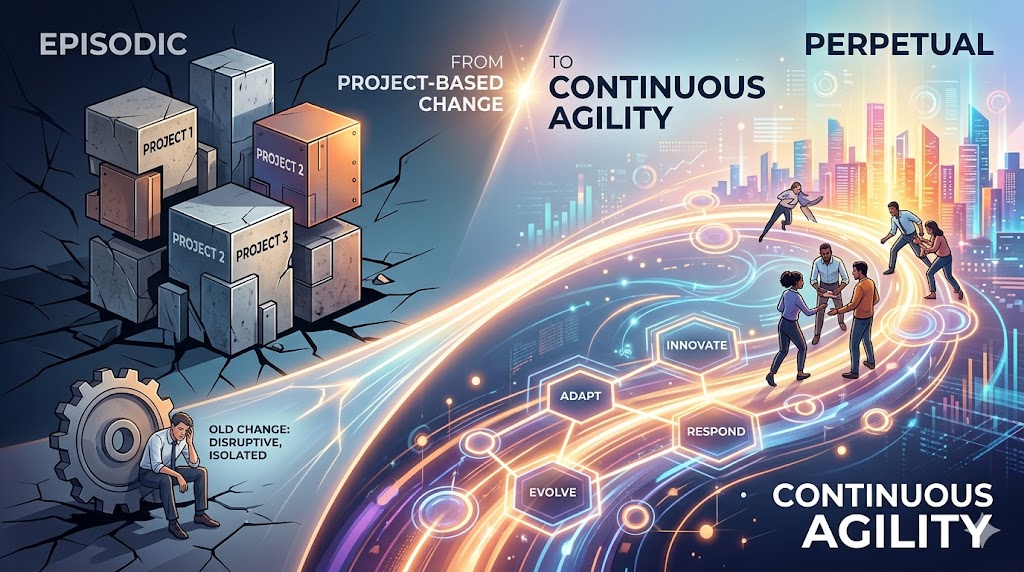
From Episodic Change to Continuous Agility: Rethinking Organizational Transformation
This article challenges the traditional view of organizational change as a finite project with a "post-change" plateau. Instead, it argues t
 bradenkelley.com·1mo ago
Navigating the Complex World of Software Development Tools and Dependencies
The article explores the overwhelming complexity of the modern software development ecosystem, questioning whether the proliferation of tool
binaryigor.com·9mo ago
Why Fewer Ideas Can Lead to Better Creativity and Design
Eric Olive challenges the conventional wisdom around brainstorming and idea quantity, arguing that fewer, more focused ideas lead to better
 Smashing Magazine·1y ago
The Evolving Role of UX Designers in AI-Accelerated Workflows
The article discusses how UX design is evolving in the age of AI, with designers transitioning from creators of outputs to directors of inte
Smashing Magazine·4mo ago
From Taste to System: How Lewis Webber Designs the Machines Behind Creative Studios
Lewis Webber reflects on a decade-long career shift from designing interfaces and identities to designing the systems and operational machin
 Codrops·17d ago
The Visual Imperative in B2B Marketing: Balancing Data-Driven Metrics with Scalable Creativity
This article argues that B2B marketing has become overly reliant on data, spreadsheets, and metrics (MQLs, SQLs, lead scoring) at the expens
 agilebrandguide.com·1mo ago
Comments
Sign in to join the conversation.
No comments yet. Be the first.