
























Designing a Fairer World: A Conversation with Karen Korellis Reuther
By
anb5654
4d ago
Source
hls.harvard.eduDesigning a Fairer World: A Conversation with Karen Korellis Reutherharvard.eduanb5654 Tue, 06/30/2026 - 11:14 June 30, 2026 Fairness at work is shaped not only by organizational design, such as hiring, promotions, and pay, but also by the design of the physical world around us: the equipment we use, the uniforms we wear, the vehicles we drive, and the offices we inhabit. In her new book, Man-Made: How We Designed a World That Leaves Women Out, and How We Can Make It Right , industrial designer and Harvard Graduate School of Design lecturer Karen Korellis Reuther reveals that many of these products and environments were built with men as the default user, leaving women to adapt to systems that were never designed with them in mind—with consequences ranging from inconvenience and additional expense to danger and even death. WAPPP senior fellow Siri Chilazi spoke with Reuther about these insights. Q : What inspired you to write Man-Made ? A : After more than 40 years as a designer, I thought I had done a reasonably good job of bringing women’s voices into spaces where they were often missing. But then I came across some statistics that stopped me in my tracks. Only about 18% of practicing industrial designers in the U.S. are women. Just 25% of licensed architects and fewer than 13% of practicing mechanical engineers are women. These are the professions that create the built world—the products we use, the clothes we wear, the buildings we inhabit. I realized we are still living in a world that has largely been designed by men for men, and women have become accustomed to adapting to a world that wasn't designed with them in mind. Q : The book includes examples of biased design ranging from insulting to literally life-threatening. Which examples affected you most? A : I'll give you two that sit at opposite ends of the spectrum. One example involves workplace uniforms. Many women are expected to wear ill-fitting uniforms designed around male body proportions. That may sound minor, but it isn't. The concept of “enclothed cognition” suggests that what we wear influences how we feel and perform. Just think of the last time you showed up for an event either overdressed or underdressed—likely you felt as if you didn’t belong. Now imagine feeling that way every single day at work because your only choice is to wear a uniform or gear that wasn’t designed for you. It's insulting, exhausting, and uncomfortable. At the other end of the spectrum is CPR. Women are 14% less likely to receive bystander CPR than men. A contributing factor is that CPR training is overwhelmingly conducted on male manikins, leaving bystanders less confident to perform CPR on women in real life. What's striking is that female CPR manikins do exist, but they represent only 5% of manikins in use. Once you see that, you realize how deeply the male default is embedded in systems we rarely question. Q : Many readers will be shocked by these examples. Is the solution simply getting more women into design and engineering? A : That's part of the solution, but it's not the whole solution. We absolutely need more women entering design professions—but we're already graduating women and men at equal levels in design and architecture, so this isn’t the reason why there are so few women in practice. No women should be a “first” or an “only”, yet many are. The challenge is retention and advancement. Too many women leave after a few years because they aren't receiving the opportunities, compensation, recognition, or promotions they deserve. But we also need to think about design itself. I often talk about both gender diversity in design and designing for gender diversity. This doesn’t mean that only women can design for women. It means ensuring that the perspectives shaping products and environments are diverse. Who's writing the design brief? Who's identifying the problem? Who's sitting at the table when decisions get made? If you're designing products for women and there are no women involved in the process, that's a problem. Q : How can each of us contribute to changing this omnipresent male default? A : First, we have to notice it. We've all become so used to living in a man-made world that we oftentimes don't notice the ways the built environment is not serving us. We assume that's just how things are. I was recently riding a crowded bus in Boston and struggling to reach the overhead handrail—and I’m taller than the average woman! My immediate reaction was, "Why?" Why was it designed this way? Why should half the population have difficulty using something as basic as public transportation? As an industrial designer, I designed for decades to the 95th percentile male and the 5th percentile male, as is the professional standard in our industry. But that standard leaves out 65% of women. There simply is no average—even for men. So I encourage people to become active observers. Next time you encounter something like the bus handrail, take a photo. Post it on social media. Send feedback to the company and the people that matter. Ask the question: "Is this the best we can do?" Consumers have more power than they realize. We can all be changemakers simply by refusing to accept poor design as inevitable and by insisting on something better. Q : What advice would you give leaders who want to make change inside their organizations? A : Start with representation: get women to the table and promote them to leadership. We need women in decision-making roles because that's where priorities get set and resources get allocated. We also need women in these roles to change the stereotype of the creative genius, which remains male today. My second piece of advice is simple: bank on women. Women are an enormous market opportunity. Companies that genuinely understand and design for women often outperform expectations. In the book, I discuss examples like the Ford Bronco SUV, which succeeded in part because it took women's needs and preferences seriously. Too often, businesses treat women as a niche market when they are literally half the population. Q : It seems that similar to organizational design, in industrial design, we know “what works,” i.e., what we should do to change the status quo. How do we actually embed fairer design into our world? A : I was very inspired by your “make it count, make it stick, make it normal” framework in Make Work Fair . This is exactly what we need to do. Everyone has a human right to be equally safe behind the wheel, or equally protected by PPE (personal protective equipment) at work. Women, just like men, have a right to products and environments that acknowledge their existence as full participants in society. This will take some reimagining in the short term. In the sneaker business, where I spent so many years, we use a last—the form of the foot¬—to build every shoe we make. Still today, the overwhelming majority of shoes are designed and built off of the form of a male foot. If we really want to invest in women's shoes, we're going to have to make a last for all those women’s sizes, and for a little while, that may change the profit model. But don't 4 billion women deserve shoes built for their feet? And isn’t that a formidable and profitable market opportunity? My answer is simple: Yes. We can do better by taking these simple steps: Name the problem: The built world was designed around a male body Offer a new standard: Design for a range of human bodies, not just one type Reframe values: Inclusion by design isn’t accommodation—it’s a human right The evidence is clear. Now it's time to act. Designing a Fairer World: A Conversation with Karen Korellis Reuther
You might also wanna read


Design Field Criticized for Excessive Self-Critique Instead of Addressing Socio-Political Crises
Design critic Susan Yelavich argues that the design field has become too focused on internal critique and self-examination rather than addre
 Dezeen·9mo ago
How AI-generated design tools are creating a homogenized web aesthetic
Kyle Chayka examines how AI-generated design tools, particularly Anthropic's Claude Design, are creating a homogenized aesthetic across the
 newyorker.com·6d ago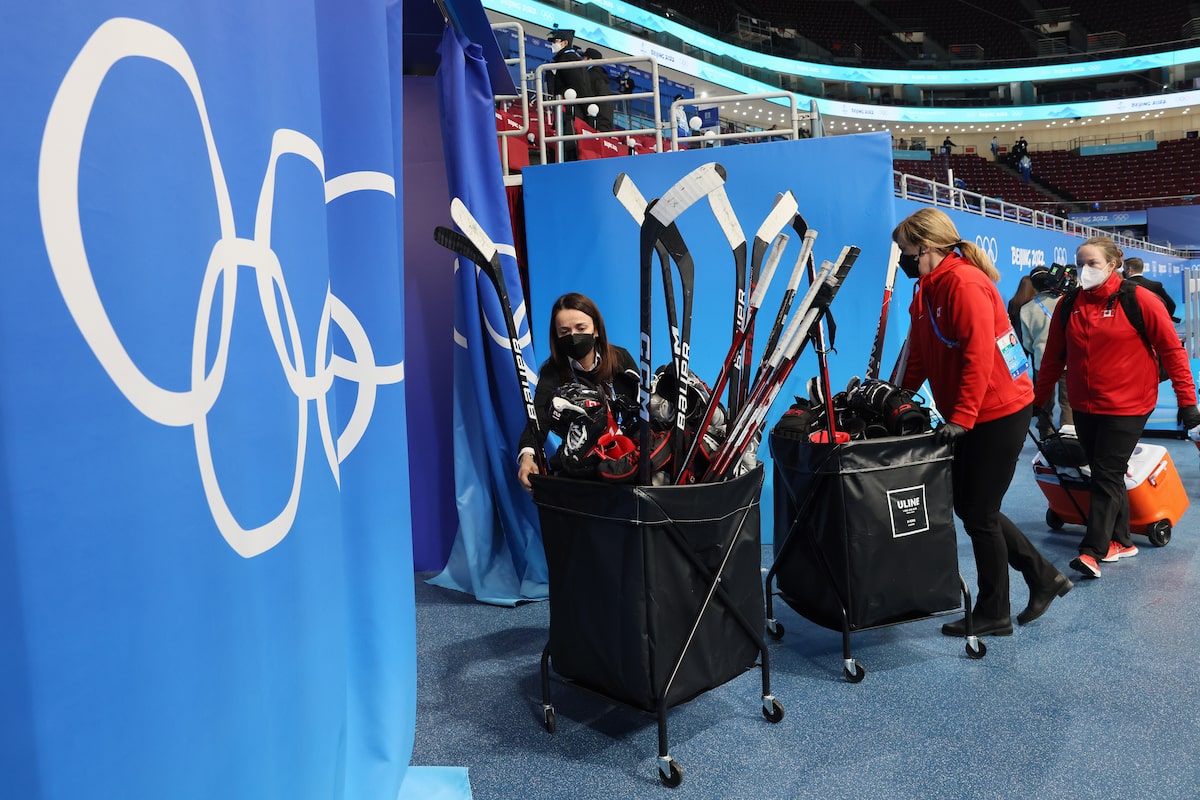
Sports equipment industry fails female athletes by adapting male designs instead of innovating for women's needs
The article argues that the sports-equipment industry has long neglected the specific physiological needs of female athletes by simply shrin
 ow.ly·18d ago
Who really designed that dress? How fashion is reacting to AI
 ft.trib.al·18h ago
Front Design Founders Discuss AI's Impact on Design Profession and Human Qualities
Front design studio founders Sofia Lagerkvist and Anna Lindgren discuss how AI is prompting designers to reconsider their core value and uni
Dezeen·8mo ago
From the Stabilo pencil to AI: the evolution of design through three generations
Ara·9h ago
Comments
Sign in to join the conversation.
No comments yet. Be the first.