
























CVE-2026-15143: Server-Side Request Forgery (SSRF) in Red Hat Red Hat OpenShift AI (RHOAI)
A flaw was found in the file_type content detector of guardrails-detectors. This vulnerability allows a remote attacker to supply an arbitrary XML Schema Definition (XSD) string, which is processed…
Read the full articleYou might also wanna read

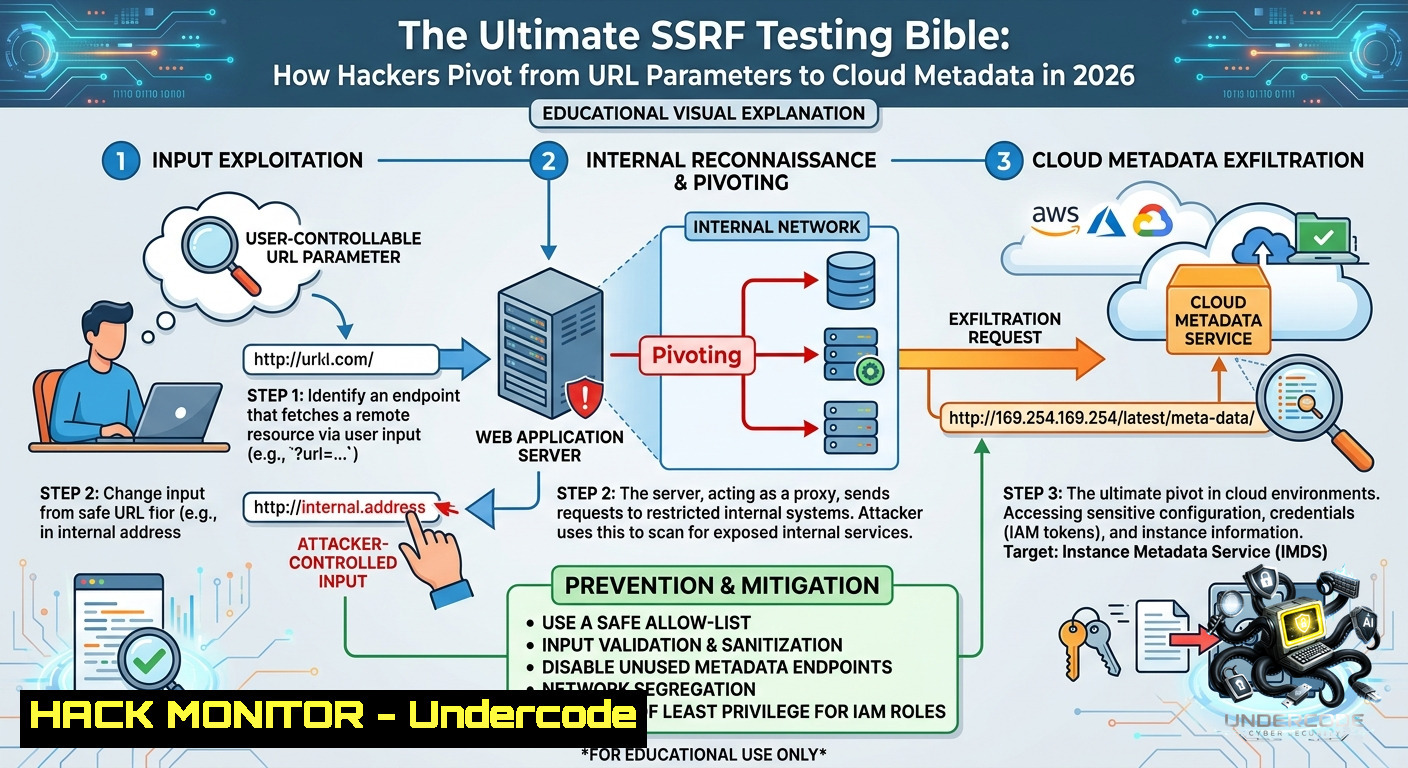
Comprehensive Guide to SSRF Testing: From URL Parameters to Cloud Metadata Exploitation
The Ultimate SSRF Testing Bible: How Hackers Pivot from URL Parameters to Cloud Metadata in 2026 + Video - "Undercode Testing": Monitor hack
 undercodetesting.com·26d ago
ReSSRF: An Automated SSRF Discovery Tool Using OAST-Powered Parameter Fuzzing
ReSSRF: Unleashing Next-Gen Automated SSRF Discovery with OAST-Powered Parameter Fuzzing + Video - "Undercode Testing": Monitor hackers like
undercodetesting.com·27d ago
Preventing server-side request forgery in Node.js applications
This article will explore SSRF, its potential risks, and the strategies to mitigate SSRF in Node.js applications.

Workers - SSRF vulnerability in @opennextjs/cloudflare proactively mitigated for all Cloudflare customers
Mitigations have been put in place for all existing and future deployments of sites with the Cloudflare adapter for Open Next in response to
WAF - WAF Release - 2025-09-29
This week highlights four important vendor- and component-specific issues: an authentication bypass in SimpleHelp (CVE-2024-57727), an infor
WAF - WAF Release - 2026-04-07
This week's release introduces new detections for a critical Remote Code Execution (RCE) vulnerability in MCP Server (CVE-2026-23744), along
Comments
Sign in to join the conversation.
No comments yet. Be the first.