
























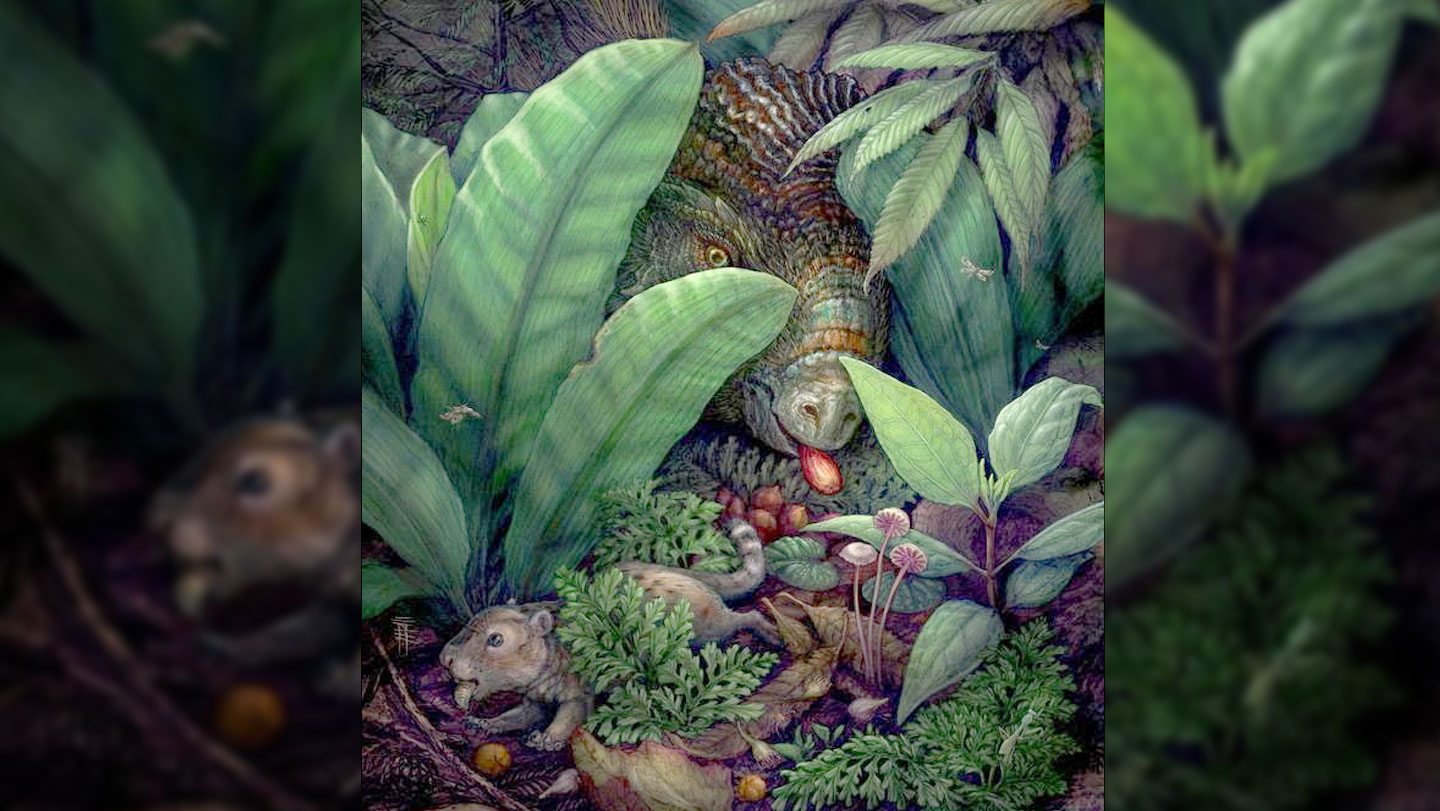
Cretaceous fossil forest reveals dinosaurs dined on large fruits and seeds
A groundbreaking study indicates that herbivorous dinosaurs, rather than just post-extinction mammals, were likely the universe's first major fruit-eaters and seed dispersers. The post Cretaceous…
Read the full articleYou might also wanna read

Fossil analysis shows flowering plants used dinosaurs to spread seeds 74 million years ago
Scientists thought angiosperms didn’t use animals to spread seeds until after the Age of Dinosaurs. Fossilized fruits from these plants chal
 sciencenews.org·15d ago
Fossil analysis shows flowering plants used dinosaurs to spread seeds 74 million years ago
Scientists thought angiosperms didn’t use animals to spread seeds until after the Age of Dinosaurs. Fossilized fruits from these plants chal
sciencenews.org·15d agoFossil analysis shows flowering plants used dinosaurs to spread seeds 74 million years ago
Scientists thought angiosperms didn’t use animals to spread seeds until after the Age of Dinosaurs. Fossilized fruits from these plants chal
sciencenews.org·15d ago
New fossils upend catastrophist narrative that flowering plants flourished only after dinosaur extinction
Flowering plants, or angiosperms, now dominate Earth’s flora, but biologists thought they truly took off only after an asteroid impact 66 mi

Study finds angiosperm reproductive diversification predated the end-Cretaceous extinction
Angiosperm reproductive evolution is traditionally linked to the end-Cretaceous biotic crisis and subsequent ecological restructuring. Here,
 scim.ag·11d ago
Study finds angiosperm reproductive diversification predated the end-Cretaceous extinction
Angiosperm reproductive evolution is traditionally linked to the end-Cretaceous biotic crisis and subsequent ecological restructuring. Here,
scim.ag·11d agoStudy finds angiosperm reproductive diversification predated the end-Cretaceous extinction
Angiosperm reproductive evolution is traditionally linked to the end-Cretaceous biotic crisis and subsequent ecological restructuring. Here,
 science.org·15d ago
Study Shows Mammals Independently Evolved to Eat Ants and Termites Multiple Times Since Dinosaur Age
A first-of-its-kind study traces the rise of ant- and termite-eaters, revealing how mammals returned to the evolutionary table — at least a
news.njit.edu·11mo agoNew dinosaur species with neck as long as cricket pitch discovered in Thailand
The plant-eating dinosaur, named Uragasaurus kalasinensis, is thought to have lived about 150 million years ago.
New dinosaur species with neck as long as cricket pitch discovered in Thailand
The plant-eating dinosaur, named Uragasaurus kalasinensis, is thought to have lived about 150 million years ago.
Comments
Sign in to join the conversation.
No comments yet. Be the first.