
























Cost of incomplete gas reforms
From the article
EDITORIAL: The latest increase in re-gasified liquefied natural gas (RLNG) prices is not merely another routine tariff adjustment. It is a reminder of the structural deficiencies that continue to plague Pakistan’s gas sector, where policy distortions, contractual rigidities and administrative indecision have made affordability increasingly elusive for paying consumers. The notified increase of around 15 percent over the previous month takes RLNG prices to their highest level in months, following a sharp rise in international procurement costs. The impact is already filtering through the power sector, where RLNG-based generation costs have more than doubled within a matter of weeks. While imported fuel prices are beyond Pakistan’s control, the extent to which these shocks are transmitted to domestic consumers is very much a function of domestic policy choices. Equally concerning is the Auditor General of Pakistan’s (AGP’s) observation that the burden of RLNG diversion continues to be borne by consumers who neither contracted for nor consumed the imported fuel. The audit has once again highlighted the long-standing practice whereby RLNG supplied to domestic consumers at subsidised rates or diverted away from its intended consumers eventually finds its financial cost socialised across the broader gas consumer base. Such cross-subsidisation erodes transparency and weakens price signals that are essential for efficient resource allocation. It also raises legitimate questions about accountability in managing one of the country’s most expensive energy sources. Be that as it may, the issue extends well beyond one month’s price notification or one audit observation. It points towards a much deeper governance challenge that successive governments have struggled to address. Pakistan has spent years debating the concept of a Weighted Average Cost of Gas (WACOG), designed precisely to rationalise pricing by blending indigenous gas and imported RLNG into a unified pool. The objective was straightforward: eliminate arbitrary distinctions between consumers receiving different gas molecules, improve market efficiency and reduce opportunities for distortions arising from selective allocation. Yet despite legislative progress, WACOG remains only partially implemented. Large segments of the market continue to operate under legacy pricing structures, while imported RLNG remains largely confined to specific consumer categories. The consequence is a fragmented pricing regime where some consumers continue to receive heavily subsidised indigenous gas while others bear the full cost of imported fuel. Such an arrangement neither reflects economic reality nor does it provide the incentive necessary for conservation and efficient fuel utilisation. The inability to fully operationalise WACOG has also complicated circular debt management. As indigenous gas production continues its secular decline and dependence on imported LNG grows, maintaining multiple parallel pricing systems only increases the financial imbalance. Every diversion of RLNG, every allocation based on administrative discretion rather than market principles and dynamics, and every delay in aligning tariffs with actual costs ultimately adds another layer of hidden liabilities that must eventually be recovered from consumers or taxpayers. The government’s broader energy reform agenda has undoubtedly made progress in several areas, particularly in reducing power sector losses and improving fiscal discipline. However, gas sector reform remains conspicuously unfinished. The persistence of allocation inefficiencies, coupled with rising imported fuel dependence, threatens to undermine many of those gains. Without a coherent pricing framework, periodic tariff revisions merely treat the symptoms while leaving the underlying disease intact. The profound challenge confronting policymakers is therefore not simply how to cushion consumers from volatile international LNG markets; it is how to establish a transparent, rules-based gas market where prices accurately reflect costs, subsidies are explicitly budgeted rather than hidden within tariffs, and contractual obligations are honoured without shifting burdens onto unrelated consumers. Pakistan can ill afford another decade of incremental fixes. The economics of imported RLNG have fundamentally altered the country’s gas landscape. Policy, regulation and pricing mechanisms must evolve accordingly. Until they do, each new RLNG price notification will serve less as an isolated adjustment and more as evidence of a reform agenda that remains frustratingly incomplete. Copyright Business Recorder, 2026
Continue reading on Business RecorderYou might also wanna read
An LNG Glut Is On Its Way
bloomberg.com·1mo ago


Filling the tank will be more expensive from July 1st
Ara·10d ago

Same Shock, Different Roads? A K‑Shaped Pattern at the Pump
libertystreeteconomics.newyorkfed.org·2mo ago
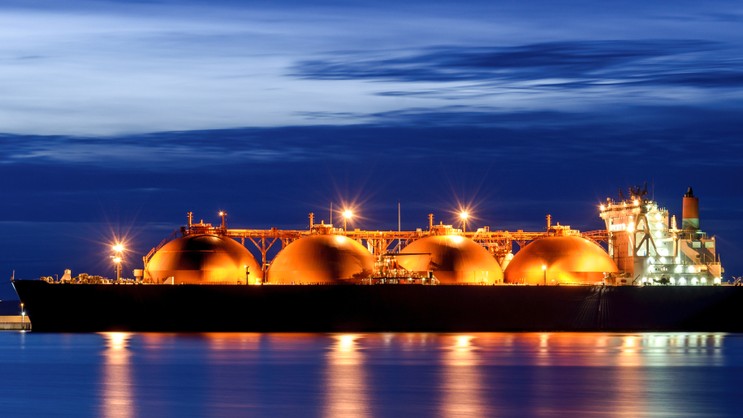
Natural gas markets expected to rebalance in Q3 as Strait of Hormuz reopens, GECF says
Natural gas markets are expected to rebalance in Q3 as the Strait of Hormuz reopens following the Gulf conflict. Qatar is restoring LNG prod
 oilprice.com·13d ago
La India levanta los controles de emergencia sobre el suministro de gas natural
Infobae·3d ago
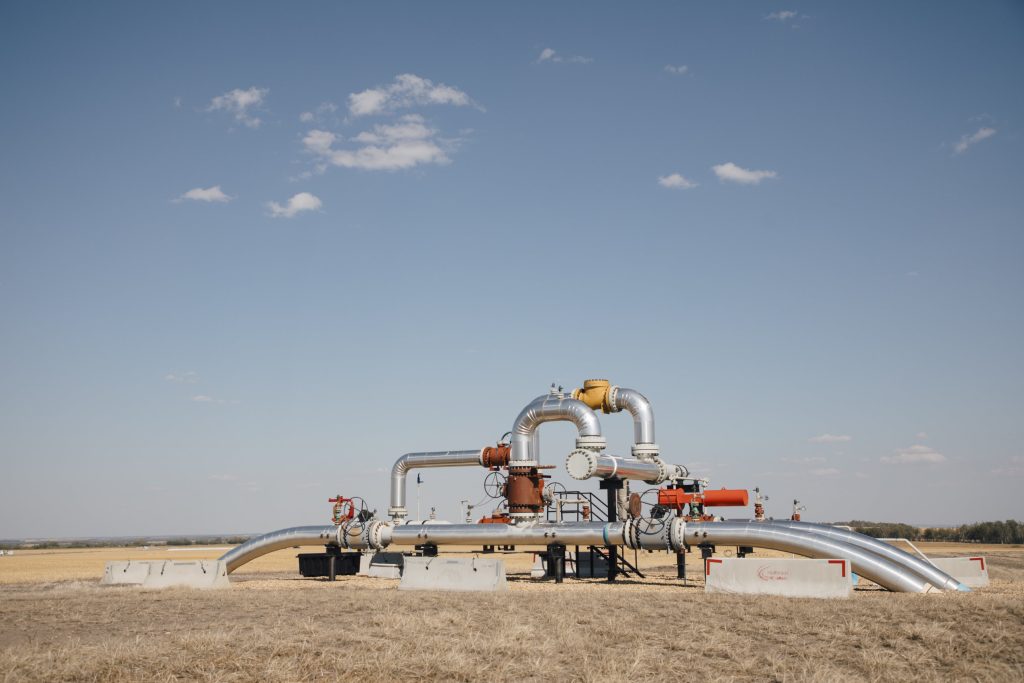
B.C. overhauls natural gas royalty system amid debate over industry profits and public returns
British Columbia is overhauling its natural gas royalty structure after an independent assessment in 2021 found the existing system was over
 thenarwhal.ca·1mo ago
Comments
Sign in to join the conversation.
No comments yet. Be the first.