
























A computer scientist's quest to find a chess position with 218+ possible moves
I hope that the title is unambiguous enough now and I wholeheartedly apologize to all the people who thought that it was about 218 move long games! .___. <3
Read the full articleYou might also wanna read


Practical Chess Strategy: A Systematic Approach to Move Selection
Feeling stuck? We’ve got you covered!
 Duolingo·3mo ago
The Evolution of Chess Computers: From Hidden Humans to Unbeatable Engines
From hidden humans to supercomputers, here’s how chess engines took over.
Duolingo·4mo ago
The unsolved mystery of the fastest way to multiply numbers
A 23-year-old student overturned an ancient conjecture about one of math’s simplest operations
 scientificamerican.com·3d ago
AI achieves breakthroughs in solving decades-old mathematical problems, sparking debate on technology limits
Google and OpenAI have solved decades-old problems — but the scientific community is beginning to discuss whether limits should be placed on
 english.elpais.com·25d ago
XKCD: What if chess included the offside rule? (If.
XKCD: What if chess included the offside rule? (If someone hasn’t done one already, I’d guess at least one person is working on a playable F
kottke·7d ago
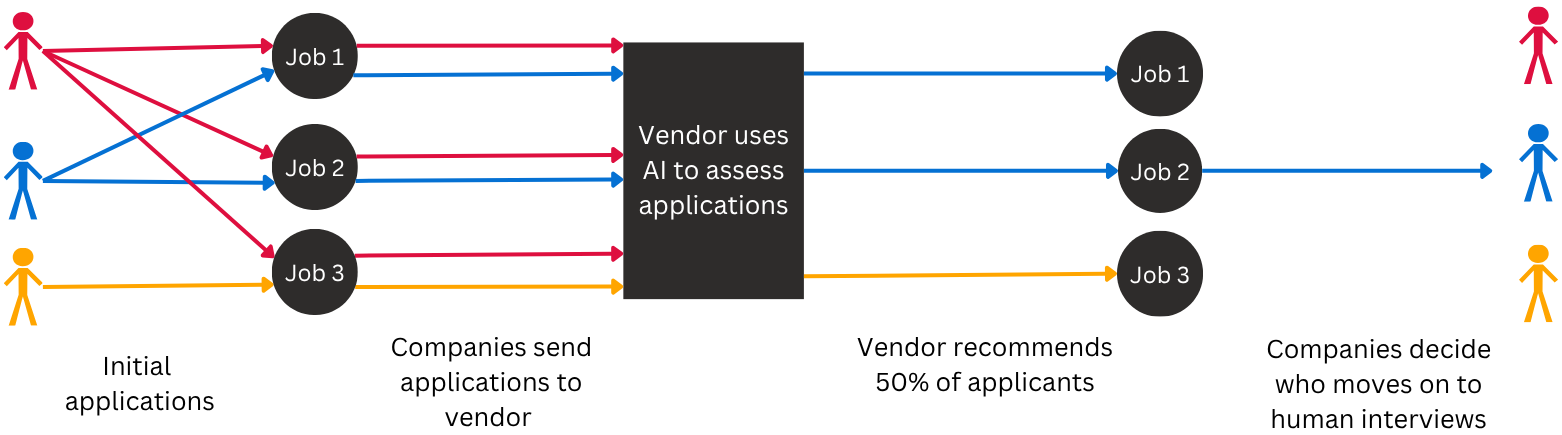
Algorithmic Monocultures in Hiring: Largest Study of 3.4 Million Applicants Reveals Widespread Vendor Concentration
Paper Code Blog Cite
algorithmichiring.github.io·22d ago
Algorithmic Monocultures in Hiring: Largest Study of 3.4 Million Applicants Reveals Widespread Vendor Concentration
Paper Code Blog Cite
algorithmichiring.github.io·22d ago
Comments
Sign in to join the conversation.
No comments yet. Be the first.