
























Commercial Gaming in the United Arab Emirates: Emerging Regulatory Framework and Market Structure
From the article
Few developments in recent commercial regulation history have garnered as much international interest as the United Arab Emirates’ (UAE) move toward formally establishing a legal and regulatory framework for commercial gaming. Long regarded as one of the world’s most significant markets for hospitality, tourism, and entertainment, the UAE has pursued deliberate and systematic policies to create an environment in which commercial gaming can operate under conditions of strict oversight, integrity, and alignment with the country's broader social values and fiscal objectives. A regulated gaming framework positions the UAE to capitalize on the potential of gaming as part of its economic diversification strategy. With a reputation as a focal point for luxury tourism, large‑scale hospitality developments, and experiential attractions, the UAE is working to incorporate gaming into a broader leisure and lifestyle ecosystem rather than treating it as a stand-alone sector. Its geographic position and connectivity to Europe, Asia, and Africa, combined with highly developed transportation, hospitality, and digital infrastructure, contributes to its appeal to international visitors and global operators. As discussed below, the UAE emphasizes integrity and regulatory certainty as central commitments in building an environment conducive to long-term investment. Against this backdrop, gaming in the UAE has been introduced not solely as an additional revenue-generating measure, but also as a catalyst for further development across entertainment, real estate and tourism sectors, supporting the country’s broader diversification beyond oil and gas. The UAE Model: Synergies with Sports The opening of the commercial gaming sector is closely tied to the UAE’s strategy of onshoring economic activity and attracting foreign direct investment as part of its diversification agenda. By enabling integrated resort developments under a federal licensing framework, the UAE aims to capture value that has historically accrued to established international commercial gaming jurisdictions. The participation of premier global operators reflects a policy shift toward high-value, capital-intensive entertainment industries. Industry projections suggest that, when combined with future developments, commercial gaming activities in the UAE could generate up to USD 8.6 billion in annual revenue, approaching the USD 8.9 billion reported by the Las Vegas Strip in 2023 1 . This approach follows a model the UAE has already applied to international sport. Formula 1 provides an illustration. Since the Abu Dhabi Grand Prix was established in 2009, the UAE has built a permanent tourism and entertainment ecosystem centered on Yas Island, generating over AED 1.25 billion (approximately USD 325 million) in economic impact 2 and attracting a predominantly international audience. Similarly, the Dubai World Cup in horse racing, the UAE Tour in UCI cycling, and other international fixtures demonstrate how sports function not as isolated spectacles, but as anchors for hospitality, sponsorships, media rights, and infrastructure investment. Commercial gaming is now being positioned in comparable terms; the licensing of integrated resorts and the entry of global operators signal an intention to deploy gaming as a catalyst industry designed to drive tourism, foreign investment, and ancillary growth. Pre-2023 Commercial gaming has historically been prohibited under the UAE’s legal framework, shaped primarily by Islamic Shari’ah principles. Under classical Islamic jurisprudence, gambling (maisir) is categorically prohibited due to its association with unjust enrichment and the broader obligations to prevent harm, and protection of public order. This position has traditionally informed UAE federal law, including criminal prohibitions 3 on games of chance and civil law 4 rules that rendered gambling contracts void and unenforceable. For decades, the UAE maintained a prohibition‑driven model under which gambling was treated as both a criminal offense and a civil wrong. That long‑standing position has begun to shift. The 2025 Civil Transactions Law 5 marks a significant development: gambling specific provisions were deliberately removed, confirming the withdrawal of the Civil Code as a primary instrument for enforcing Shari’ah‑derived prohibitions in this area. This reflects a recalibration of how those values are protected in practice. Central to this transformation is the General Commercial Gaming Regulatory Authority (GCGRA), the federal body tasked with regulating, licensing, and supervising all forms of commercial gaming in the UAE. Extending beyond permitting commercial gaming, the GCGRA’s mandate is to ensure that gaming is conducted with integrity, protects players and the public, contributes meaningfully to the national economy, and remains grounded in UAE societal values. As the framework matures, lawmakers may consider additional measures, such as targeted amendments to the Penal Code and, where relevant, the Cyber Crimes Law, to further align the gaming framework with UAE federal law. Together, these developments reflect the UAE’s broader shift from absolute prohibition toward regulatory oversight, preserving cultural and religious considerations while advancing economic diversification and regulatory certainty. The Governance Framework: Integrity by Design The GCGRA’s institutional design consolidates rulemaking, authorization, supervision, and compliance under a single organizational structure, enabling cohesive administration of the regulatory environment and orderly control of market participation and conduct. Ongoing oversight mechanisms enable the GCGRA to identify risks, address deficiencies, and ensure that regulatory expectations remain aligned with its mandate. By coordinating policy development, supervisory activity, and corrective measures, the GCGRA works to maintain sustained regulatory credibility. Approach to Risk The GCGRA applies a structured and tailored supervisory approach for each license type and license holder. This delineation ensures that appropriate safeguards ranging from technical standards to administrative measures are applied to specific license categories. Licensure A defining feature of the UAE’s commercial gaming framework is the “one (operator) license per Emirate 6 ” model, under which market entry is deliberately limited rather than open to broad competition. This exclusivity reflects the UAE’s broader philosophy of controlled liberalization, consistent with other reforms such as permitting 100% foreign ownership in the corporate sector and relaxing residency requirements. Such measures reflect a policy approach in which economic activity and social considerations are treated as complementary objectives. One exception is the National Lottery, which operates under a single national license. By limiting the number of operators per Emirate, the framework enables each Emirate to manage commercial gaming within its jurisdiction and set its own timeline for implementation. This signals that gaming is intended to function not as a mass‑market consumer activity but as a limited, high‑impact component of the UAE’s economic diversification strategy. Market access is not automatic, open-ended, or granted without scrutiny. It is a revocable (and non-assignable) privilege extended by the GCGRA only to those who can demonstrate they are qualified, suitable, and capable of contributing positively to the industry’s development whilst maintaining compliance with applicable requirements. The framework recognizes that commercial gaming encompasses diverse activities, each presenting different regulatory challenges and risk profiles. Accordingly, the licensing architecture is organized around distinct categories of authorization from financial parameters to competency assessments, each tailored to the nature of the permitted activity. Suitability Consistent with practice in many regulated jurisdictions, operators must hold an Operator License before conducting any form of commercial gaming. Within this category, specific sub-licenses cover the operation of physical gaming facilities, internet gaming, sports wagering, and lottery operations. Each sub-license carries its own eligibility criteria, compliance requirements, and operational conditions. The framework also requires licensing of those who supply goods, services, and technology to gaming operators through a Gaming-Related Vendor license category that extends regulatory scrutiny into the supply chain. Lottery retailers hold a separate license category. Individual gaming employees are subject to occupational licensing requirements calibrated to their level of access to and influence over gaming operations. A notable category covers individuals in senior positions of influence within licensed entities, including directors, executive officers, and controllers through whom gaming conduct can be materially shaped. Throughout the licensing process, the burden of demonstrating compliance rests with those seeking to obtain and maintain a license. Applicants must affirmatively demonstrate eligibility and qualifications, provide all requested information, at their own expense, and cooperate fully with suitability investigations. Onshoring Among requirements (for operators) licensing, a key condition involves formation or collaboration with a domestic entity. This is not a procedural formality but a substantive licensing requirement for any application. A domestic entity is deemed qualified when incorporated in the UAE with sufficient domestic engagement which can serve as a credible anchor for conducting gaming operations in the UAE. Establishing compliance with these and other related requirements are subject to GCGRA’s full discretion. Responsible Gaming A central consideration in any jurisdiction permitting commercial gaming is the protection of potentially vulnerable individuals. GCGRA’s Responsible Gaming Framework aims to address this through a structured, risk-based, and lifecycle approach to player engagement. Licenses are required to design gaming operations that anticipate and mitigate harm at every stage, from marketing and onboarding to ongoing play, intervention, and, where necessary, exclusion. The exclusion regime is one of the framework’s primary regulatory tools. Recognized forms include voluntary self‑exclusion, third‑party exclusion, and operator‑ or regulator‑initiated- exclusion. Once exclusion is triggered, operators are subject to obligations to prevent further access supported by identity verification, system controls, and inter‑operator cooperation where required. Advertising and marketing controls are in place to reinforce these protections. Promotional activity should avoid targeting vulnerable individuals, exaggerating chances of winning, or framing gaming as a solution to financial or personal hardship. Responsible gaming messaging is required as part of consumer communications. The framework also establishes escalation mechanisms and access to external support. Licensees must provide players with information on counselling, treatment services, and support organizations, and must cooperate with the GCGRA on data provision, audits, and investigations. Market Entry The GCGRA has established a standardized intake process through which prospective applicants introduce themselves and identify the license they wish to pursue. The intake form initiates an evaluation process in which the GCGRA assesses the applicant’s identity, corporate structure, nature of activity and other background information The form also covers the specific license sought, the Emirate in which operations will be conducted (for operator applicants), and key personnel details. For an operator license securing the approval of the relevant Emirate is a threshold requirement enforced by the GCGRA. As of the date of this publication, five Emirates do not yet have an operator license. Investors seeking In-Principle approval should be prepared to submit the intake form with written Emirate-backing. Once these foundational steps are completed, applicants proceed to the GCGRA’s licensing portal. Following payment of an application fee, detailed submissions are required covering business and operational information, financial disclosures, and corporate structures, supported by documentation. The GCGRA then evaluates suitability and, upon approval, issues the license. Following issuance, the GCGRA conducts due diligence on the applicant’s key persons to confirm their qualifications and suitability. At each stage, the applicant bears responsibility for demonstrating suitability, providing accurate and complete information, and covering associated costs. Ongoing Supervision Obtaining a license is the beginning of a continuing compliance obligation. Operational licensees are required to maintain ongoing compliance and cooperation with the GCGRA and other federal/local-Emirate authorities. This includes, for example, periodic updates to licensing information, adhering to reporting requirements, and payment of royalties. Licensed entities are subject to ongoing supervision, and investigations may be initiated into their activities where warranted. The GCGRA’s Supervision and Investigations division is authorized to investigate infractions ranging from misrepresentation of suitability information and material omissions in reporting to non-compliance with the Financial Crime Prevention Framework and non-cooperation with the GCGRA. The resulting sanctions may range from denial, revocation, suspension or restriction of the license to monetary penalties. 1 CBRE sees UAE to become ‘Las Vegas of the Middle East’ 2 Abu Dhabi Grand Prix revs up for greater growth after hitting Dh1.25b impact in 2024 - Aletihad News Center 3 Articles 460-463, Federal Law by Decree No. (31) of 2021 Promulgating the Crimes and Penalties Law 4 Federal Law No.25 of 2025 Promulgating the Civil Transactions Law, effective 1 June 2026. Articles 1012-1021 have been deliberately omitted from the new law. 5 Federal Law No. 50 of 2022, as amended. 6 The UAE is a federation of seven Emirates, with a division of powers between the Federal government and the local Emirate governments. The Federal government sets certain national laws as mandated by the UAE Constitution.
Continue reading on The National Law ReviewYou might also wanna read


UAE among world’s most engaged and travel-driven sports markets
YouGov·4mo ago

Dubai Boosts Public-Private Partnership to Build Global Gaming Hub
Outlook Respawn·14h ago
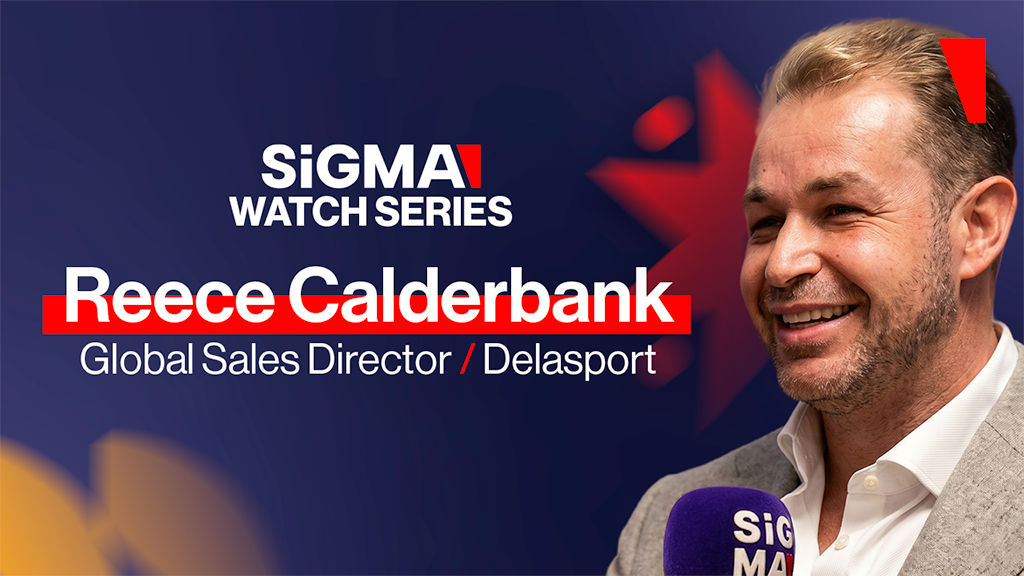
Compliance as a competitive edge: Delasport on iGaming expansion in Southeast Asia
Delasport Global Sales Director Reece Calderbank explains at SiGMA Asia 2026 in Manila how compliance in highly regulated markets like the U
 sigma.world·23d ago
Hamdan bin Mohammed meets with global gaming leaders at Dubai Gaming Retreat
Zawya·2d ago

Dubai strengthens position as global wealth hub: Julius Baer report
Zawya·1d ago

Curaçao Gaming Authority Issues First Crypto Rulebook for Online Casinos, Mandating Wallet Screening and Mixer Ban
The Curaçao Gaming Authority (CGA) has issued its first detailed cryptocurrency regulatory framework for licensed online gambling operators.
 news.bitcoin.com·12d ago
Comments
Sign in to join the conversation.
No comments yet. Be the first.