
























Civilizational Energy Transition and Contemporary Unrest
It's pretty clear now that a lot of the unrest we're seeing—and the insecurity-induced radicalization—is due to an unprecedented civilizational energy transition that looks to be more or less…
Read the full articleYou might also wanna read

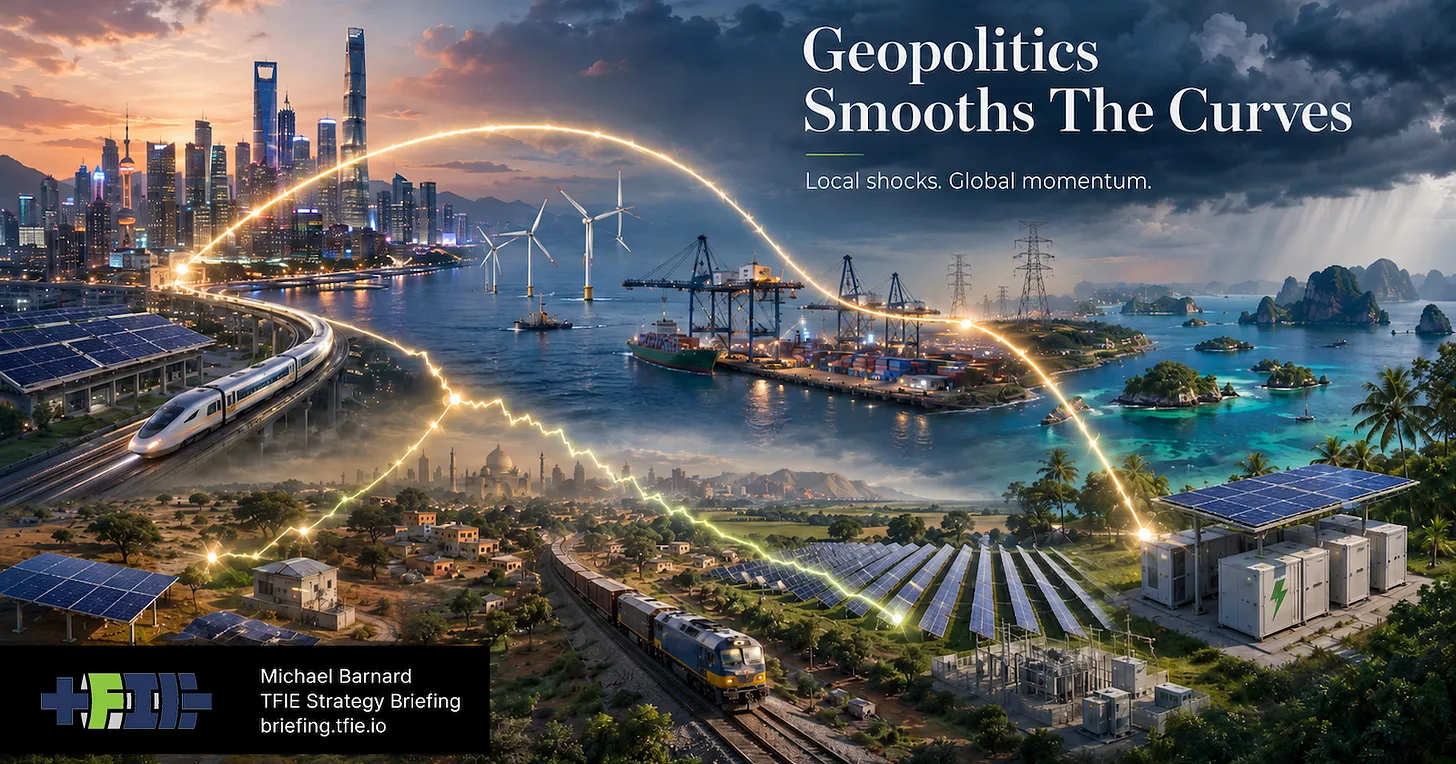
Why the Global Energy Transition Is Smoother Than Any Single Country's Path Suggests
Local energy-transition curves are jagged. Global deployment is smoothed by many countries, shocks, supply chains and industrial strategies
 cleantechnica.com·21d ago
Energy transition or energy addition? What the latest data shows
Ten takeaways from the Energy Institute’s 75th annual Statistical Review of World Energy
ft.com·9d ago

Energy Transition: Yes, No, Maybe?
THB figures and tables from the 2026 EI Statistical Review of World Energy
rogerpielkejr.substack.com·10d ago

Climate, conflict and the energy transition: security challenges ahead
Climate change can increase the risk of armed conflict, but it is not the only driver.
erc.europa.eu·3mo ago
THE ENERGY CRISIS – Welcome to the Age of Global Energy Shocks: Bousso
The past decade has brought a rapid succession of global energy crises, driven by military conflict, extreme weather and supply-chain snarls
EnergyNow·2mo ago
Energy and Energy Transition
nam11.safelinks.protection.outlook.com·3mo ago
Comments
Sign in to join the conversation.
No comments yet. Be the first.