
























China's New Rules For PV Efficiency And Impact On India
By
Prasanna Singh
4h agoen
Source
 Saur EnergyChina's New Rules For PV Efficiency And Impact On Indiasaurenergy.com
At the end of June, Chinese authorities issued three mandatory national standards covering the entire PV value chain, from polysilicon and monocrystalline silicon to modules and inverters, all taking legal effect on January 1, 2027. The mopve, clearly aimed at consolidating a sector that has failed to find a way on its own, will have implications worldwide, as one would expect. TOPCon and heterojunction (HJT) modules must deliver a conversion efficiency of at least 23.2%, and back-contact (BC) modules at least 23.5%, to be sold at all. On the standard 1134mm x 2382mm format, that efficiency floor translates to a minimum rated power of 630W, below which commercial sale is banned. Upstream, polysilicon made via the trichlorosilane (Siemens) route must come in under 6.4kgce/kg of energy consumption, against an industry average of 7.05 and a fleet of legacy lines running well above 7.6. China's silicon industry body expects operational polysilicon capacity to shrink to 2.4 million tonnes from 2.87 million tonnes, a 16.4% cut, as non-compliant lines exit. For China, this is supply-side reform by decree: a legally enforced cull of the excess capacity that has kept the industry in a hurting price war for three years. For India, it is two very different stories, split neatly at the January 2027 deadline. Through 2026: a buyer's market in everything China wants to retire The first-order effect for India is a windfall. Chinese producers holding inventory or running lines that will be illegal to sell from in six months have every incentive to clear stock now, and the natural destination for sub-630W modules, older-generation cells and mid-efficiency wafers is any large market that will still absorb them. India remains exactly that. Despite the reimposition of ALMM in April 2024 cutting module imports sharply, Indian module assembly still leans heavily on imported Chinese cells and wafers, and the non-ALMM private market (captive, C&I and merchant projects outside government-supported schemes) continues to buy imported product freely. Expect three flavours of deflation between now and December. First, cell and wafer prices into India should stay soft or fall further as Chinese fabs prioritise volume over price ahead of the cut-off, cushioning Indian module makers' input costs at a time when domestic module prices are already under pressure from the 100GW-plus of nameplate capacity ALMM now carries. Second, finished-module clearance pricing will tempt the non-ALMM segment, keeping imported modules cheap for private buyers through the year. Third, and least discussed, is capital equipment: production lines that cannot make compliant product in China do not become scrap, they become export goods. India's module capacity build-out over the past three years has been substantially tooled on Chinese lines, and a wave of retired-but-functional PERC and early-TOPCon equipment will be offered at distressed prices to those still kleen on solar manufacturing. That is a genuine trap. Cheap tooling that produces product below the new global efficiency frontier is how a manufacturing base locks in obsolescence at attractive IRRs. The uncomfortable mirror: what ALMM Revision XLIX reveals The more sobering exercise is to hold India's own approved list up against Beijing's new floor. SaurEnergy ran the numbers on the full MNRE ALMM List-I released on July 6, 2026 (Revision XLIX): roughly 214 enlisted manufacturers and over 15,000 individual model listings, each with a declared module efficiency. The results are stark. Of the nearly 8,000 TOPCon model listings on the Indian list, fewer than 10% meet or exceed China's 23.2% minimum . The median Indian TOPCon listing sits at 22.2%, a full percentage point below what will constitute the bare minimum for market access in China from January. Even the 90th percentile of Indian TOPCon listings, at roughly 23.18%, falls a whisker short of the Chinese floor. Flagship models fare better, with Emmvee standing out in particular, but the broader pattern is 'compliance at the top of the brochure'. About 97 of the 152 manufacturers with TOPCon listings have at least one model at 23.2% or above, yet in almost every case it is only the highest one or two bins of a long range. Only one manufacturer's entire listed TOPCon range, a single Gautam Solar facility at Bhiwani,Haryana, clears the Chinese bar from bottom bin to top. The rest sell a spread whose volume-weighted centre of gravity is comfortably below it. The picture darkens further outside TOPCon. PERC still accounts for close to half of all model listings on the ALMM, with a median efficiency of 20.4%, and the new Chinese standards simply provide no compliant category for it. HJT is a rounding error on the Indian list, essentially confined to Reliance's listings topping out near 23.5-23.8%. Back-contact, for which China has set a 23.5% floor, does not appear on the Indian list at all. The Regulatory Contrast- a 220-basis-point gap On January 1, 2027, the very day China's 23.2% floor takes legal effect, MNRE's own proposed revision to ALMM efficiency thresholds would raise India's minimum for utility-scale crystalline silicon modules from 20% to just 21%, rising to 21.5% a year later. Both governments are tightening on the same date; the gap between their definitions of 'minimum acceptable' will be 220 basis points. India's floor in 2028 will still sit below China's 2027 floor by 170 basis points, and below the median product China will actually ship by far more. ALMM was designed as a quality and origin gate, not a technology-forcing mechanism, and it shows. Post-2027: competing against a leaner, meaner China Beyond the deadline, the news for India turns distinctly less pleasant, through two channels. The input-cost channel reverses. The same capacity cull that produces 2026's clearance sales produces 2027's tighter market. A 16.4% cut in operational polysilicon capacity, concentrated among the highest-cost producers, is just the kind of supply discipline that ends a price war. If polysilicon and wafer prices firm from 2027, and that is the explicit intent of the reform, Indian cell and module makers who remain net importers of upstream material will end up paying more. India's wafer capacity is still being planned, and ALMM for wafers only bites from June 2028. The window in which India enjoys Chinese overcapacity pricing without Chinese-style consolidation is closing in soon. The export benchmark moves. From 2027, every module leaving a Chinese factory will be, by mandate, a 630W-plus, 23.2%-plus product. That becomes the reference specification for every serious buyer in the Gulf, Africa, Southeast Asia and Latin America, the markets Indian exporters are being pushed towards after the US, which took roughly 95% of Indian module exports, was effectively closed by tariffs that have already cut India's solar exports by more than a third. A buyer in Riyadh or Nairobi comparing a median Indian TOPCon module at 22.2% against a floor-spec Chinese module at 23.2% is not making a close call on efficiency, and the balance-of-system savings from higher-wattage modules compound the gap. Indian product can still win on tariff arbitrage, trade-policy alignment and China-plus-one procurement mandates, but it will increasingly do so despite the spec sheet, not because of it. What should change here Three implications follow. First, MNRE's proposed 21% floor for 2027 looked cautious when it was drafted in November 2025; it looks timid now. A faster escalator, with a published glide path to 23%-class minimums by the end of the decade, would give manufacturers investment certainty and buyers a credible quality signal, while ALMM's origin rules continue to do the protection. Second, the equipment-import temptation of the next six months deserves scrutiny: PLI-backed and new greenfield capacity should be benchmarked against where the global frontier will be in 2028, not where clearance-sale tooling was in 2024. Third, the roughly one hundred manufacturers whose flagship bins already clear 23.2% have a marketing and certification opportunity: in export markets, 'meeting Chinese benchmarks is about to become an unspoken pass/fail test, and Indian firms that can document it should say so loudly. China has, characteristically, used regulation to do what its market would not: destroy its own weakest capacity to save its strongest. India's manufacturers get one comfortable year out of the transition. What they do with it, and whether India's own standards regime pushes them or coddles them, will decide whether 2027 is remembered here as the year inputs got expensive, or the year Indian modules got serious.
You might also wanna read
Updation of List (Manufacturers and Models of Solar PV Modules) of ALMM Order, 2019 – Reg. – EQ
Solar Quarter·22h ago

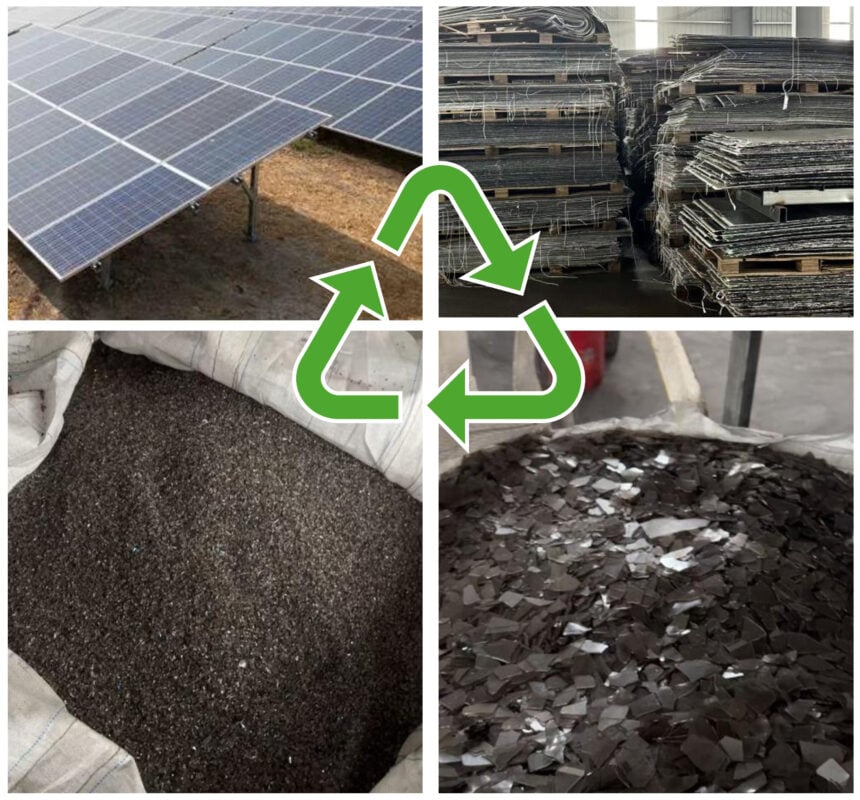
China's solar PV capacity surpasses thermal power, driving focus on end-of-life recycling and circular manufacturing
China's solar PV capacity has surpassed thermal power for the first time, reaching 946GW by early 2025 and 1.24TW by March 2026. Under carbo
 pv-tech.org·25d ago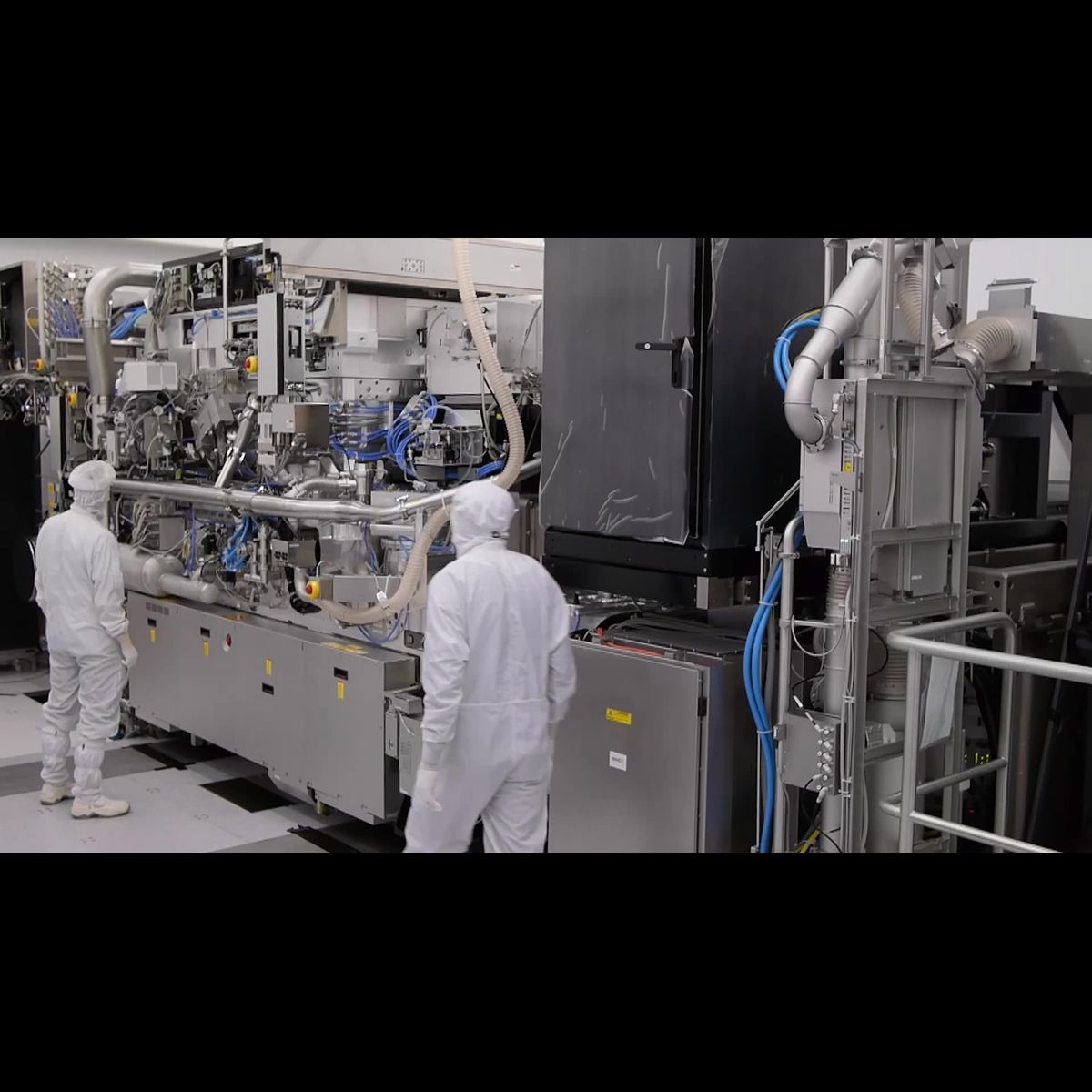
China faces steep technical hurdles in bid to build domestic lithography machines to rival ASML
This article examines China's ambitious goal to build its own advanced lithography machines — the critical equipment needed to manufacture c
 nikkei.shorthandstories.com·10d ago
Taiwan’s Next Semiconductor Bottleneck Is Not Silicon. It Is Power.
open.substack.com·2d ago
ASML unveils EUV light source advance that could yield 50% more chips by 2030
reuters.com·4mo ago
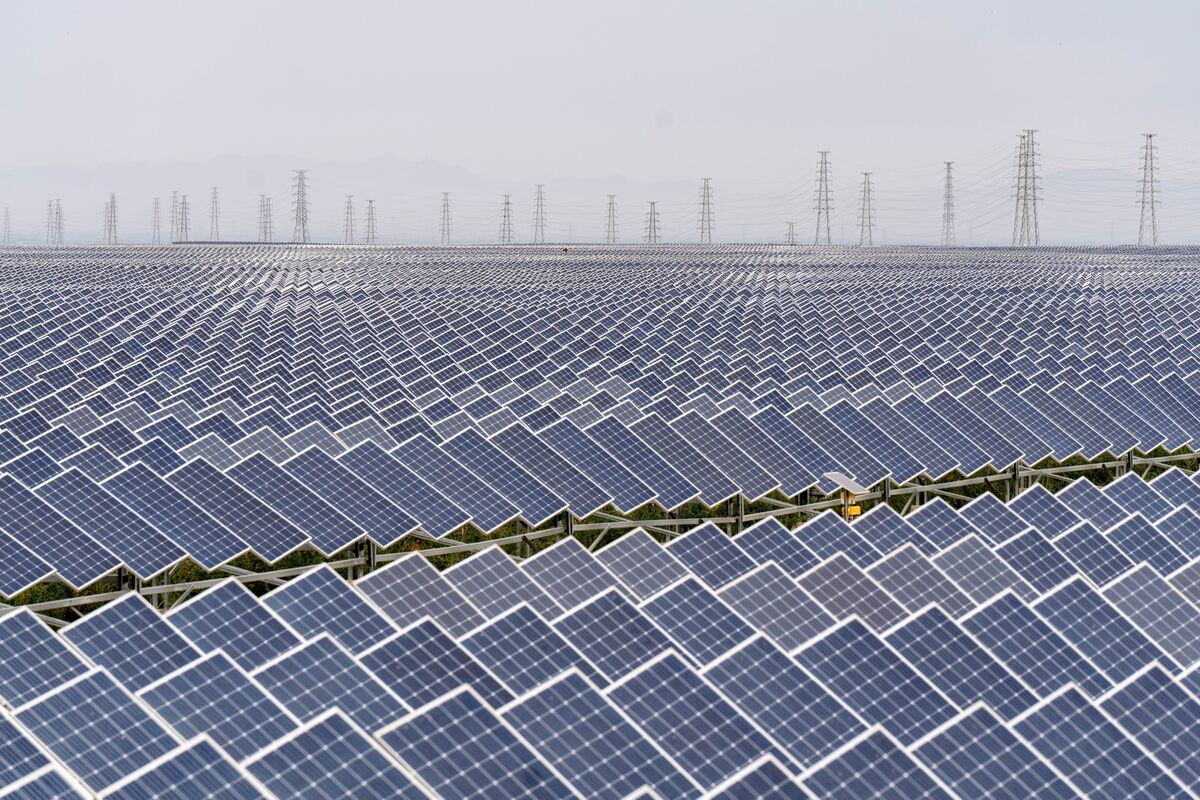
China's Solar Industry Faces Overcapacity Crisis, Looks to Batteries and Space for Growth
China's solar industry is grappling with chronic overcapacity that has depressed profits for over two years. At the world's largest solar co
 bloomberg.com·1mo ago
Comments
Sign in to join the conversation.
No comments yet. Be the first.