
























China's De-Dollarization Push Stalls Against Market Realities
By
Agathe Demarais
Summary
China's de-dollarization efforts have made genuine progress over the past decade in building alternative financial channels, but the yuan still faces significant structural barriers to becoming a true global reserve currency. While Beijing can create financial instruments and swap lines, it cannot decree market demand. The article examines the gap between China's ambitions and the reality of dollar dominance, noting that despite political pushes at forums like BRICS, the yuan's share of global reserves, trade settlement, and forex trading remains modest. Key obstacles include capital controls, lack of convertibility, limited trust in Chinese institutions, and the absence of deep, liquid, and transparent financial markets that international investors require.
Source

 bskyChina's De-Dollarization Push Stalls Against Market Realitiesforeignpolicy.com
Key quotes
· 4 pulledChinese planners are once again taking aim at the dollar.
Beijing can create financial instruments, but it cannot decree demand.
Over the past decade, Beijing has made genuine progress in building alternative financial channels.
Expect the usual chatter about de-dollarization to hit fever pitch ahead of the annual BRICS summit.
You might also wanna read


De-dollarization: Analyzing the Shift Away from US Dollar Dominance in Global Markets
The article examines de-dollarization - the process of reducing reliance on the US dollar in global trade and finance. It explores how this
 jpmorgan.com·5mo ago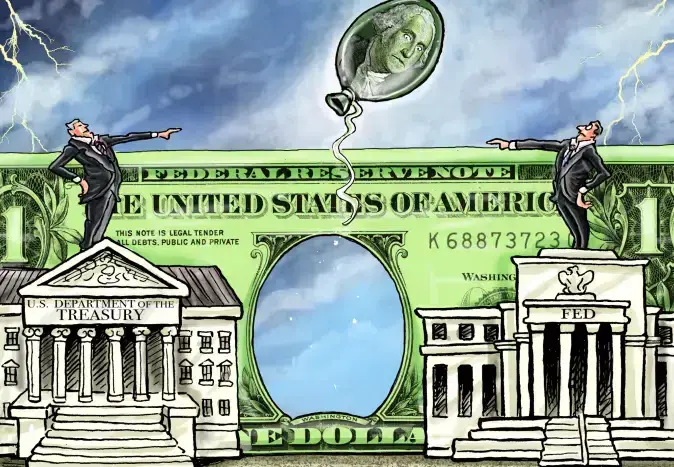
The Mechanics of Money: How Deficits, Trade, and Reserves Interact in Modern Economies
This article provides a detailed technical explanation of how money actually works in modern economies, focusing on the accounting mechanics
 doap.metal.bohyen.space·3mo ago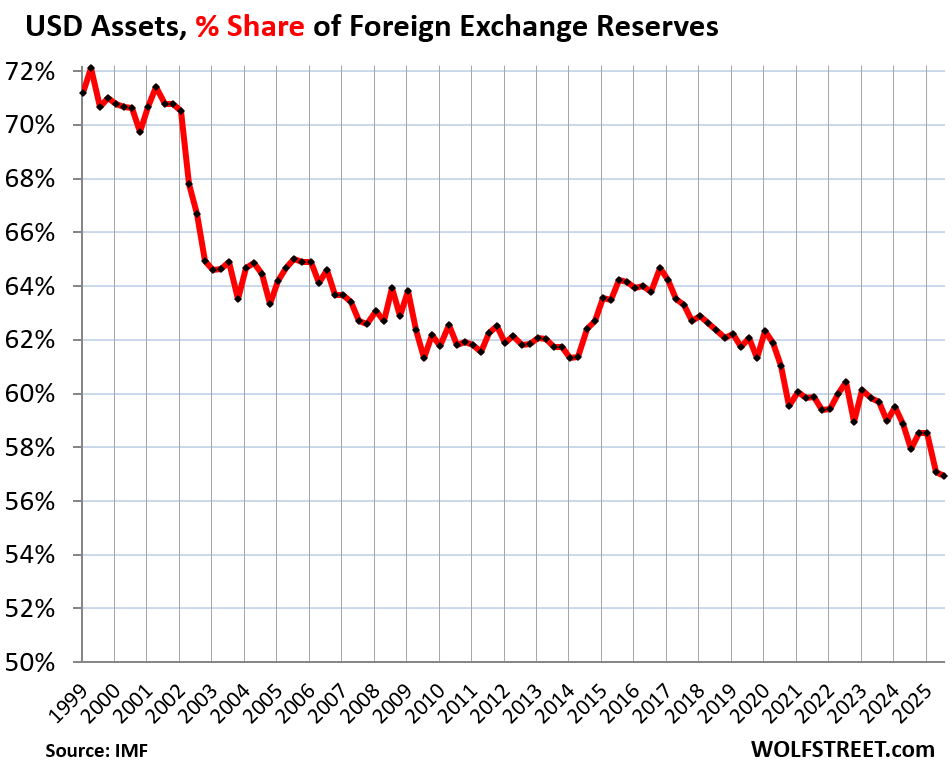
US Dollar Share of Global Central Bank Reserves Falls to Lowest Level Since 1994
The US dollar's share of global foreign exchange reserves held by central banks has dropped to 56.9% in Q3, the lowest level since 1994, acc
Projecting the Decline of the U.S. Dollar as the Global Reserve Currency by 2040
The article predicts the decline of the U.S. dollar as the global reserve currency by 2040, suggesting it may no longer be the default unit
 mathmeetsmoney.substack.com·10mo ago
Strategic Analysis: Why US-China Economic Decoupling Favors the United States
This article presents a strategic analysis arguing that US-China economic decoupling is inevitable and asymmetric, with China being more dep
 campbellramble.ai·8mo ago
Bessent: Dollar Can Stay Strong During Rate Cuts If Economy Holds Up
Treasury Secretary Scott Bessent argues that interest rate cuts do not necessarily lead to a weaker dollar, contrary to conventional market
 zerohedge.com·16h ago
Comments
Sign in to join the conversation.
No comments yet. Be the first.