
























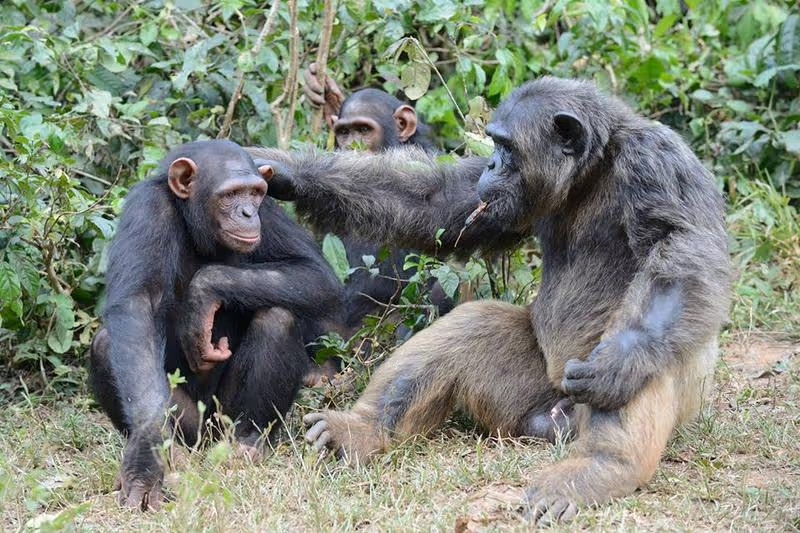
Chimpanzee cognitive study shows ability to process conflicting evidence and change decisions
Chimps can take in new evidence, evaluate its strength, and change their minds.
Read the full articleYou might also wanna read


Sensorimotor Complexity and Cognition as Predictors of Primate Brain Size
Objectives As animal brain size increases, cognitive performance generally increases. However, other key brain functions, such as the regula
 onlinelibrary.wiley.com·1mo ago
Qué descubrió la ciencia sobre los sueños de las personas sin imágenes mentales
Una investigación identificó que quienes presentan afantasía también muestran diferencias en el contenido sensorial de sus sueños. El hallaz
Quantum computing used to study chimpanzee conflict
The project could sharpen conservation planning by showing how habitat and food pressures shape violent and peaceful behaviour in primates.
Study Reveals Same-Sex Sexual Behavior in Chimpanzees Has Been Overlooked Due to Scientific Biases
The big question is, how did we manage to miss these behaviors in chimpanzees for so long?
 prosocial.world·1mo ago
Queering Primate Research: How Bias Shapes the Study of Same-Sex Behavior in Bonobos and Other Great Apes
Are bonobos just gal pals? We outline historical interpretations of same-sex sexual behavior in bonobos and propose ways of queering this re
onlinelibrary.wiley.com·23d ago
Charles Darwin avait raison : les humains et les animaux partagent certains goûts musicaux
Une étude récente révèle que les humains et les animaux partagent des préférences musicales, suggérant des racines évolutives communes. Cett
Comments
Sign in to join the conversation.
No comments yet. Be the first.