
























 Baker's Take
Decades-old mystery solved as chemists freeze fleeting borylnitrene in crystal for first time

By
Mr Bagel
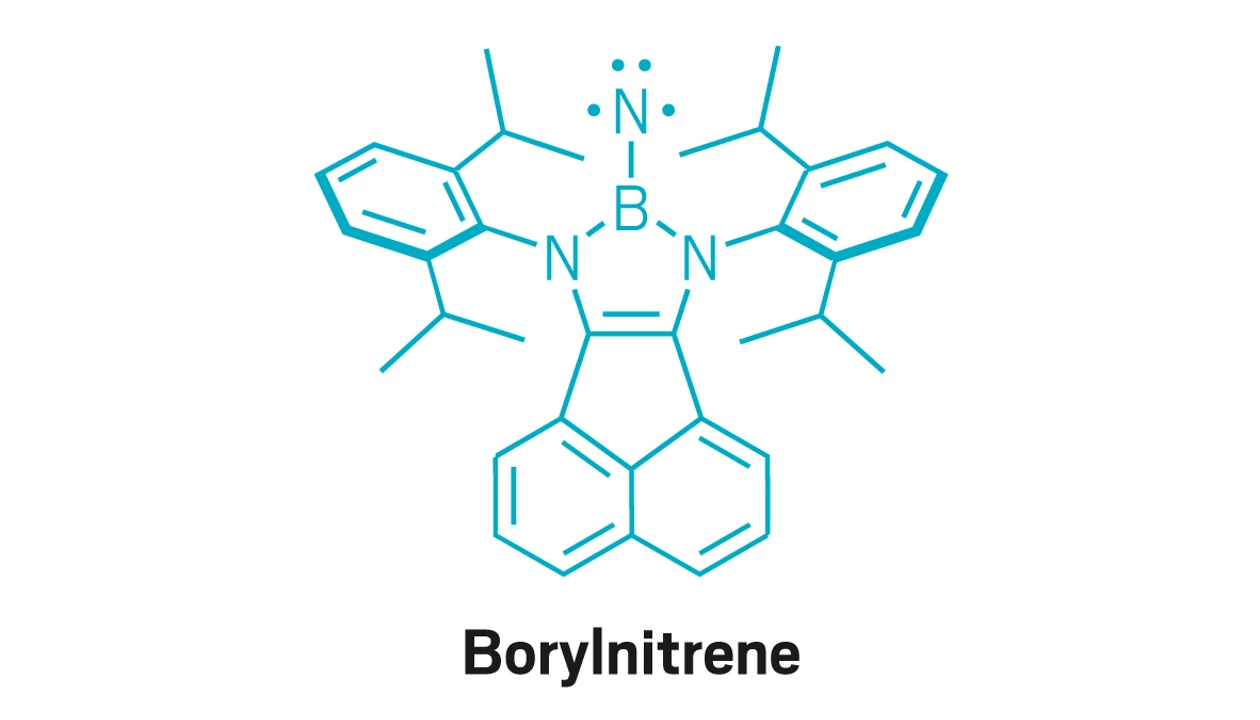
For the first time, researchers have captured and directly observed the structure of a triplet borylnitrene, a highly reactive nitrogen-containing molecule that has eluded direct study for decades. The achievement, reported by Phys and Chemical & Engineering News, solves what the latter calls a long-standing mystery in synthetic chemistry.

Nitrenes are notoriously difficult to study because they rapidly transform into more stable structures through a process called 1,2-migration. As Phys explained, these intermediates are "the ghosts of synthetic chemistry, formed in an instant and gone just as quickly, rearranging into something entirely different."
"formed in an instant and gone just as quickly, rearranging into something entirely different"
The researchers succeeded in trapping the borylnitrene in a crystal and then used X-ray diffraction to reveal its structure. According to Chemical & Engineering News, the team's work marks the first time a triplet borylnitrene has been observed in crystalline form.
"For decades, chemists have relied on boron-bound nitrenes (triplet borylnitrenes) as fleeting intermediates in synthesis, but their structure was previously unknown."
The direct observation of this elusive intermediate could open new avenues in synthetic chemistry. Both outlets noted that nitrenes are widely used in synthesis, and having a clear structural picture of the triplet borylnitrene may help chemists better control and design reactions that depend on these fleeting species.
The reporting
2 outlets covered this story. Each links to the original.
Comments
Sign in to join the conversation.
No comments yet. Be the first.