
























Cache - BYPASS status now returned for uncacheable responses
Source
CloudflareCache - BYPASS status now returned for uncacheable responsescloudflare.comYou might also wanna read


Cloudflare Addresses CPU Performance Benchmarks for Workers Platform
Cloudflare investigated and responded to independent benchmarks by Theo Browne that showed Cloudflare Workers performing 3.5x slower than Ve
 blog.cloudflare.com·8mo ago
Cloudflare's response to the "Copy Fail" Linux kernel vulnerability (CVE-2026-31431)
Cloudflare's security and engineering teams responded to the "Copy Fail" Linux kernel local privilege escalation vulnerability (CVE-2026-314
The Cloudflare Blog·1mo ago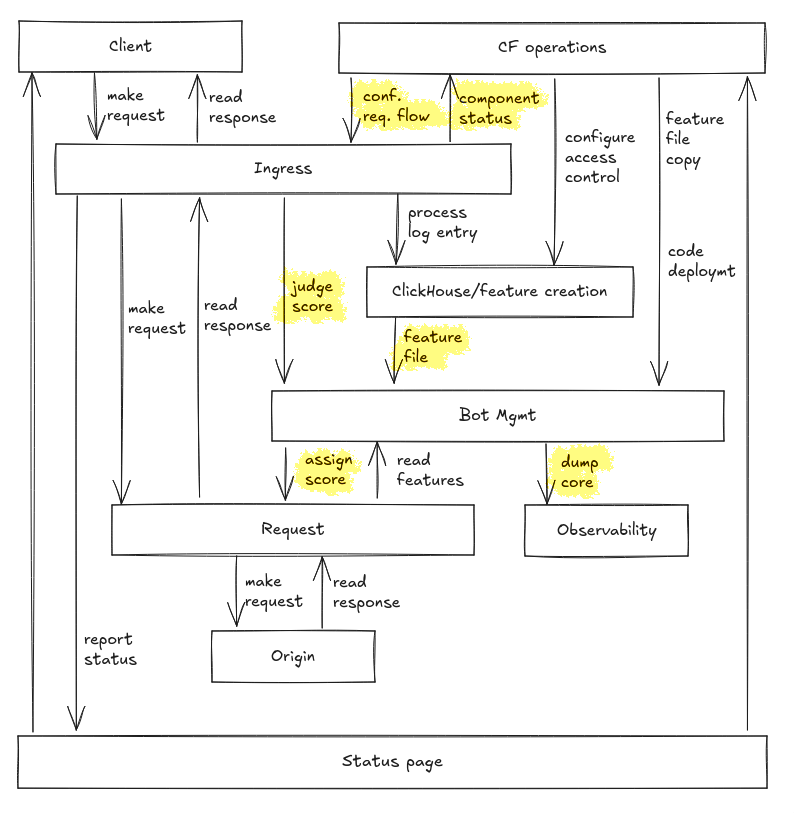
Author Responds to Criticism of Cloudflare Outage Analysis
The article is a response to criticism about a previous analysis of Cloudflare's outage. The author acknowledges that their earlier piece wa
 entropicthoughts.com·7mo ago
Cloudflare Joins UK Pirate Site Blocking Program Impacting Major ISPs
Cloudflare has become the first intermediary to join the UK's pirate site blocking program, impacting major UK internet service providers. T
torrentfreak.com·11mo ago
Cloudflare fixes CUBIC congestion control bug in QUIC implementation that permanently pinned performance at minimum
Cloudflare engineers discovered and fixed a bug in the CUBIC congestion control algorithm (RFC 9438) used in their QUIC implementation (quic
blog.cloudflare.com·1mo ago
Cloudflare Outage Linked to Rust Code Rewrite from C
The article discusses Cloudflare's largest-ever outage, attributing it to a significant factor: code rewritten from C to Rust. The Rust-base
 news.ycombinator.com·7mo ago
Comments
Sign in to join the conversation.
No comments yet. Be the first.