
























Building Real-Time AI Tutoring Platforms: Using FastAPI and WebSockets to Overcome HTTP Latency
By
Estefanio Fernando
Summary
This article explores the infrastructure challenges of building real-time AI tutoring platforms for EdTech. It argues that traditional HTTP request-response cycles are inadequate for interactive learning environments, especially for complex subjects like Computer Science and engineering. The piece advocates for using FastAPI and WebSockets to bypass HTTP latency, enabling high-concurrency, low-latency communication between AI tutors and students. It covers architectural patterns for scaling real-time educational software, including connection management, stateful interactions, and concurrency handling.
Source
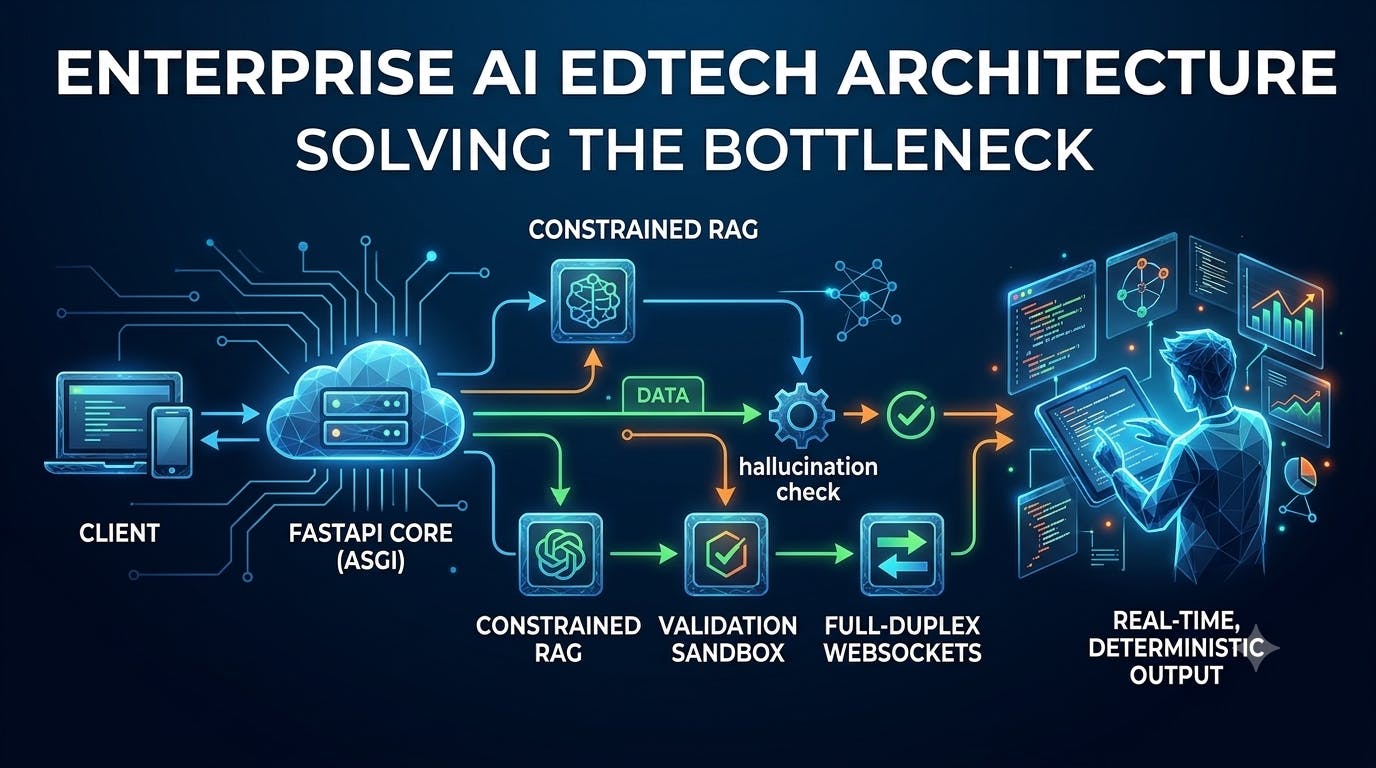 bskyBuilding Real-Time AI Tutoring Platforms: Using FastAPI and WebSockets to Overcome HTTP Latencyhackernoon.com
Key quotes
· 3 pulledStandard consumer-grade AI chatbots rely heavily on traditional HTTP request-response cycles.
While this stateless model works fine for asynchronous text generation, it completely breaks down when applied to real-time, interactive learning environments.
In educational scenarios—especially when teaching complex subjects like Computer Science, structural engineering, or algorithmic logic—students do not just need ra
You might also wanna read

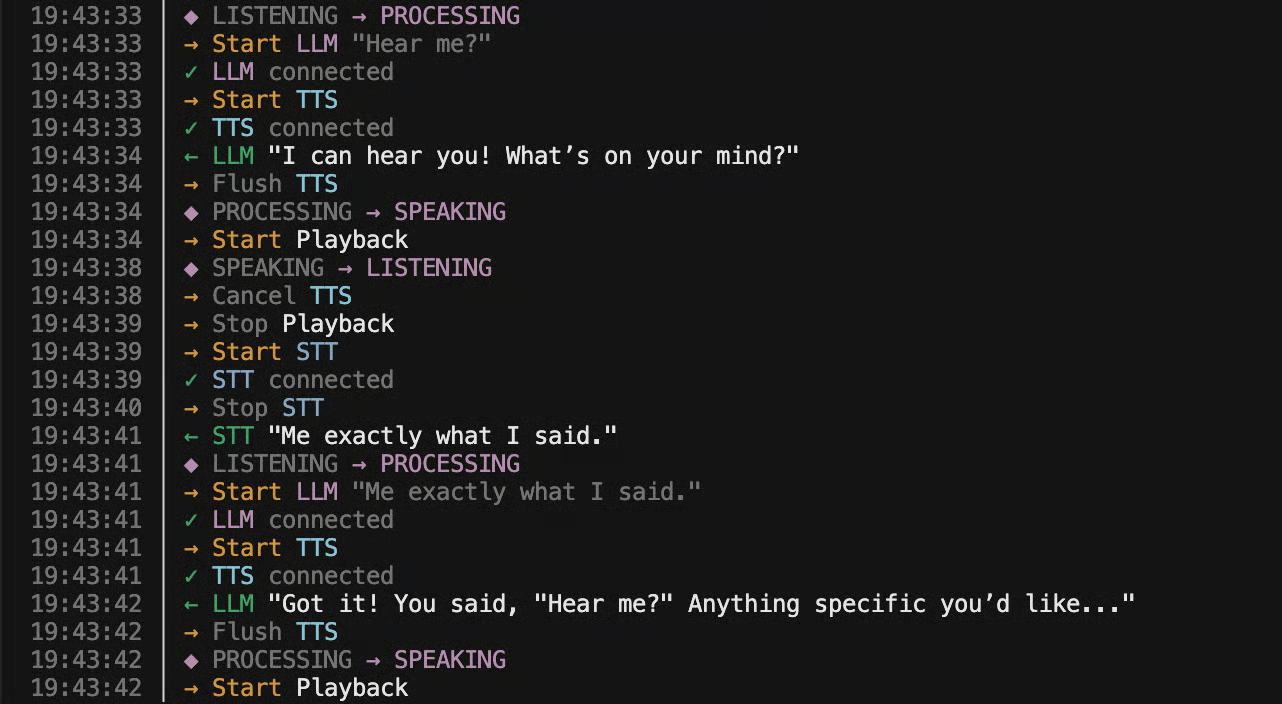
Building a Sub-500ms Latency Voice Agent: Technical Architecture and Implementation
Nick Tikhonov shares his technical journey building a sub-500ms latency voice agent from scratch, detailing the challenges of achieving real
 ntik.me·4mo ago
OpenAI Launches WebSocket Mode for Responses API to Reduce Latency by 40%
OpenAI has introduced WebSocket Mode for its Responses API, which maintains persistent connections to reduce latency by up to 40% in AI agen
 Product Hunt·4mo ago
How OpenAI rebuilt its WebRTC stack for low-latency voice AI at scale
OpenAI rearchitected its WebRTC stack to address three key constraints for real-time voice AI: low-latency audio delivery, global scale, and
 OpenAI·2mo ago
AI Gateway - AI Gateway launches Realtime WebSockets API

Overcoming Barriers to AI Adoption: Addressing Latency and Cost Challenges
The article discusses the current state and future potential of AI, highlighting that while AI already surpasses human performance in narrow
 taalas.com·4mo ago
VoiceAI: A Developer's Learning Path for Building Real-Time Voice Agents
A curated, developer-friendly learning path for building real-time voice AI agents, covering the full stack from speech-to-text foundations
 GitHub·2mo ago
Comments
Sign in to join the conversation.
No comments yet. Be the first.