
























Boron nitride nanotube membranes transport lithium ions 31 times faster than predicted, researchers find
By
Ben Zientara
Summary
Researchers from Rutgers University, the University of Illinois Chicago, and Argonne National Laboratory discovered that boron nitride nanotube membranes can transport lithium ions up to 31 times faster than standard diffusion rates predict. This breakthrough has potential applications in lithium recovery from spent batteries and blue energy generation, as the membranes selectively move lithium ions far faster than other charged particles.
Source
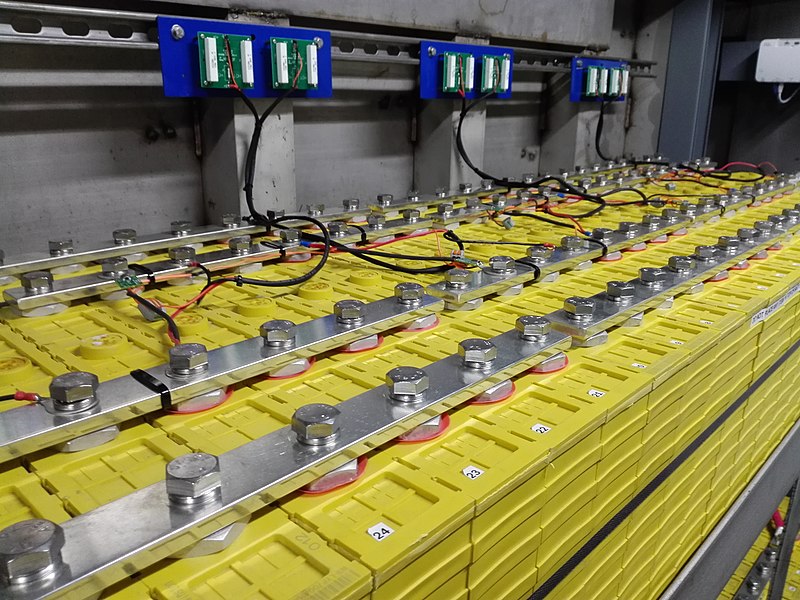
 bskyBoron nitride nanotube membranes transport lithium ions 31 times faster than predicted, researchers findpv-magazine-usa.com
Key quotes
· 3 pulledResearchers at Rutgers University, the University of Illinois Chicago, and Argonne National Laboratory have found that boron nitride nanotube membranes transport lithium ions far faster than expected
Lithium transport was observed at up to 31 times the rate expected from standard diffusion
pointing to potential applications in lithium recovery from spent batteries and blue energy generation
You might also wanna read

Sodium-ion battery breakthrough offers faster charging and improved safety over lithium-ion
Scientists at Tokyo University of Science have developed a new carbon-based electrolyte for sodium-ion (Na-ion) batteries that could signifi
 livescience.com·5mo ago
BAIC Group Announces Sodium-ion Battery Breakthrough: 11-Minute Charging and 450 km Range for EVs
Chinese automaker BAIC Group announces a breakthrough in sodium-ion battery technology for electric vehicles, achieving 11-minute charging a
 electrek.co·3mo ago
Columbia University Researchers Develop Gel Electrolyte to Stabilize Anode-Free Lithium-Ion Batteries
Researchers at Columbia University have developed a new gel electrolyte that stabilizes anode-free lithium-ion batteries, potentially improv
 techradar.com·4mo ago
Discovery of Dendritic Nanotubular Networks Enables New Form of Brain Cell Communication
Researchers have discovered a previously unknown form of intercellular communication in the brain through dendritic nanotubular networks. Us
 science.org·8mo ago
Korean Research Team Develops Anode-Free Battery with 1,270 Wh/L Energy Density, Potentially Doubling EV Range
A Korean research team from POSTECH, KAIST, and Gyeongsang National University has developed an anode-free lithium metal battery that achiev
 postech.ac.kr·6mo ago
Lithium-ion batteries near theoretical limits as solid-state alternatives emerge
The lithium-ion battery, long dominant in smartphones, EVs, and drones, is approaching its theoretical performance limits. Scientists note t
 economist.com·1mo ago
Lithium-ion batteries near theoretical limits as solid-state alternatives emerge
The lithium-ion battery, long dominant in smartphones, EVs, and drones, is approaching its theoretical performance limits. Scientists note t
economist.com·1mo ago
Comments
Sign in to join the conversation.
No comments yet. Be the first.