
























Biodegradable Packaging Film Made from Milk Protein Breaks Down in 13 Weeks
Scientists racing to tackle plastic pollution have created a surprising new contender: a biodegradable packaging film made partly from milk protein. Researchers at Flinders University blended calcium…
Read the full articleYou might also wanna read
Formulation and Properties of Agar-Based Biopolymer Blends for Packaging Applications
This dissertation developed and evaluated agar-based biopolymer films prepared by solution casting through three formulation routes: binary
Researchers develop compostable PLA that potentially could be used for biomedical applications
When researchers Marc Hillmyer and Christopher Ellison created their compostable plastic, they focused on accelerating PLA’s degradation wit
Machine learning to predict how fast biodegradable plastics break down in nature
Testing how quickly a biodegradable plastic actually breaks down in the environment can take months, sometimes years, of lab work. A new stu
New “living plastic” self-destructs in just 6 days without leaving microplastics
Researchers have created self-destructing living plastic that uses engineered bacteria to completely break itself down when activated. The m
New “living plastic” self-destructs in just 6 days without leaving microplastics
Researchers have created self-destructing living plastic that uses engineered bacteria to completely break itself down when activated. The m

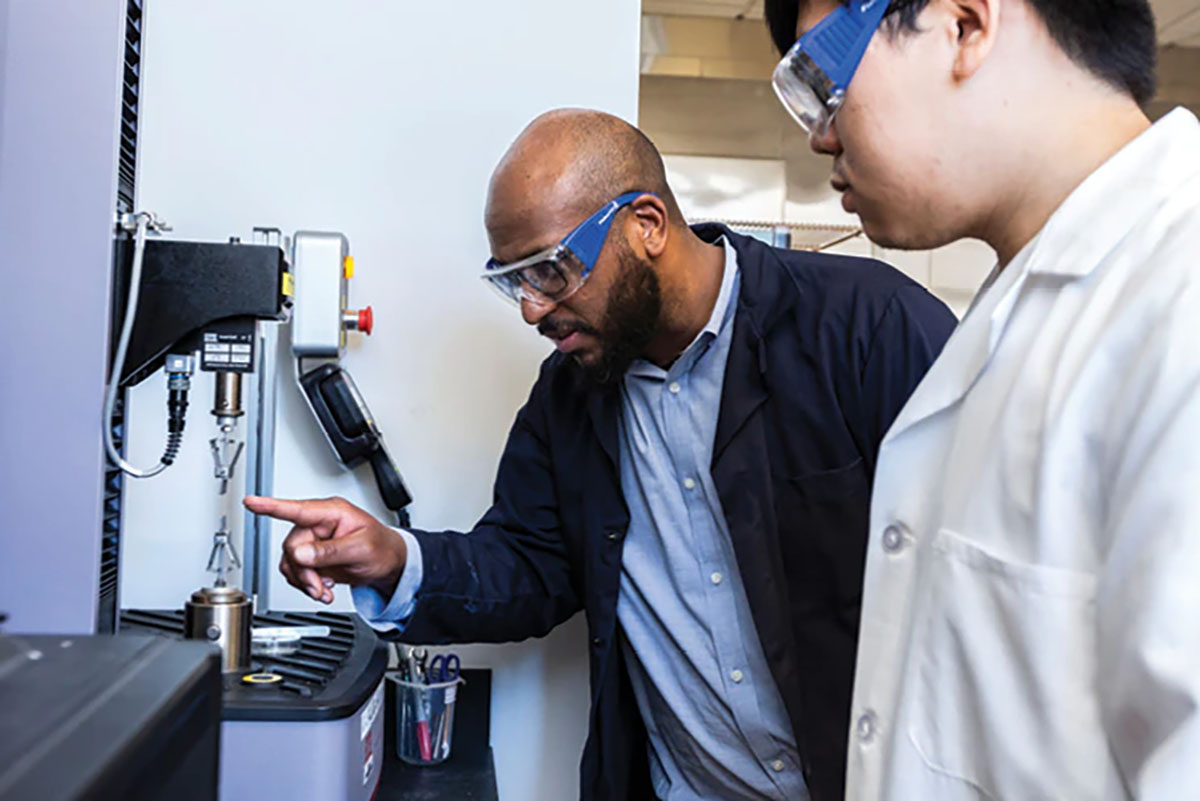
Washington University researchers strengthen soy-based bioplastics using surface chemistry
Researchers at Washington University in St. Louis using surface chemistry to improve the strength of soy and cellulose-based biomaterials.
 engineering.washu.edu·1mo ago
Comments
Sign in to join the conversation.
No comments yet. Be the first.