
























Beyond the Game: Exploring Latin American and Caribbean Cultures Through the FIFA World Cup
From the article
Beyond the Game: Exploring Latin American and Caribbean Cultures Through the FIFA World Cup [email protected] Tue, 06/30/2026 - 10:14 Explore how the FIFA World Cup reflects diverse Latin American and Caribbean histories, communities and scholarship, from national pride and fan culture to media representation and global sports influence. No 2026-07-01T14:00:00 What You'll Learn: The FIFA World Cup is a global football tournament with deep historical and cultural significance Latin American and Caribbean countries and communities have shaped the World Cup in distinct ways The game has become a way for people across the globe to connect over a shared love of the sport The FIFA World Cup is a global football tournament that takes place every four years, consisting of 48 teams competing for the championship title and trophy. This popular sporting event draws billions of spectators and has become a significant cultural occurrence for countries across the globe. The World Cup is not just a football tournament—it’s a cultural event shaped in part by Latin American and Caribbean countries, communities, players and fans. A Brief History of the World Cup The first-ever World Cup, organized by the Fédération Internationale de Football Association (FIFA), took place in 1930 and was hosted in Uruguay. The inaugural tournament involved 13 teams from North America, South America, and Europe. After 18 matches, the final match came down to Uruguay versus Argentina, with Uruguay taking home the trophy. Since its inception, the World Cup has evolved in its format, participants, and level of competition. The event is now one of the most watched sporting events and has grown both socially and economically. The 2026 FIFA World Cup, taking place across Canada, Mexico, and the United States, and will be the first tournament with 48 teams competing for the sought-after title. Impact of Latin American and Caribbean Cultures Across many Latin American and Caribbean countries and communities, football can be connected to national pride, identity, community, and culture . For many fans, the World Cup can become a shared cultural moment through public viewing events, family traditions, music, media coverage, and national or regional pride. The pitch can become a stage for the achievements, cultures and identities of countries across Latin America and the Caribbean. It can also draw attention to the broader social, economic, and political contexts that shape how the tournament is experienced and represented. For players, fans, journalists, and communities, the World Cup offers opportunities for connection, celebration, and visibility on a global scale. How Latin American and Caribbean Communities Shape the Game Latin American and Caribbean communities have had undeniable influence on the World Cup since its creation. Countries like Brazil and Argentina have played prominent roles in World Cup history. Caribbean teams have also contributed to World Cup history, with Curaçao becoming the smallest country by population to qualify for the men’s World Cup. In the 2026 World Cup, Los Angeles, Miami and Houston will host some of the games. These cities are home to diverse Latin American, Caribbean, Latino, and Hispanic communities, recognizing that these identities overlap but are not interchangeable. Their local histories, languages, media, businesses, cultural organizations, and fan communities may shape how the tournament is experienced in each city. As the 2026 FIFA World Cup brings renewed attention to the Americas, it also offers an opportunity to explore the rich scholarship surrounding football's cultural influence. From national identity and migration to media and popular culture, researchers have long examined the sport's role in shaping societies across Latin America and the Caribbean. Discover More with HAPI The Hispanic American Periodicals Index (HAPI) is a bibliographic database that provides citations to articles from scholarly journals published around the world on Latin America and the Caribbean since the late 1960s. It can be used to research topics such as football and national identity, media representation, and the social impact of global sporting events, as well as a broad range of political, economic, social, artistic, and humanities subjects. Learn more with the Hispanic American Periodicals Index Explore HAPI Library Resources Research databases Academic libraries Collection development Improving Discovery: Updating Indigenous Names in HAPI Records 27 April 2026 Latino, Hispanic, Latina or Latinx? Exploring the Complexities Around Cultural Neologisms 26 September 2022 Open Access in Latin America — A New Initiative from Hispanic American Periodicals Index (HAPI) and SciELO-Mexico 17 November 2020 EBSCOpost
Continue reading on ebsco.comYou might also wanna read

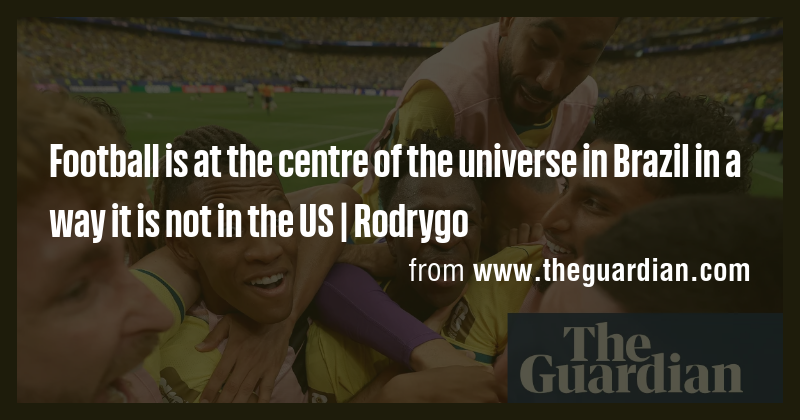
Rodrygo contrasts Brazil's all-encompassing football culture with the US's more contained World Cup enthusiasm
The article contrasts the cultural centrality of football (soccer) in Brazil versus the United States. In the US, World Cup excitement is la
 briefly.co·4d ago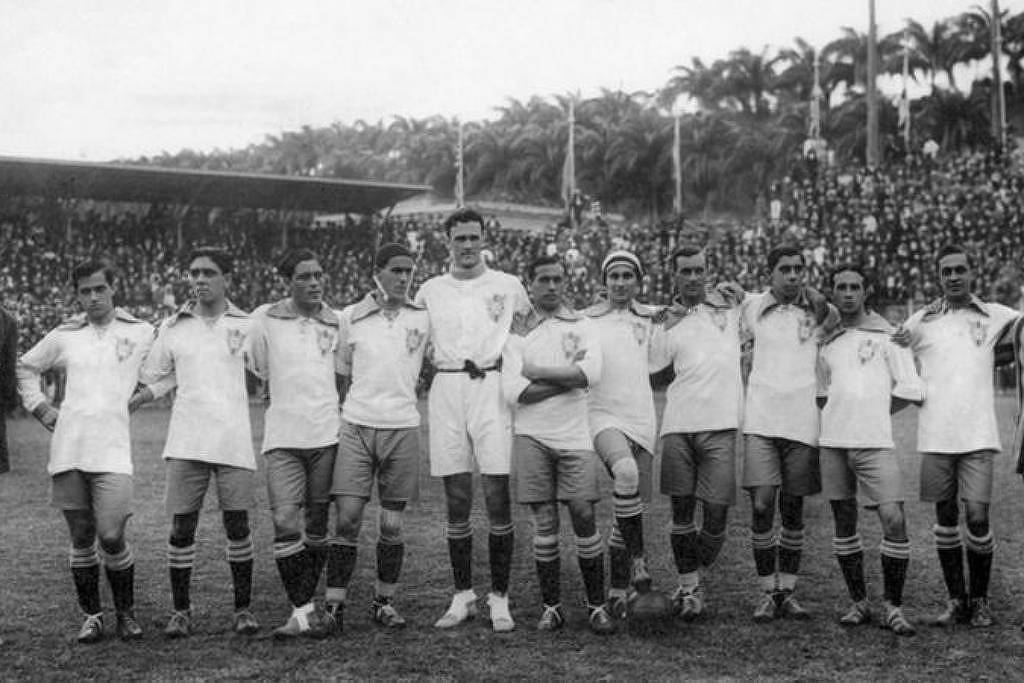
Quando a seleção brasileira era formada por filhos de imigrantes e operários: um paralelo histórico com as Copas atuais
The article explores how national football teams at the 2026 World Cup are increasingly composed of children of immigrants, using France as
 www1.folha.uol.com.br·10d ago
World Cup Wallcharts and Rituals: A Cultural Analysis of Football's Global Magnetism
The article discusses the cultural phenomenon of the World Cup, focusing on its unique ability to draw in casual fans and the traditions sur
 lrb.co.uk·18d ago
Curacao's historic 7-1 win highlights the tension between World Cup expansion and competitive quality
The article criticizes FIFA's expansion of the 2026 World Cup from 32 to 48 teams as a greed-driven move that dilutes the tournament's compe
 Defector·24d ago
A bluffer's guide to the World Cup: conversation starters and cultural insights
A lighthearted guide to the World Cup, offering conversation starters and cultural insights about the tournament. It highlights Brazil's dee
 bbc.co.uk·1mo ago
Football, Fever, and the 2026 World Cup
open.substack.com·1mo ago
Comments
Sign in to join the conversation.
No comments yet. Be the first.